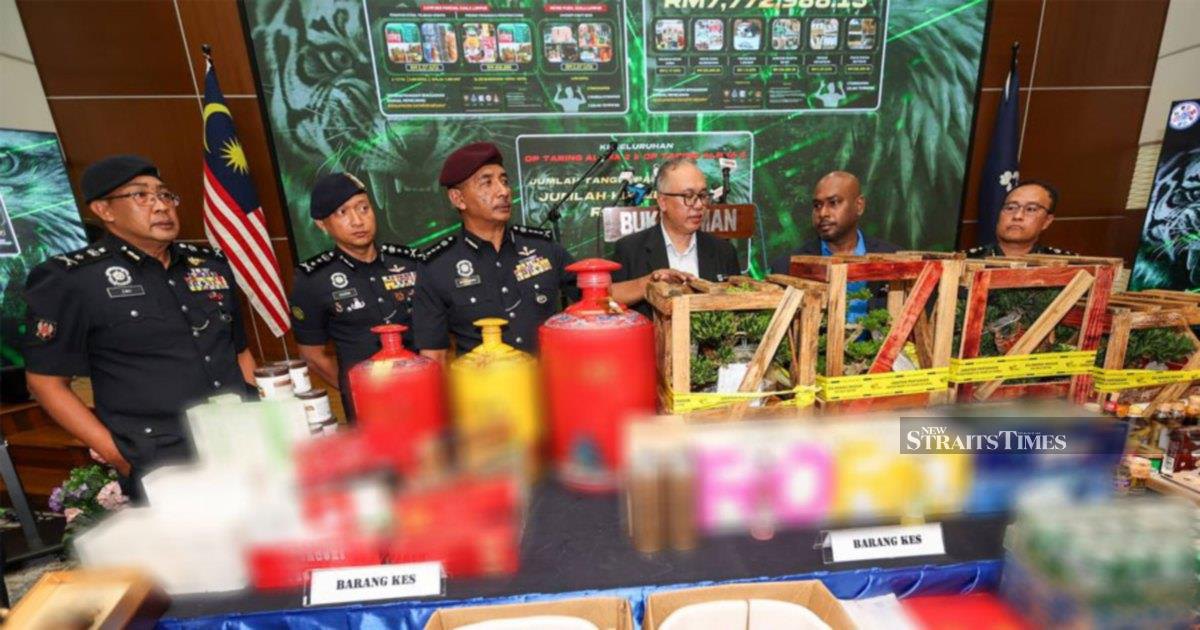
Malaysian police have significantly disrupted the underground smuggling networks operating across the Klang Valley, apprehending five suspects and recovering illegal goods and contraband estimated at RM12.8 million during two separate coordinated enforcement operations centred in Kuala Lumpur and Klang. The busts represent a notable success in authorities' ongoing battle against organised smuggling syndicates that continue to exploit commercial corridors and logistics hubs in the country's most densely populated urban region.
The operations, executed by police units specialising in economic crime and contraband interdiction, targeted suspected smuggling operations that had apparently been functioning across both locations. The strategic timing and execution of the raids suggest police intelligence gathering had provided sufficient evidence to warrant the simultaneous strikes, a tactic commonly employed to prevent suspects from coordinating responses or destroying evidence across multiple sites.
Smuggling remains a persistent challenge for Malaysian enforcement agencies, with criminal networks continuously adapting their methods to circumvent customs and border controls. The contraband recovered in these operations—valued at RM12.8 million—underscores the significant financial stakes involved in illicit trafficking. The sophistication and scale of these operations typically demand coordination across multiple jurisdictions and commercial infrastructures, particularly given the Klang Valley's strategic position as the nation's primary logistics and trade gateway.
For Malaysian businesses operating legitimately in trade and commerce, the presence of these smuggling networks creates an uneven competitive landscape. Smugglers operating without taxation, regulatory compliance, or safety standards undersell legitimate operators and distort market pricing, placing pressure on law-abiding traders. The recovery of such large quantities of contraband indicates that these operations had achieved a significant level of operational scale before police intervention.
The five arrests mark the dismantling of key personnel within these smuggling structures. Authorities typically employ further investigation to establish the full networks behind detained suspects, tracing supply chains, financing mechanisms, and distribution channels. Such follow-up investigations frequently lead to additional charges and arrests as authorities work to comprehensively dismantle the criminal enterprises rather than merely apprehending low-level operatives.
The Klang and Kuala Lumpur corridor has long served as a focal point for smuggling activities due to its proximity to Port Klang, the nation's busiest seaport, as well as numerous inland distribution centres and warehouses. This geographical and commercial concentration makes the region both attractive to smugglers and a priority for police resource allocation. The frequency and scale of smuggling interceptions in the area suggest that despite enforcement efforts, the fundamental incentives driving illicit trade—price differentials, weak enforcement in certain jurisdictions, and high profit margins—continue to fuel criminal activity.
The types of contraband involved in such operations vary considerably, ranging from counterfeit goods and untaxed consumer products to more serious items including narcotics, wildlife products, or strategic materials. The specific nature of the RM12.8 million seizure has not been detailed in initial reports, though authorities typically prioritise operations targeting goods that pose public health or safety risks or those involved in financing more serious criminal enterprises.
These enforcement successes highlight the ongoing resource allocation by the Royal Malaysia Police to combat economic crimes affecting the nation's tax base, public safety, and legitimate commerce. The operations demonstrate that despite the challenges posed by complex smuggling networks, coordinated police action can yield substantial results. The recovery rate and the number of suspects apprehended indicate effective intelligence work preceding the actual raids.
For Malaysia's position within regional supply chains and trade networks, combating smuggling is critical to maintaining the integrity and reputation of the country's ports and logistics sectors. International trading partners and investors depend on the predictability and security of Malaysian commercial infrastructure. When smuggling networks operate extensively, it can undermine confidence in the reliability of goods transiting through Malaysian territory and ports.
The cases also underscore the importance of continued vigilance and inter-agency cooperation in addressing smuggling. Customs authorities, port security, logistics regulators, and police units must maintain coordinated efforts to identify and intercept illicit shipments. Intelligence sharing between government agencies and private sector stakeholders in the supply chain—shipping companies, warehousing operators, and freight forwarders—amplifies detection capabilities.
Authorities have indicated that investigations into both operations remain ongoing, with further developments likely as police work to establish the complete scope of the criminal enterprises involved. Interrogation of the five detained suspects should yield additional leads regarding supply sources, distribution networks, and financing channels. Such intelligence-led follow-up typically results in a cascading series of enforcement actions against associated individuals and businesses.
Moving forward, the successful interception of these two operations will likely result in tighter monitoring of similar trading patterns and suspect individuals within the region. Police will utilise information gathered from these cases to enhance threat assessment frameworks and resource deployment protocols. The RM12.8 million seizure also serves as a reminder to would-be smugglers of the operational and legal risks inherent in pursuing illicit trafficking activities within Malaysia's increasingly sophisticated law enforcement environment.

