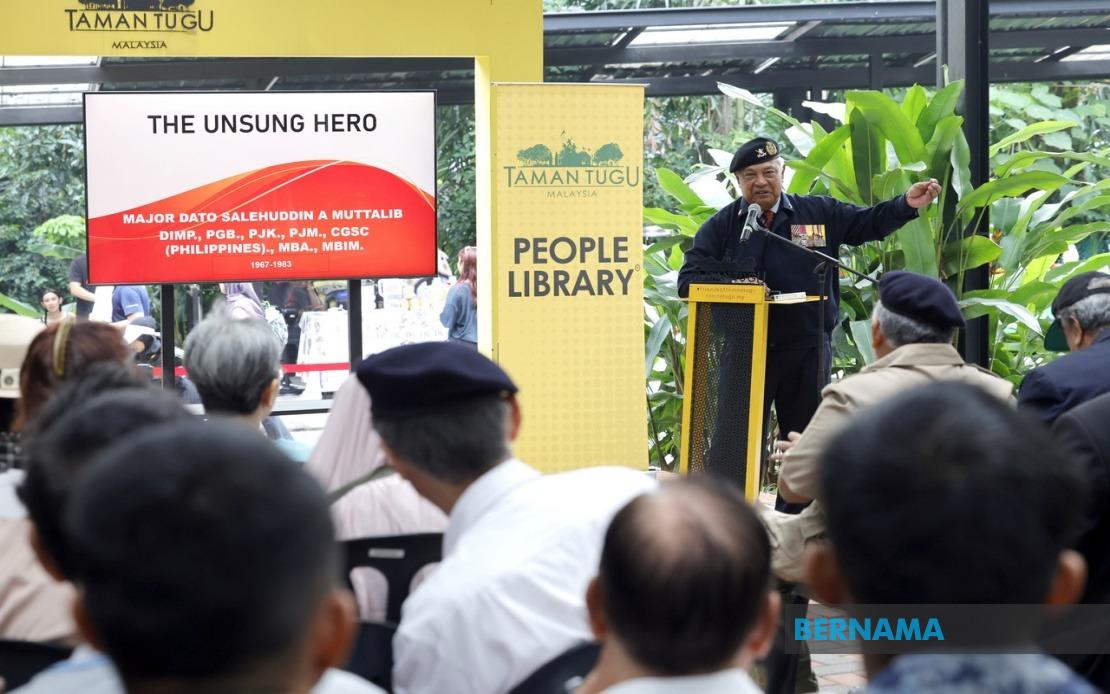
A gathering in Kuala Lumpur on July 25 brought together retired Malaysian security personnel to commemorate Warriors' Day, observed annually on July 31, with veterans recounting the psychological and physical toll of undercover operations conducted during the nation's counter-insurgency campaigns. The event, organised jointly by the Malaysia Military History Tourism Association and Taman Tugu, attracted about 200 participants keen to hear first-hand accounts of service during one of Malaysia's most turbulent periods.
Superintendent (Retired) Paul Kiong Sing Chu, now 82 years old, described the extraordinary risks he undertook as an embedded operative within the Communist Party of Malaya during the early 1980s. His role required him to move freely among communist cadres while maintaining his identity as a police intelligence asset, a balancing act that could have ended fatally if his cover had been compromised. The psychological burden of such work extended beyond mere survival; operatives had to navigate moral complexities while gathering intelligence that would ultimately lead to arrests or confrontations.
One particularly perilous incident illustrates the razor-thin margin between life and death that undercover operatives navigated. While transporting three CPM members through Chemor in Ipoh, Kiong Sing Chu encountered a police roadblock ahead. The situation presented an impossible dilemma: if the communist members detected the roadblock and opened fire on officers, he would inevitably become caught in the crossfire with minimal chance of survival. His rapid decision to steer the vehicle into a side lane before reaching the checkpoint avoided what could have escalated into a gunfight, potentially costing multiple lives. Such split-second judgements, made under extreme duress with imperfect information, defined the operational environment in which these officers worked.
The toll of such service was eventually recognised by the state. Following 31 years in the Royal Malaysia Police, Kiong Sing Chu received the Seri Pahlawan Gagah Perkasa medal in acknowledgement of his exceptional bravery during operations. Yet medals and honours, however prestigious, cannot fully compensate for the psychological scars and the permanent vigilance required when living a double life infiltrated among hostile organisations. His decision to share these experiences publicly, including through documented accounts, reflects a broader effort to ensure younger generations understand the true costs of national security.
Major (Retired) Datuk Salehuddin Abd Muttalib contributed an equally sobering account of operations conducted in Sarawak against the Indonesian Communist Party during a period when communist insurgencies threatened regional stability across Southeast Asia. During one covert military operation, Salehuddin found himself in direct confrontation with an armed PKI operative. The encounter resulted in the death of the communist fighter, a necessary outcome in combat but one that would haunt Salehuddin for decades.
What transformed this encounter from a routine military engagement into a deeply personal moral reckoning was Salehuddin's subsequent discovery that the man he had killed was a Muslim. This revelation triggered introspection about the religious and ethical dimensions of his actions. He wrestled with questions about whether killing a fellow believer could be justified, what his actions meant for the deceased's family, and whether forgiveness could ever be extended. These questions represented the hidden emotional burden carried by military personnel engaged in counterinsurgency work, dimensions rarely captured in official histories or military records.
The emotional weight of this encounter resurfaces a decade later when an unexpected visitor arrived at Salehuddin's home. The visitor revealed himself to be a relative of the man Salehuddin had killed in that operation years before. The meeting represented a moment of profound shock and vulnerability for the retired officer. Rather than confrontation or recrimination, however, the encounter became an opportunity for human connection across the divide of historical conflict. That moment remained permanently etched in Salehuddin's consciousness, a testament to how warfare creates invisible connections and lasting psychological imprints that transcend the immediate conflict.
The venue for these testimonies held particular significance. Warriors' Day commemorations, centred around July 31, form part of Malaysia's effort to memorialise national sacrifice and heroism. By hosting veteran speakers at Taman Tugu, a heritage site, organisers deliberately connected personal narratives to the broader landscape of national memory. The choice to include younger visitors among the 200 participants reflected an intentional educational strategy: ensuring that contemporary Malaysians, particularly those with no direct memory of the anti-communist struggle, gain understanding of the security environment that shaped the nation's early decades.
The anti-communist struggle represents a formative chapter in Malaysian history that fundamentally shaped the country's security apparatus, political culture, and regional standing. The Emergency period and subsequent operations against communist insurgencies defined an entire generation's understanding of national security threats and appropriate state responses. Yet public knowledge of these campaigns has diminished as the immediate historical period recedes, creating a knowledge gap between those who lived through the violence and younger citizens who encounter this history only through textbooks.
These veteran testimonies serve multiple functions within contemporary Malaysian discourse. They preserve individual memories that might otherwise be lost, they provide human context to abstract historical events, and they honour those who made sacrifices that contemporary Malaysians often take for granted. The emphasis on warriors' contributions to national sovereignty underscores how security operations, however necessary, extract personal costs from those who conduct them. The psychological dimensions highlighted by both Kiong Sing Chu and Salehuddin demonstrate that counterinsurgency work demands more than tactical competence; it requires moral courage and emotional resilience.
For Malaysia's broader security narrative, these accounts reinforce official histories while adding crucial subjective dimensions. The Emergency and subsequent anti-communist campaigns represented existential threats to the fledgling nation's stability and territorial integrity. Southeast Asian context matters here: Malaysia's experience paralleled struggles across the region, from Indonesia's confrontation with the PKI to broader Cold War tensions. By commemorating these experiences, Malaysia positions itself within a regional narrative of states defending against communist expansion, a framing that remains politically significant in Southeast Asian geopolitics.
The gathering also reflects how Malaysia processes its security history relative to other post-colonial nations. Rather than suppressing or minimising these chapters, official commemoration and platform-provision for veteran testimony suggests institutional confidence in the legitimacy of the state's counter-insurgency actions. The involvement of heritage organisations like Taman Tugu alongside official military bodies indicates an integration of security history into broader cultural narratives about national identity and achievement. This approach contrasts with countries that treat such periods as uncomfortable historical episodes to be downplayed or contested.
Moving forward, the participation of veterans in public remembrance ensures that abstract security policies gain human faces and emotional resonance. Younger generations hearing these accounts may develop deeper appreciation for institutional security provision and the sacrifices underpinning it. Simultaneously, the psychological burdens described by Salehuddin and others highlight the need for adequate support systems for those engaged in traumatic operational environments. Both dimensions—honouring sacrifice while acknowledging trauma—form essential components of responsible national commemoration, ensuring that security history is neither mythologised nor forgotten.

