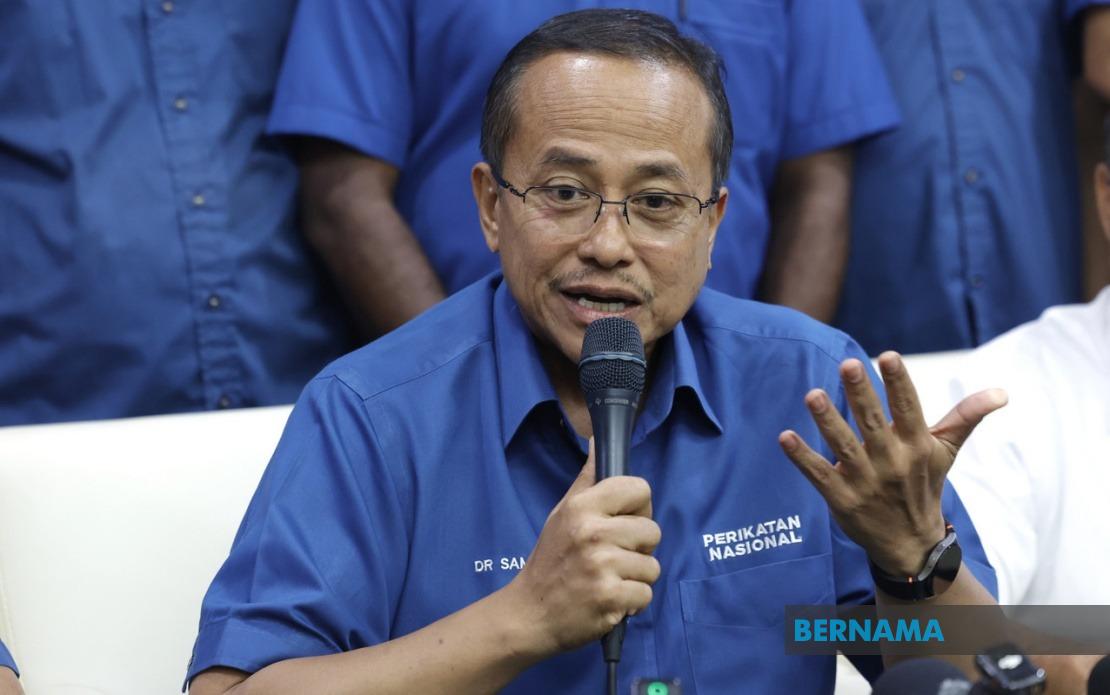
The Perikatan Nasional coalition has formally approved its electoral strategy for the upcoming 16th Negeri Sembilan state election, moving ahead with a unified campaign structure that consolidates its component parties under a single organisational identity. At a specially convened Supreme Council meeting in Seremban on July 16, the coalition endorsed seat-sharing arrangements among PAS, Gerakan, Wawasan, and MIPP, while mandating that all participating candidates will run under the coalition's own logo rather than their individual party emblems.
Chairman Datuk Seri Dr Ahmad Samsuri Mokhtar articulated the coalition's vision for the contest, framing the electoral effort as centred on advancing constituent welfare, catalysing economic development across Negeri Sembilan, and maintaining the pluralistic harmony that defines both the state and the nation. His remarks sought to position PN's participation as a constructive engagement with the electorate, emphasising social cohesion alongside policy delivery. The decision to present a unified branding represents a calculated move to strengthen coalition coherence and simplify voter messaging during campaigning.
Dr Ahmad Samsuri's statement also served to address internal tensions within the broader opposition coalition ecosystem. He underscored that all preliminary negotiations with potential partner organisations had proceeded under his direct supervision and with his explicit consent as PN chairman. This clarification appeared designed to rebut suggestions that coordination had occurred outside formal party channels or without appropriate oversight, a concern that carries particular weight in Malaysian coalition politics where unauthorised engagement can trigger disputes over autonomy and decision-making authority.
The PN chairman's emphasis on approval and endorsement by the full Supreme Council reflected an attempt to present the coalition's position as democratically derived and internally sanctioned. In Malaysian political culture, where perceptions of legitimacy hinge partly on inclusive decision-making processes within party structures, such invocation of formal institutional validation matters significantly for maintaining constituent confidence and party discipline. The appeal to collegial deliberation and approval suggests awareness that unilateral decision-making risks provoking resentment among component parties.
However, the statement also contained an implicit acknowledgment of discord. The need for Dr Ahmad Samsuri to clarify that discussions with other parties—a direct reference to potential engagement with Barisan Nasional—had occurred with his knowledge pointed to prior public questions or allegations of backroom dealings conducted beyond standard channels. This defensive posture revealed fault lines within the opposition camp regarding coalition coordination, particularly around the sensitive question of whether PN entities might explore cooperation with the ruling coalition.
The situation crystallised when Bersatu president Tan Sri Muhyiddin Yassin publicly announced that his party had not been consulted on PN's seat allocation decisions for the Negeri Sembilan contest. Muhyiddin's statement that Bersatu was equally excluded from deliberations concerning potential coordination with Barisan Nasional underscored a significant rupture in opposition coordination. His decision to field Bersatu candidates independently using the party's own logo rather than the PN symbol represented a direct rejection of the coalition framework and a visible challenge to PN's claimed authority to coordinate opposition strategy.
This development carries substantial implications for Malaysian opposition politics. The fracturing of PN cohesion in Negeri Sembilan illustrates the persistent difficulty in maintaining unified opposition coalitions across Malaysia's federal system. State-level elections frequently become flashpoints where national coalition agreements strain under local pressures, personality conflicts, and divergent strategic calculations about electoral advantage. Bersatu's decision to go alone mirrors patterns seen in previous state contests where nominal coalition partners have prioritised local positioning over national coalition discipline.
For Negeri Sembilan specifically, the split complicates opposition mathematics. Rather than presenting voters with a consolidated anti-government bloc, the state now faces a fractured opposition landscape where PN and Bersatu will contest separately. This fragmentation potentially benefits Barisan Nasional, which can exploit divided opposition vote to improve its electoral prospects. In a state where results often mirror national trends but with distinct local dynamics, the opposition's internal disarray creates tactical advantages for the governing coalition.
The Negeri Sembilan election acquires additional significance as a barometer of opposition cohesion more broadly. The state represents one of the few genuine competitive battlegrounds in Malaysian electoral politics, where election outcomes remain genuinely uncertain and where opposition and government camps command roughly comparable organisational resources. How opposition parties perform individually versus how they might have performed collectively becomes an interpretive touchstone for assessing coalition functionality across the region.
The seat allocation arrangements themselves, though not detailed in Dr Ahmad Samsuri's statement, will shape campaign dynamics substantially. The distribution of candidacies among PN's component parties reflects calculations about which party can best contest particular constituencies—considerations based on historical performance, demographic composition, and local party infrastructure. The decision to campaign under a unified logo, even as Bersatu opts out, suggests PN leadership believes that presenting a cohesive image outweighs the symbolic importance of allowing component parties to highlight their individual contributions.
Moving forward, the Negeri Sembilan election offers a test case for opposition coordination strategies in Malaysia. Whether the PN-led approach yields better results than fragmented campaigns will influence how opposition coalitions structure themselves in future state contests. The lesson from Bersatu's defection is that imposed coalition discipline, absent genuine buy-in from all participants, remains brittle. Malaysian voters will witness whether unified opposition branding translates to electoral advantage or whether the underlying organisational weakness undermines such presentational strategies.

