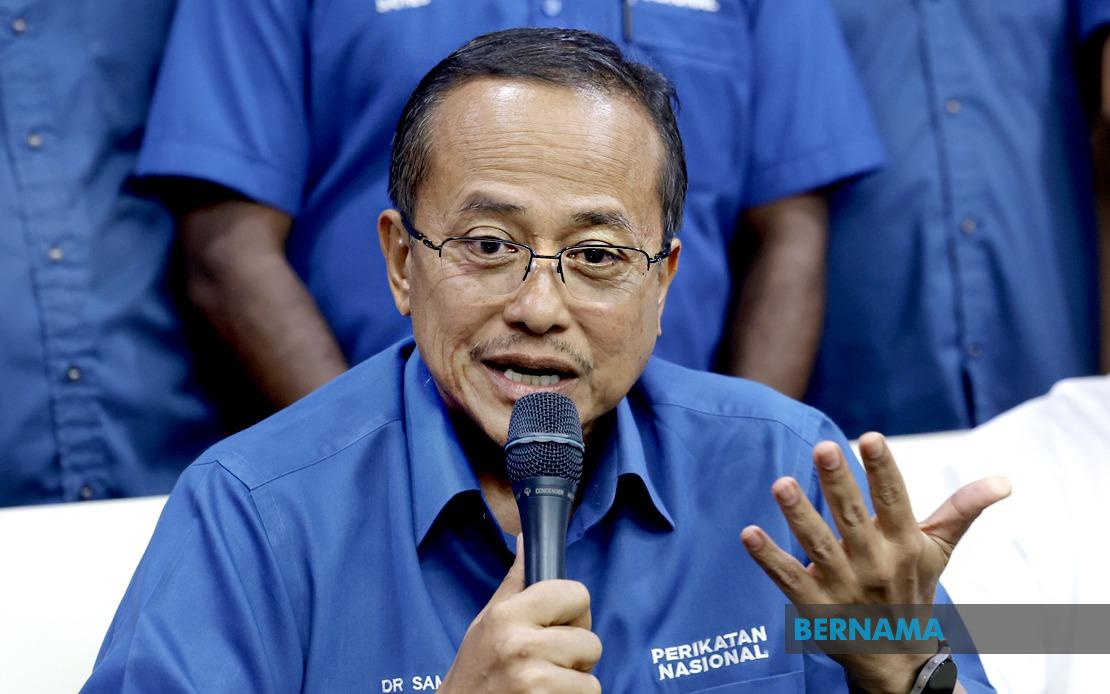
Perikatan Nasional has indicated it stands ready to engage in discussions with Barisan Nasional regarding the forthcoming Melaka state election, according to PN chairman Datuk Seri Dr Ahmad Samsuri Mokhtar. Speaking at the 23rd Perak PAS Convention in Taiping on August 9, Ahmad Samsuri stressed that his coalition remains receptive to exploratory talks with its traditional rival, contingent on BN's willingness to participate in such dialogue.
The timing of such negotiations would be critical, Ahmad Samsuri emphasised, noting that discussions ideally should conclude before the dissolution of the Melaka State Legislative Assembly is formally announced. Since no firm timeline has been established for the assembly's dissolution, there exists what he characterised as adequate breathing room for the two coalitions to pursue substantive negotiations without unnecessary time constraints. This window of opportunity, he implied, should not be squandered if both parties genuinely wish to explore areas of common ground.
In his address to party members at the Perak PAS gathering, Ahmad Samsuri presented an intriguing electoral calculus. According to his strategic analysis, a formal alliance between PN and BN would position their combined strength to form the next Melaka state government with what he estimated at approximately 75 per cent likelihood of victory. Such a scenario would represent a significant realignment in Malaysian peninsular politics, fundamentally altering the balance of power in a state that has experienced considerable political turbulence in recent years.
The prospect of PN-BN cooperation carries substantial implications for Malaysia's political landscape, particularly given the fractious nature of coalition politics at both federal and state levels. While PN has built considerable grassroots support and organisational momentum over recent years, a partnership with BN would consolidate traditional government machinery with emerging political forces. For BN, which has faced electoral challenges and defections in several states, such an arrangement could potentially stabilise its position in Melaka, a state where its historical dominance has been increasingly contested.
Yet Ahmad Samsuri cautioned against overly optimistic assumptions about the pathway toward such cooperation. He acknowledged that achieving electoral convergence would not prove straightforward, employing a memorable metaphor to describe the challenges ahead. The road toward cooperation, he suggested, would lack the ease and convenience of a well-maintained highway, complete with conveniently placed rest stops. Instead, the journey would demand careful navigation through complex political terrain, requiring substantial measures of prudence, tolerance, and patience from both parties to overcome inherent suspicions and competing interests.
The PN chairman's comments reflect a calculated political positioning that leaves maximum flexibility for his coalition. By publicly expressing openness to talks while simultaneously setting demanding preconditions for meaningful cooperation, PN signals to its support base that it remains focused on consolidating state-level governance, while also maintaining the option to contest independently should negotiations falter. This hedging strategy allows PN to appear conciliatory without committing prematurely to any binding arrangement.
For Malaysian observers, the significance of these overtures extends beyond Melaka itself. The state's electoral outcome could establish precedent for how PN and BN navigate their complex relationship elsewhere in Malaysia. In several states, these coalitions have maintained uneasy coexistence or even open competition, creating opportunities for opposition parties to capitalise on divided anti-government sentiment. A successful PN-BN arrangement in Melaka might demonstrate viability for similar arrangements in other states, potentially reshaping the competitive dynamics of Malaysian politics more broadly.
The Melaka election assumes heightened importance given the state's role as a bellwether for broader political trends in Malaysia. Recent elections in the state have demonstrated volatile voter preferences, with administrations changing hands with relative frequency. This volatility makes Melaka particularly attractive to opposition parties seeking to expand their footprint, while simultaneously creating anxiety among both PN and BN regarding their individual competitive prospects against opposition unity.
Ahmad Samsuri's framing of PN's transformation from opposition status to government formation under this potential new cooperative arrangement hints at broader strategic thinking within the coalition. For PN leadership, particularly its dominant component PAS, assuming executive power at state level provides opportunities to consolidate influence, demonstrate administrative competence, and build institutional bases that could enhance its federal-level ambitions. A shared governance arrangement in Melaka could serve these long-term strategic objectives while providing immediate electoral benefits.
The ambiguity surrounding BN's stance on these overtures adds another layer of complexity to the situation. As Ahmad Samsuri noted, no substantive discussions have yet occurred between the coalitions, leaving BN's receptiveness to such proposals uncertain. BN leadership may harbour reservations about sharing state governance with PN, particularly given ideological differences and competition for the same voter constituencies. Whether BN chooses to reciprocate PN's signals of openness will largely determine whether Melaka becomes a testing ground for new forms of coalition politics or whether both groups proceed separately into electoral competition.
The constitutional and procedural aspects of any eventual cooperation also merit consideration. Malaysian electoral law provides limited mechanisms for formal post-election coalitions to govern jointly in the manner that federal government can be structured. Any PN-BN arrangement in Melaka would likely require either a clear pre-electoral understanding or ad-hoc agreements following polling day, each option carrying distinct advantages and risks regarding commitment and stability.

