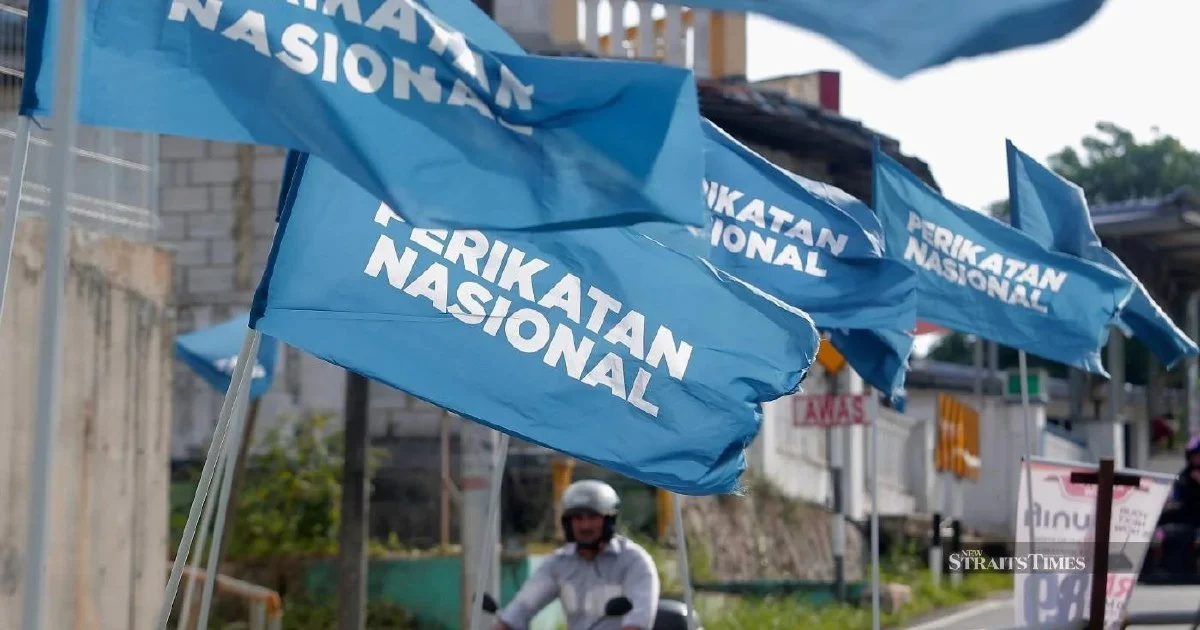
Perikatan Nasional appears committed to keeping its coalition with Bersatu intact during a critical electoral period, according to analysts monitoring the political landscape ahead of state elections in Johor and Negri Sembilan. The timing of any potential friction within the alliance suggests that PN leadership is acutely aware of the risks posed by internal divisions when voters are preparing to cast their ballots in these strategically important states.
The calculus behind maintaining coalition cohesion at this juncture reflects deeper dynamics within Malaysia's competitive political ecosystem. Bersatu, as a key component of PN, brings substantial electoral machinery and voter support particularly in certain constituencies within these two states. Any public split or policy disagreement could fracture PN's unified messaging and undermine voter confidence in the coalition's ability to govern effectively. Election specialists observe that unity signals are particularly important when campaigning against entrenched rivals, as disunity invites attacks questioning the coalition's stability and competence.
For PN, the electoral stakes in Johor and Negri Sembilan carry considerable weight beyond these two states alone. Success in these polls would strengthen PN's bargaining position within Malaysia's broader political architecture and demonstrate voter appetite for the coalition's platform. Conversely, defeats could trigger internal recriminations and emboldened challenges to leadership authority. This high-stakes environment creates powerful incentives for coalition partners to suppress disagreements and present a unified front to the electorate.
Bersatu's position within PN has been subject to periodic scrutiny, with observers noting the party's significant influence relative to its parliamentary representation. The party leadership, under Muhyiddin Yassin, has cultivated particular strength in Negri Sembilan where it retains substantial grassroots organisation and local connections. In Johor, where PN faces stiffer competition, Bersatu's contributions to campaign machinery and candidate selection remain strategically important. Maintaining Bersatu's engagement thus becomes essential to PN's electoral prospects in both states.
Analysts emphasise that coalition partnerships in Malaysia often operate under carefully managed restraint, where disagreements are negotiated privately rather than aired publicly during sensitive electoral windows. The precedent established by other Malaysian coalitions demonstrates that overt conflict during campaigns typically damages all partners collectively. This shared vulnerability creates natural incentives for restraint and accommodation among coalition members, even when underlying tensions may exist regarding power-sharing arrangements, policy priorities, or resource distribution.
The broader political context amplifies these considerations. With Malaysia's parliamentary system requiring coalitions to secure and maintain majorities, the cost of rupturing established partnerships extends beyond individual elections to threaten overall political stability and government formation. PN leaders recognise that fragmenting the coalition would invite opportunistic defections to rival blocs and potentially undermine PN's longer-term strategic positioning. In this environment, short-term electoral cooperation becomes inseparable from medium-term political survival.
For Malaysian voters in Johor and Negri Sembilan, the apparent coalition stability carries implications for how PN presents itself as a governing alternative. A visibly fractious alliance raises questions about accountability, decision-making processes, and the ability to translate campaign promises into effective administration. Conversely, a disciplined coalition projects competence and coherence, qualities voters assess when evaluating which block deserves their confidence. Election observers note that swing voters in particular prove sensitive to these signals about coalition functionality.
The timing factor cannot be overstated in Malaysian electoral politics. PN appears to be calculating that managing coalition tensions can be deferred to the post-election period when electoral incentives shift and internal renegotiations of power-sharing arrangements become more natural. This approach requires tactical discipline from coalition leadership in avoiding public statements that might be interpreted as Bersatu criticism or other inflammatory rhetoric. Such restraint, while challenging given the diverse interests within any political coalition, remains achievable over the relatively compressed timeframe of state campaigns.
Regional dimensions also merit consideration. Johor's traditional significance in Malaysian politics, combined with Negri Sembilan's role as a battleground between competing coalitions, means that PN's performance in these elections will be interpreted as indicative of broader electoral trends. A cohesive campaign therefore sends market signals about PN's momentum and viability, potentially influencing funding flows, volunteer mobilisation, and candidate recruitment in future contests. Coalition fragmentation would reverse these dynamics, signalling weakness to potential supporters.
Looking forward, analysts suggest that the stability PN projects during this electoral cycle should not be mistaken for the absence of underlying tensions. Coalition politics inherently involves negotiation and compromise among partners with distinct organisational interests and leadership ambitions. The priority afforded to electoral performance during this period will inevitably give way to more contentious discussions about how power and resources should be distributed following the elections. Understanding PN's current unity strategy therefore requires recognising it as a tactical choice rather than evidence of harmonious long-term alignment.