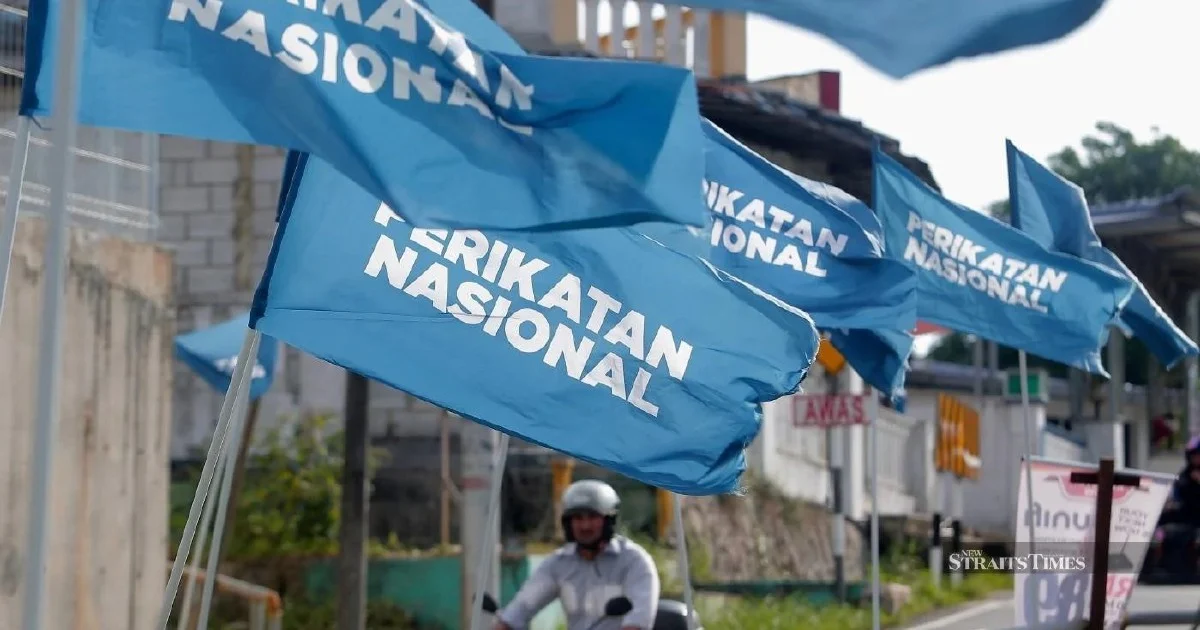
Perikatan Nasional has moved swiftly to debunk mounting speculation that the opposition coalition intends to bypass the forthcoming Johor state election, with senior party officials characterising the claims as unfounded misinformation designed to mislead the public and potentially damage the coalition's political standing in the crucial southeastern state.
P. Punithan, serving as deputy chairman of the Perikatan Nasional alliance, took the decision to publicly address the unsubstantiated assertions that have gained traction across social media platforms in recent days. His intervention underscores the seriousness with which the coalition is treating what party leadership clearly views as a coordinated disinformation campaign that threatens to create confusion among party members and supporters ahead of an election cycle widely anticipated to reshape the state's political landscape.
The timing of these rumours appears particularly sensitive given the heightened electoral activity across Malaysia's states. Johor holds particular strategic significance for any national political coalition, given its sizeable population base, established political machinery, and historical track record of determining broader national political trends. Any perceived withdrawal from electoral competition in such a consequential state would represent a major shift in coalition strategy and send powerful signals about Perikatan Nasional's broader political ambitions.
Viral claims circulating through Malaysian social media ecosystems have become an increasingly common feature of the country's political landscape, with various factions deploying false narratives to undermine opponent strategies, dampen supporter enthusiasm, or create artificial crises that generate media attention and public discourse. The Perikatan Nasional's quick rebuttal reflects heightened awareness among political parties that uncontested disinformation can rapidly calcify into perceived reality if left unaddressed, potentially influencing voter sentiment and internal party cohesion.
The coalition's explicit denial carries implications for understanding current factional dynamics within Malaysia's opposition landscape. Perikatan Nasional represents an important alternative political force comprising several parties with distinct constituencies and regional strongholds, making collective participation in major state elections fundamental to maintaining the alliance's viability and demonstrating unified political purpose to potential supporters.
Johor's electoral significance extends beyond its state-level implications. The state has historically functioned as a crucial testing ground for broader political movements, with electoral outcomes often suggesting emerging voter sentiment regarding national governance. Any major coalition decision regarding participation levels in Johor contests therefore carries potential ramifications for national political calculations and may signal broader strategic repositioning within Malaysia's competitive political environment.
The propagation of false electoral narratives raises broader questions about information integrity during Malaysia's election seasons. When false claims gain sufficient circulation through digital channels before official party clarifications can reach equivalent audiences, the resulting confusion can subtly influence political perceptions and potentially affect actual voter behaviour in ways that become difficult to untangle after elections occur.
Perikatan Nasional's emphatic response suggests the coalition views the false claims as sufficiently credible-sounding to warrant serious concern about their potential impact. The specificity required to construct such rumours—that PN would deliberately abstain from a major state election—indicates either sophisticated political adversaries seeking to manufacture discord or genuine public uncertainty regarding actual coalition electoral plans that malicious actors exploited.
The coalition's stance affirms its commitment to competing across Malaysia's electoral landscape and suggests confidence in its capacity to mobilise support in Johor. By categorically rejecting suggestions of withdrawal, party leadership sends clear signals to party members, potential candidates, and voters that Perikatan Nasional intends to present competitive candidacies and mount substantive campaigns in the state.
For Malaysian voters monitoring opposition dynamics, the episode illustrates the complex information environment surrounding electoral competition. Distinguishing genuine political developments from fabricated narratives requires engagement with official statements from party sources while remaining alert to the strategic deployment of misinformation by various political actors seeking advantage during election cycles.
The broader context reveals how Malaysian politics increasingly operates across multiple information channels simultaneously. While traditional media carries official party statements and established reporting, social media ecosystems generate rapid information flows that may prioritise virality over accuracy, creating parallel narrative spaces where false claims gain traction independently from institutional verification mechanisms.