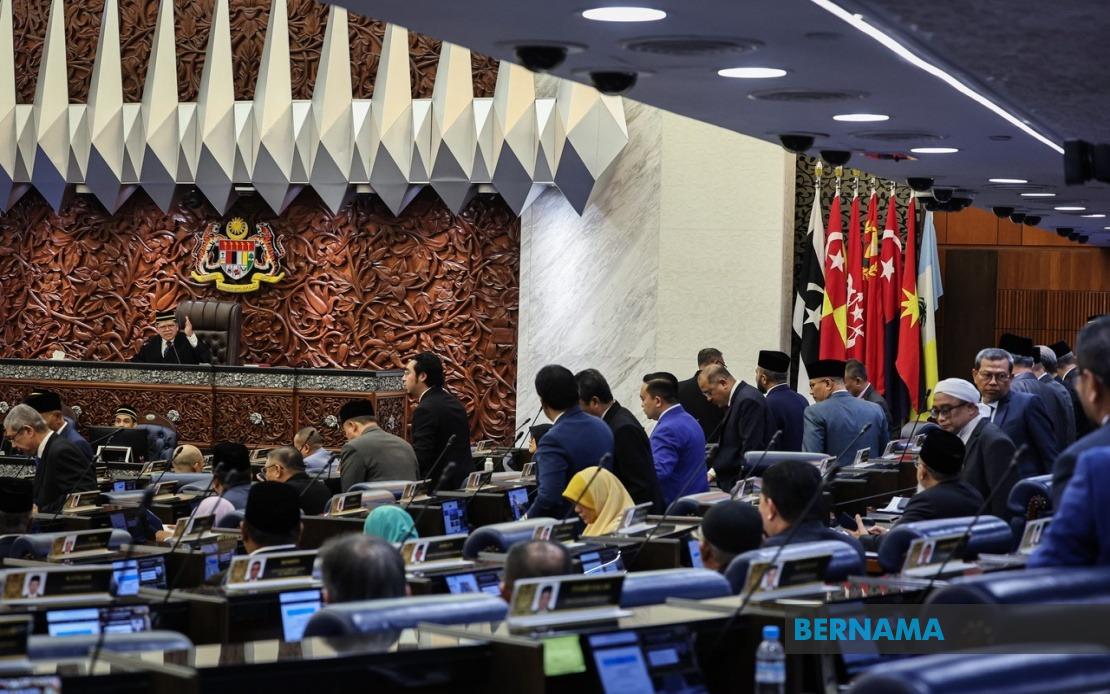
The Prime Minister's Senior Political Adviser, Tengku Datuk Seri Zafrul Tengku Abdul Aziz, has pushed back against opposition legislators who walked out of a special parliamentary session devoted to examining a Royal Commission of Inquiry report into the management of Lembaga Tabung Haji, suggesting that the Prime Minister's physical absence should not become a pretext for dodging substantive legislative engagement with one of Malaysia's most consequential Muslim economic issues.
Tengku Zafrul's intervention, articulated through social media, directly addressed what he characterised as the misguided departure of several Perikatan Nasional MPs from the Dewan Rakyat chamber during debate on the comprehensive 211-page RCI report into Tabung Haji's operations between 2014 and 2020. Among those departing were opposition leader Datuk Seri Hamzah Zainudin, PN parliamentary chief whip Datuk Seri Takiyuddin Hassan, and PN chairman Datuk Seri Dr Samsuri Mokhtar, whose coordinated absence signalled a calculated protest that the adviser explicitly rejected as negligent.
The adviser's framing reorients the parliamentary dispute away from personalised criticism of the Prime Minister and toward the institutional responsibility of legislators to engage rigorously with issues affecting millions of Malaysian Muslims and workers whose retirement savings are held within Tabung Haji. By characterising the walkout as a failure of collective parliamentary duty rather than legitimate political protest, Tengku Zafrul advanced an argument about the separation between the Prime Minister as an individual actor and the substantive policy questions requiring legislative attention. His rhetorical question—"The Prime Minister is not there, so does that mean MPs cannot listen and debate?"—positioned the boycott as intellectually incoherent and derelict of parliamentary function.
The strategic dimensions of this moment extend beyond procedural irritation. Tabung Haji represents not merely a financial institution but a foundational instrument of Islamic economic stewardship in Malaysia, holding the savings of millions of pilgrims and ordinary citizens across diverse professional and economic strata. The RCI report's release on July 29 followed government deliberation about public disclosure, indicating sensitivity around the institution's management trajectory. The fact that parliamentary time was expressly allocated for examination and debate underscores establishment recognition that public trust requires legislative oversight and explanation rather than administrative silence.
Tengku Zafrul's statement articulated a muscular conception of parliamentary opposition, one that distinguishes between principled dissent and performative abdication. He explicitly invited MPs to "stand up and question," to "debate," and to deploy "facts" as weapons against government positions they found objectionable. This framing does not dismiss criticism but rather demands that opposition scrutiny meet evidentiary standards. When he suggested MPs should "hit it with facts" if they believed the government wrong, he was not closing off parliamentary challenge but recalibrating its legitimacy around factual foundations rather than gesture politics.
The Tabung Haji controversy sits within a broader context of institutional governance questions affecting Malaysian Muslims' economic interests. Over the past decade, various concerns regarding fund management, investment decisions, and administrative transparency have periodically surfaced, generating unease among contributors and beneficiaries. The establishment of the RCI itself represented formal acknowledgement that independent inquiry was necessary to address public concerns and restore confidence. Parliament's special sitting offered an opportunity for legislators across the aisle to interrogate findings and recommendations while citizens observed their representatives' engagement with these consequential matters.
The opposition's walkout strategy may have reflected internal PN calculations about parliamentary dynamics or broader political positioning, but Tengku Zafrul's rebuttal suggested the government viewed such tactics as strategically counterproductive and ethically problematic. By abandoning the chamber, opposition MPs arguably surrendered the platform they needed to mount effective challenge to government narratives about Tabung Haji's stewardship. Parliamentary debate, even under adversarial conditions, creates the record by which governments are held accountable and through which voters eventually assess legislative performance.
The adviser's emphasis on the scale of Tabung Haji as "among the biggest" economic issues in Malaysian and Malay history reflected genuine substance. The institution manages enormous assets accumulated through contributions spanning decades, touching not only Muslim stakeholders but also encompassing economic and social dimensions relevant to broader Malaysian cohesion and prosperity. That Perikatan Nasional chose to absent itself from substantive examination of the RCI findings may, from a longer political perspective, prove self-limiting, as voters and constituents later inquire what their elected representatives accomplished through non-participation.
Tengku Zafrul's invocation of pluralism within disagreement—his assertion that "it is fine to disagree"—attempted to reframe parliamentary debate as an arena where substantive contestation of facts, logic, and policy consequences should occur independently of whether legislators liked or supported the Prime Minister personally. This distinction between institutional roles and personal preferences represents a mature conception of parliamentary function, one increasingly necessary in Malaysian political culture where tribal loyalties and personal followings sometimes overwhelm policy substance.
The special sitting's specific focus on the 2014-2020 period carries particular significance for Malaysian political memory and accountability. This timeframe encompasses important transitions in government and institutional leadership, raising inevitable questions about responsibility, oversight failures, and corrective measures. An RCI report spanning such consequential years warranted exhaustive parliamentary examination, not ceremonial attendance followed by strategic withdrawal. The adviser's implicit suggestion was that opposition MPs forfeited an opportunity to extract accountability and demonstrate constituent service through their absence.
Looking forward, the episode highlights persistent tensions within Malaysian parliamentary culture between legislative substance and political theatre. Tengku Zafrul's intervention suggested that government viewed the Tabung Haji debate as sufficiently important to merit serious engagement, while opposition tactics suggested different calculations about parliamentary utility. How voters and stakeholders ultimately judge these competing approaches may depend partly on whether the Tabung Haji RCI findings prove consequential in administrative practice or whether they recede into parliamentary archives without material impact on institutional reform.

