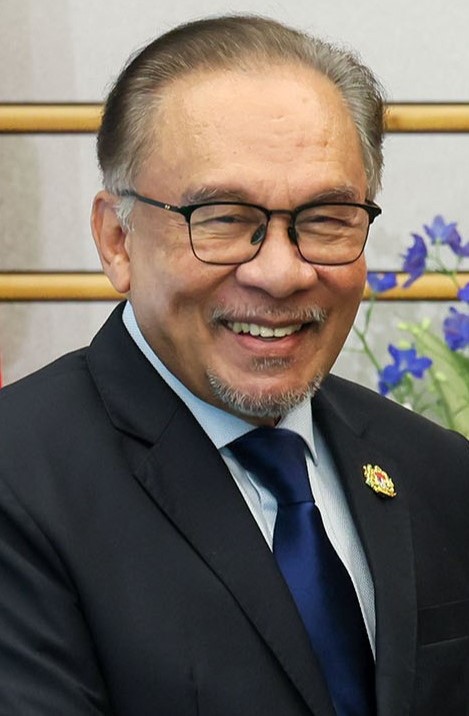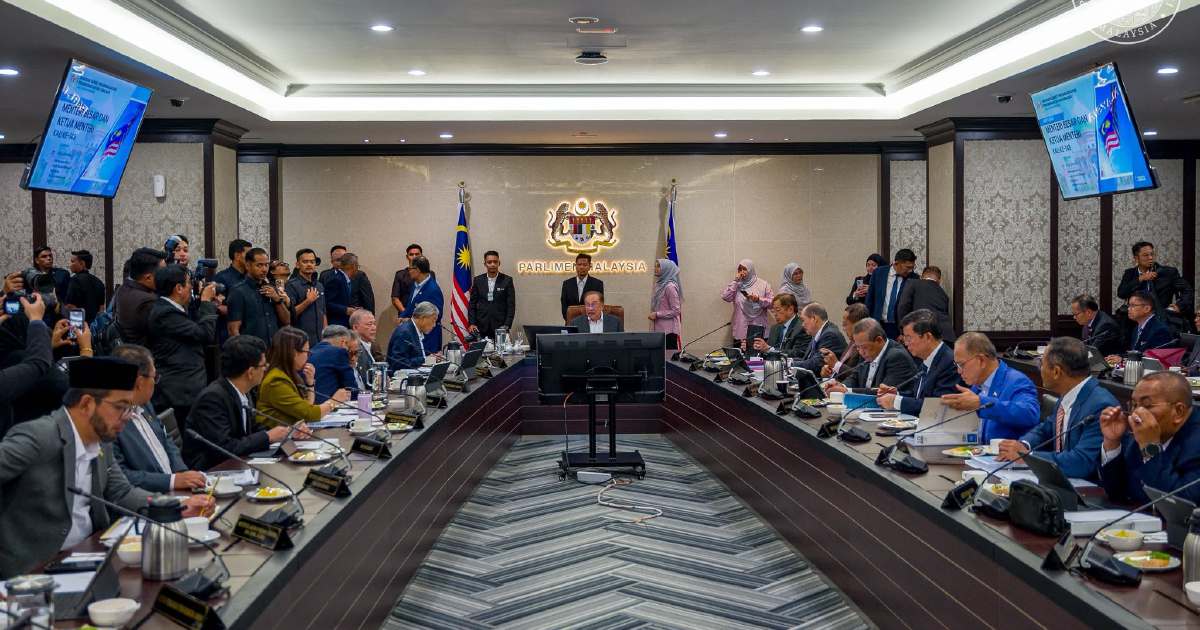
Prime Minister Datuk Seri Anwar Ibrahim presided over the 149th meeting of Menteris Besar and Chief Ministers at the Parliament building in Kuala Lumpur today, steering deliberations toward revitalising Malaysia's economic trajectory as the nation navigates an increasingly volatile international landscape marked by regional conflicts. The convocation of these senior subnational administrators underscores the federal government's determination to coordinate a unified response to economic challenges that transcend state boundaries, particularly given the escalating instability emanating from the Middle East that threatens to destabilise global supply chains and investment flows.
The gathering brought together state executives responsible for managing regional economies across Peninsular Malaysia, Sabah, and Sarawak—a composition that reflects the federated nature of Malaysia's governance architecture and the necessity for aligned policy implementation across all fourteen states and three federal territories. By assembling these leaders in Parliament, the Prime Minister signalled the gravity of current economic conditions and the imperative for coordinated action rather than fragmented regional approaches that might undermine national competitiveness. Such meetings serve as critical platforms for translating federal macroeconomic strategies into tangible state-level initiatives that directly affect employment, investment attraction, and infrastructure development.
The agenda centred on mechanisms to fortify Malaysia's economy, a priority that reflects deeper anxieties about the nation's vulnerability to external shocks. Over recent years, Malaysia has faced mounting competition from neighbouring countries in attracting foreign direct investment, while traditional manufacturing sectors confront pressures from automation and shifting global production networks. The emphasis on economic strengthening suggests recognition that incremental adjustments will prove insufficient—the nation requires comprehensive strategies spanning sectoral diversification, skills development, and digital transformation to remain resilient against destabilising external forces.
Geopolitical turbulence in the Middle East presents a multifaceted challenge to Malaysia's economic interests. The region remains crucial for Malaysian energy security, with substantial petroleum imports flowing through potentially threatened maritime corridors. Beyond energy, Middle Eastern markets absorb significant Malaysian exports of petrochemical products, palm oil derivatives, and manufactured goods, making regional stability directly consequential for Malaysian exporters and employment in commerce-dependent states. Disruptions to shipping lanes or shifts in trade patterns could reverberate through port-dependent economies in Klang, Port Klang, and Johor, while reduced investor confidence might discourage new foreign projects across manufacturing zones and technology parks.
The gathering likely examined how states could enhance their competitive positioning through improved business environments, streamlined regulatory frameworks, and targeted investments in high-value sectors. Individual states possess distinctive economic profiles—some depend predominantly on agriculture, others on manufacturing or tourism—requiring differentiated approaches rather than one-size-fits-all prescriptions. Menteris Besar and Chief Ministers bring crucial ground-level intelligence about local economic conditions, workforce capabilities, and infrastructure gaps that federal policymakers must understand to craft effective national strategies.
Coordination between state governments becomes particularly vital during periods of economic uncertainty, as inconsistent policies across jurisdictions can fragment markets and confuse investors evaluating Malaysia as an investment destination. A manufacturer considering whether to establish facilities in Selangor, Penang, or Johor requires assurance of predictable regulatory treatment and aligned incentive structures; contradictory state-level approaches diminish Malaysia's appeal relative to more administratively streamlined competitors like Vietnam or Thailand. This meeting likely aimed to establish common principles while permitting state-level flexibility suited to local circumstances.
The Middle East context assumes additional significance given Malaysia's broader strategic positioning. As an Islamic-majority nation with substantial Middle Eastern commercial ties, Malaysia maintains distinctive diplomatic and economic relationships across the region. Malaysian investors operate businesses throughout the Gulf states, while Middle Eastern sovereign wealth funds hold significant Malaysian assets. Any sustained deterioration in regional stability threatens these bilateral relationships and potentially erodes the investment flows and market access that support Malaysian prosperity.
Economic revival imperatives extend beyond addressing immediate geopolitical risks to encompassing longer-term structural challenges. Malaysia's working-age population is ageing, potentially constraining labour force growth that historically powered expansion. Productivity growth has plateaued relative to competitors, suggesting that sustained development increasingly depends on innovation and quality improvements rather than workforce expansion or capital accumulation alone. State governments, through their control over education, vocational training, and local economic development institutions, bear responsibility for cultivating the skilled workforces and entrepreneurial ecosystems that modern economies require.
The timing of this assembly carries additional weight given Malaysia's approaching mid-term economic reviews and budget allocations. Decisions made regarding federal-state resource distribution, infrastructure investment priorities, and sectoral support mechanisms will substantially influence regional development trajectories over coming years. Menteris Besar and Chief Ministers wielding influence in these deliberations can ensure that resource allocation reflects genuine state development requirements rather than politically expedient distributions that fail to address structural economic weaknesses.
International experience demonstrates that coordinated subnational responses to macroeconomic challenges frequently outperform fragmented approaches. States that align behind national economic priorities while maintaining appropriate local autonomy typically experience stronger recovery trajectories than those where regional leaders pursue parochial interests at the expense of broader competitiveness. The meeting thus represents more than administrative routine—it constitutes a foundational element of Malaysia's capacity to navigate the uncertain economic terrain ahead and maintain developmental momentum despite gathering international headwinds.