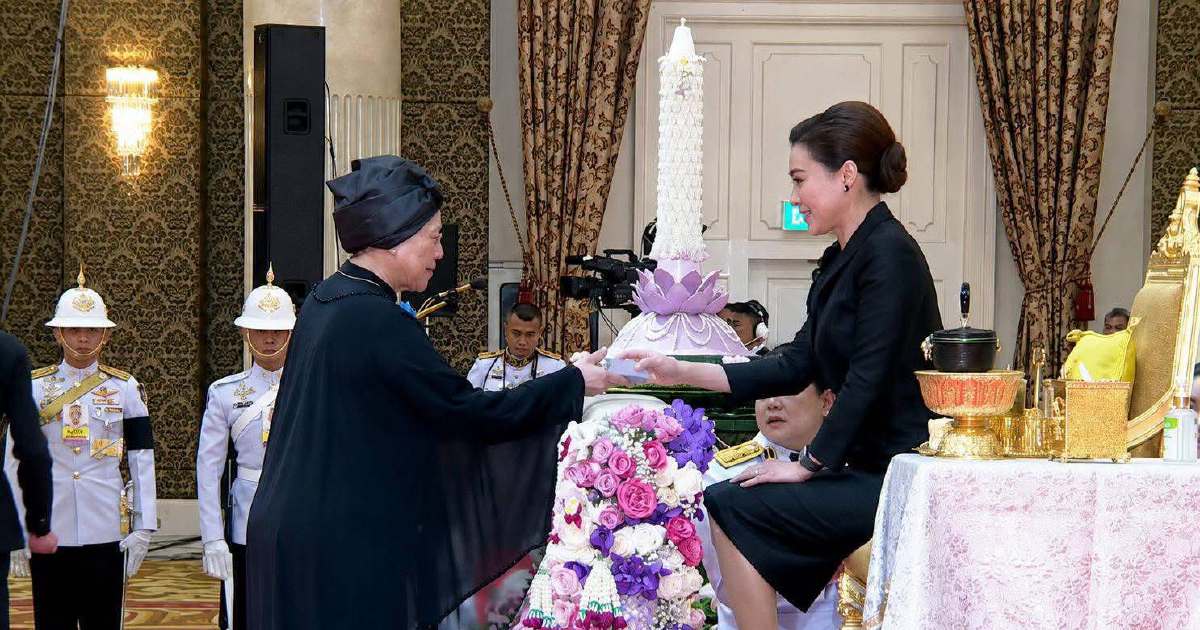
Prime Minister Datuk Seri Anwar Ibrahim, accompanied by his wife Datuk Seri Dr Wan Azizah Wan Ismail, has extended his commendation to Prof Emerita Tan Sri Datuk Seri Dr Sharifah Hapsah Syed Hasan Shahabudin following her bestowal with the Outstanding Woman Award for Social Development. The accolade represents official recognition of her sustained dedication to social causes and underscores the administration's commitment to acknowledging female leaders who shape the nation's trajectory across multiple sectors.
The award carries particular significance within Malaysia's contemporary context, where discussions surrounding women's roles in governance, academia, and community development have gained considerable momentum. Sharifah Hapsah's recognition aligns with broader regional and international movements recognising female achievement beyond traditional boundaries. Her selection for this honour reflects an institutional shift towards amplifying voices that have long contributed to social fabric without commensurate public acknowledgement.
The prime minister's personal engagement in celebrating this achievement signals the government's positioning on gender equality as integral to national development strategies. By highlighting Sharifah Hapsah's accomplishments through an official statement, the administration demonstrates that female participation in social development carries equal weight with other policy priorities. This messaging proves especially relevant for Southeast Asian nations navigating the balance between traditional structures and contemporary inclusive governance models.
Sharifah Hapsah's career trajectory spans decades of engagement with social development initiatives, suggesting her award reflects cumulative impact rather than isolated achievements. The conferment of emeritus status denotes institutional esteem typically reserved for those whose contributions transcend individual projects or timebound engagements. Such designations within Malaysian universities and public institutions remain disproportionately concentrated among male recipients, making female emeritus appointments noteworthy indicators of changing institutional practices.
The involvement of Datuk Seri Dr Wan Azizah Wan Ismail in the congratulations adds another dimension to this recognition. As a prominent political figure in her own right, her presence underscores female representation at the highest echelons of national leadership. Their joint acknowledgement creates a symbolic continuum connecting women's historical struggles for recognition with contemporary institutional validation of female achievement across generational and sectoral lines.
Within Malaysia's social development landscape, awards distinguishing individual contributions serve multiple functions beyond honouring recipients. They establish benchmarks for aspiring professionals, particularly those entering fields traditionally dominated by male leadership. Such recognition mechanisms can influence career pathways for younger women considering roles in academia, policy-making, and community engagement—sectors where Malaysian representation has gradually improved but remains uneven across hierarchical levels.
The award category itself—social development—encompasses diverse fields including education, health, welfare, community engagement, and policy implementation. Sharifah Hapsah's selection suggests her work addressed interconnected social challenges rather than operating within narrow specialisations. This holistic approach to social development aligns with contemporary frameworks viewing societal progress as dependent on collaborative, multidisciplinary efforts rather than siloed expert domains.
Regionally, Malaysia increasingly competes with neighbouring economies to attract and retain talent across professional sectors. Formal recognition of accomplished individuals, particularly women, contributes to creating environments perceived as rewarding merit and dedication. As Southeast Asian nations vie for position within knowledge economies, the visibility of accomplished academics and social development professionals influences perceptions of professional opportunity and institutional integrity.
The timing of this award announcement within Malaysia's broader policy environment merits consideration. Social development remains contested political terrain globally, with different administrations prioritising divergent approaches. The government's explicit celebration of work in this domain suggests commitment to specific vision of societal progress emphasising inclusive development and community welfare frameworks. How this vision translates into budgetary allocations and legislative priorities will determine whether such recognition constitutes substantive policy positioning or ceremonial acknowledgement.
For Malaysian women navigating professional advancement, particularly in traditionally male-dominated sectors, high-visibility awards create tangible examples of achievable recognition. Sharifah Hapsah's honour provides narrative counter-weight to persistent challenges women face accessing senior positions across government, academia, and corporate Malaysia. Yet the existence of such awards simultaneously raises questions about underlying systemic barriers—why does formal recognition remain exceptional rather than normalised for female achievement.
The distinction between social development expertise and political power remains significant in Malaysian governance contexts. While awards celebrate individual accomplishment, they do not automatically translate into institutional influence or resource control. Sharifah Hapsah's recognition thus functions within parallel system to formal governance structures, potentially limiting practical application of her accumulated expertise to policy formulation at highest levels.
Moving forward, the implications of this award extend beyond individual celebration to broader conversation about Malaysian women's positioning within development frameworks. Whether this recognition catalyses institutional change—through appointments, budget allocations, or advisory roles—will determine its substantive impact on social development trajectories. The prime minister's public acknowledgement establishes political space for such advancement, though actualising that potential requires sustained commitment beyond ceremonial moments.

