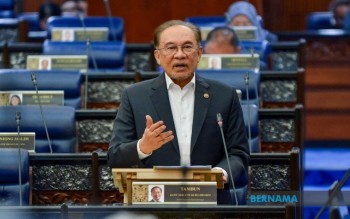
Prime Minister Datuk Seri Anwar Ibrahim has drawn a firm line on accountability in state pension investments, declaring that the government will maintain an absolute zero-tolerance stance towards any evidence of corruption or fraud linked to the Retirement Fund (Incorporated)'s stake in eFishery, the aquaculture technology start-up. Speaking during parliamentary proceedings in Kuala Lumpur on July 20, Anwar underscored that financial probity in managing retirement savings is non-negotiable, even as preliminary assessments suggest no impropriety has occurred in the transaction.
The investment in eFishery has attracted scrutiny over governance and due diligence protocols governing how Malaysia's sovereign pension funds deploy capital. Anwar, who holds the dual portfolio of Prime Minister and Finance Minister, signalled that despite initial findings indicating the absence of fraudulent elements, a comprehensive examination by the Malaysian Anti-Corruption Commission (MACC) is essential to validate the integrity of the entire investment pathway. This dual-layered approach—accepting preliminary assurances while simultaneously ordering independent investigation—reflects the delicate balance between maintaining investor confidence and addressing legitimate public concern about how retirement savings are safeguarded.
During the Oral Answers session at the Dewan Negara, Anwar confirmed he had convened discussions with KWAP management to emphasise the necessity of unreserved cooperation with anti-corruption authorities. He stressed that institutional transparency and willingness to submit to scrutiny are prerequisites for maintaining public trust in pension fund stewardship. The directive signals that no organisation, regardless of its status or the quality of initial internal reviews, can opt out of external oversight when public funds are at stake.
Anwar's remarks emerged in response to a parliamentary inquiry from Senator Mohd Hasbie Muda concerning the government's broader strategy for ensuring that Malaysia's two principal retirement schemes—the Employees Provident Fund (KWSP) and KWAP—continue delivering competitive returns to members despite operating in an environment of heightened geopolitical tensions and macroeconomic volatility. The question underscored lingering anxiety among savers about whether their accumulated contributions remain secure and are being deployed judiciously, particularly as global economic headwinds intensify.
Senator Wan Martina Wan Yusoff posed a supplementary query that probed deeper into the government's approach to corporate governance and investment screening. She sought clarification on what criteria and safeguards guide decisions about which companies receive institutional capital, and what assurances exist to shield ordinary Malaysians' retirement wealth from misadventure. This line of questioning reflects broader public apprehension about pension fund governance in Southeast Asia, where inadequate due diligence or regulatory capture in investment decisions can erode years of savings.
The eFishery investment represents a notable venture into emerging technology and agriculture innovation, positioning Malaysia's pension funds as participants in the broader regional shift towards digitalised agribusiness. However, the visibility of the investment also means it operates under heightened public and political scrutiny. Any governance lapse or misalignment between promised outcomes and actual performance could ripple across confidence in institutional fund management more broadly.
Anwar's articulation of the government's investigative approach—examining not only the transaction itself but also the decision-making framework applied by investment committees and ratified by the board—suggests recognition that institutional corruption risks often lie within procedural and governance architecture rather than isolated acts. By directing MACC to audit the investment process and the judgements made by evaluation panels, the government is signalling that systemic accountability matters as much as outcome verification.
The emphasis on KWAP management's duty to cooperate fully carries implicit weight. In Malaysian governance contexts, such public declarations by the Prime Minister typically establish expectations that cascade downward through administrative hierarchies, making subsequent resistance to investigation politically untenable. This top-down signalling often proves more effective than formal directives alone in activating institutional compliance.
For Malaysian savers and pensioners, the government's pledge carries reassuring dimensions but also raises questions about whether existing governance structures were sufficiently robust to detect problems without requiring prime ministerial intervention. The need for MACC investigation suggests that internal oversight mechanisms may not have been comprehensive enough to provide complete assurance, indicating potential gaps in how retirement fund boards evaluate and monitor major capital allocation decisions.
The broader context of KWAP and KWSP operations reveals two funds managing combined assets exceeding hundreds of billions of ringgit on behalf of millions of Malaysians. The stakes of governance failures in either institution extend far beyond individual investors to encompass systemic financial stability. Pension fund failures or sustained underperformance can cascade into elder poverty, reduced consumer spending, and broader economic contraction across Southeast Asia's largest economy.
Anwar's positioning reflects his government's attempt to navigate competing pressures: encouraging Malaysian institutional investors to participate in promising entrepreneurial ventures and emerging sectors, while simultaneously demonstrating zero tolerance for governance shortcuts or ethical compromises. This balancing act becomes particularly important as Malaysian funds seek exposure to high-growth opportunities in fintech, agritech, and other innovation-driven domains where risk and reward curves remain steeper than traditional investments.
The investigation's scope and timeline remain undefined, but the Prime Minister's public commitment ensures continued parliamentary and media attention to outcomes. This transparency, while potentially creating short-term discomfort for KWAP management and eFishery, ultimately strengthens institutional credibility and public confidence—essential foundations for long-term pension fund sustainability in Malaysia.
Moving forward, this episode will likely inform how Malaysian retirement funds approach technology investments and emerging market opportunities, potentially prompting enhanced due diligence frameworks and clearer documentation of investment rationales across the pension fund sector in Southeast Asia.

