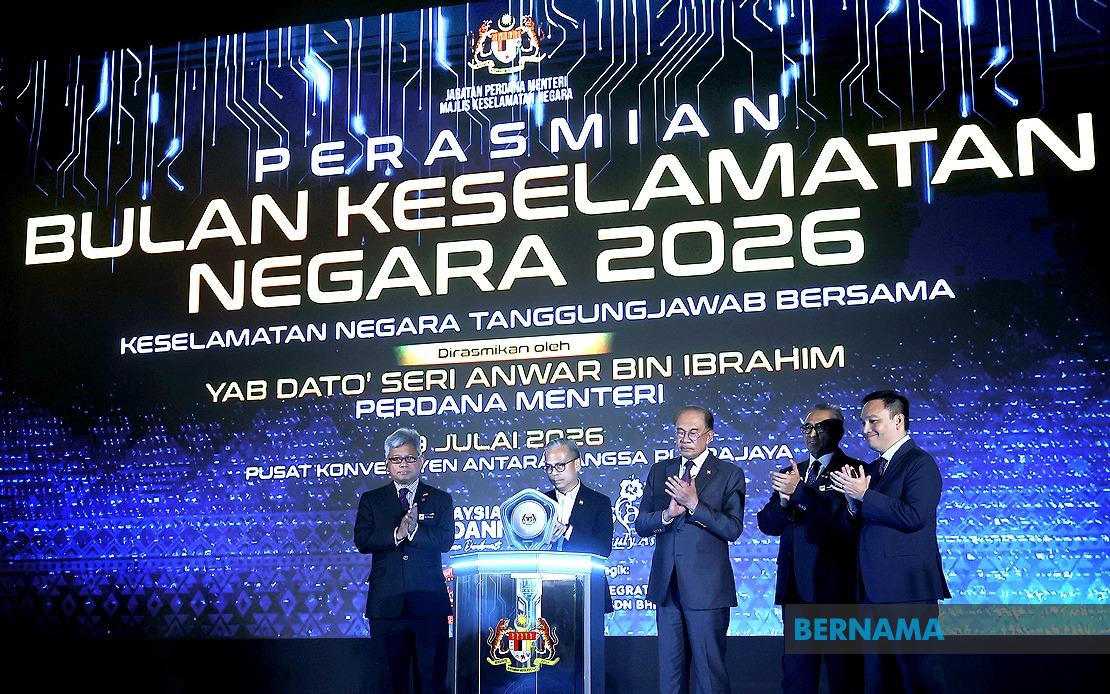
Prime Minister Datuk Seri Anwar Ibrahim has sounded an alarm about the persistent reliance on divisive rhetoric centred on state, racial and religious identity, contending that such narratives risk undermining national cohesion at a time when Malaysia faces mounting security pressures. Speaking at the inauguration of National Security Month 2026 in Putrajaya on July 9, Anwar stressed that political discourse dominated by these traditional fault lines distracts policymakers and citizens from the more substantive threats confronting the nation. His intervention comes as Malaysian security agencies grapple with emerging challenges spanning digital infrastructure vulnerabilities, cyber-espionage, and technologically enabled terrorism—domains that require unified rather than fractionalised national responses.
The Prime Minister's remarks represent a pointed critique of how Malaysian political culture continues to orbit around identity-based grievances that, while historically significant, increasingly crowd out space for discussion of issues with immediate bearing on public safety and prosperity. Anwar noted that during parliamentary sessions, colleagues routinely resort to rehashing longstanding positions on race, religion, and regional interests, consuming legislative time and political energy that might otherwise address urgent matters. This observation reflects frustration within the highest echelons of government at what officials perceive as an outdated policy discourse ill-suited to contemporary challenges. The accumulation of such divisive rhetoric, Anwar suggested, carries real security consequences by fragmenting the unified front necessary to counter sophisticated threats.
Malaysia's security environment has undergone profound transformation in recent years, introducing categories of risk that transcend traditional borders and demographic divides. Technological advancement has created new vectors for malicious activity—from infiltration of critical infrastructure to manipulation of public information through coordinated digital campaigns. These challenges demand rapid institutional learning and adaptive governance responses that cannot be effectively mounted when political attention remains fragmented across identity-based conflicts. Anwar's argument essentially contends that the cost of perpetuating divisive narratives is no longer merely social discord but concrete vulnerabilities in national defence and resilience.
The Prime Minister, who simultaneously holds the Finance Ministry portfolio, emphasised that governmental leadership across all departments and agencies bears responsibility for recalibrating institutional priorities and operational mindsets. He rejected the notion that existing security frameworks suffice, instead calling for proactive rather than reactive postures toward emerging threats. This distinction carries significant weight in security governance: reactive approaches respond to incidents after they occur, whereas proactive strategies anticipate threats and preempt their materialisation. Anwar's exhortation suggests dissatisfaction with bureaucratic inertia and calls for accelerated capability development among security agencies.
The gathering assembled key figures in Malaysia's security apparatus, including Communications Minister Datuk Fahmi Fadzil, Chief Secretary to the Government Tan Sri Shamsul Azri Abu Bakar, and National Security Council director-general Datuk Raja Nurshirwan Zainal Abidin. The composition of attendees underscores the interconnected nature of modern security challenges, which increasingly blur distinctions between military, law enforcement, cybersecurity, and information domains. Communications remains a critical security consideration precisely because digital platforms have become conduits for disinformation, recruitment of extremist actors, and coordination of potentially destabilising activities.
For Malaysian readers, Anwar's warning carries implications extending beyond government circles into broader society. The persistence of identity-based political appeals reflects genuine historical grievances and demographic realities that cannot be dismissed or legislated away. Yet the Prime Minister's intervention suggests a view that perpetual rehearsal of these tensions, particularly when channelled through inflammatory rhetoric, diverts collective attention and resources from threats that menace all Malaysians regardless of ethnic or religious identity. A cyber-attack on financial infrastructure, for instance, affects the economic security of all communities; a terrorist attack targets civilians across demographic categories.
Southeast Asia more broadly faces intensifying security pressures stemming from geopolitical competition, transnational criminal networks, and ideologically motivated extremism. Malaysia's particular geopolitical position—straddling critical maritime chokepoints and maintaining significant diaspora populations—renders it susceptible to regional instabilities. Anwar's argument implicitly positions Malaysia as requiring a security posture consonant with its strategic exposure, one that subordinates internal divisions to collective defence imperatives. This framing reflects thinking among regional security analysts who contend that Southeast Asian nations cannot afford the luxury of prolonged internal quarrelling.
The invocation of National Security Month provides institutional machinery for elevating these themes, channelling official messaging through dedicated communications and public education efforts. Such campaigns serve multiple functions: they remind the public of shared vulnerabilities, establish frameworks for understanding security beyond military confrontation, and attempt to reframe political discourse around resilience and collective interest. Whether such messaging penetrates public consciousness remains uncertain, particularly when competing political actors continue deriving benefit from identity-based appeals.
Anwar's warnings about technological and digital threats reflect genuine contemporary security doctrine across industrialised and emerging economies alike. Nations worldwide confront rapid proliferation of cyber capabilities, artificial intelligence deployment in military contexts, and the weaponisation of information systems. Malaysia, with growing digital integration across government and commerce, faces corresponding vulnerabilities requiring constant vigilance and capability enhancement. The Prime Minister's call for leaders to "quickly understand emerging technologies" suggests recognition that existing expertise may lag behind threat evolution.
The structural challenge underlying Anwar's intervention concerns whether exhortations from the highest political levels can genuinely redirect institutional behaviour and public discourse. Political incentives often reward divisive rhetoric over consensus-building, particularly in electoral contexts. Security threats, by contrast, reward unity and rapid response. Reconciling these competing incentives represents an enduring challenge for Malaysian governance, one that cannot be resolved through speeches alone but requires sustained institutional reform, resource allocation, and political will to resist divisions when they prove electorally advantageous.
Looking forward, the articulation of these concerns at National Security Month 2026 suggests the government intends positioning security consciousness as a unifying rather than divisive national project. Whether this repositioning succeeds depends on consistent reinforcement through policy actions, institutional incentives, and leadership example. Simultaneously, addressing legitimate underlying grievances that fuel identity-based appeals remains essential; security appeals lacking resonance with tangible improvements in governance and equity risk being perceived as instruments of control rather than expressions of genuine shared interest.

