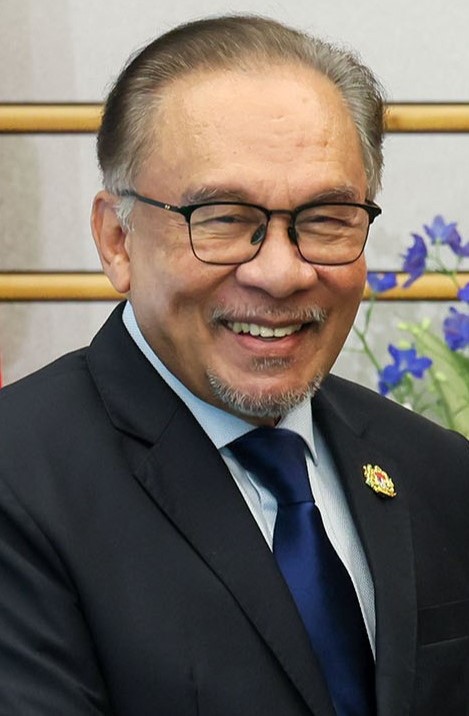
Prime Minister Datuk Seri Anwar Ibrahim returned to Johor on June 24 to oversee two community engagement events in Segamat, the second time in as many days he had ventured into the state. The twin programmes underscored the government's push to connect with voters and reinforce its policy initiatives on the ground as the countdown to the July 11 state election accelerated across Malaysia's southern corridor.
Segamat, situated approximately 200 kilometres from Johor Bahru, became the focal point of Anwar's schedule just days after his appearance in Bukit Gambir, Tangkak, where he unveiled the complete roster of Pakatan Harapan candidates contesting all 56 state assembly seats in the forthcoming election. That announcement represented a milestone moment in the coalition's election machinery, bringing together the collective strength of its three constituent parties as they prepared for an intense campaign period ahead of nomination day on June 27.
The centrepiece of Anwar's Segamat itinerary was the official launch of the MADANI KITA programme at Dataran Segamat at 5 pm, conducted in partnership with the district's Rukun Tetangga community groups. MADANI KITA functions as a structured initiative designed to foster neighbourly relations and cross-cultural understanding among residents, translating the government's broader policy objectives into tangible, grass-roots level interventions. By attaching his presence to such local-level engagement, Anwar signalled the administration's commitment to embedding its governance philosophy within the fabric of ordinary communities rather than restricting such messaging to formal state occasions.
The rationale behind MADANI KITA extends beyond symbolic representation. The programme explicitly aims to strengthen community cohesion across different ethnic and religious groups, a particularly salient objective in Johor's diverse demographic landscape. In a state where the electorate encompasses urban centres, agricultural towns, and plantation communities, initiatives that emphasise shared responsibility and mutual support can prove influential in shaping voter sentiment. The government's emphasis on neighbourhood-level activation reflects a recognition that election campaigns are ultimately won not through top-down announcements alone, but through sustained engagement that demonstrates tangible commitment to local concerns.
Following the formal MADANI KITA event, Anwar transitioned to a more relaxed community gathering, the "Jom! Makan Durian" programme scheduled for 6.30 pm at the Yayasan Bazaar site in Segamat. This deliberately casual approach to political engagement—gathering constituents around a shared Malaysian culinary experience—represents a departure from traditional formal politics. By choosing durian, one of Southeast Asia's most iconic and unifying food symbols, as the focal point for community interaction, the event combined dietary pleasure with implicit messaging about shared national identity and cultural continuity.
The strategic timing of these Segamat events cannot be divorced from the broader election timeline that dominated Johor's political calendar. With nomination day just three days away on June 27, early voting scheduled for July 7, and election day set for July 11, the window for candidate introduction and ground-level campaigning remained compressed. Anwar's personal appearance in the district underscored the hierarchy of Pakatan Harapan's priorities, suggesting that Segamat represented a contested terrain where coalition support required energising and consolidation.
The candidate slate announced in Tangkak comprised 20 representatives from PKR, 19 from Amanah, and 17 from DAP, distributed across all 56 state seats. This distribution reflected not merely a division of electoral territory but rather careful negotiation among coalition partners over seat allocation and resource deployment. For voters in constituencies like Segamat, understanding which party carried the Pakatan Harapan banner in their district became essential context for interpreting Anwar's visits and the coalition's campaign messaging.
For Malaysian observers watching developments in Johor, the state election assumed heightened significance as a bellwether for national political trends. As the country's second-largest state by population and a traditional stronghold of Umno influence, Johor's electoral outcome held implications for broader coalition dynamics at the national level. Anwar's deliberate cultivation of ground-level engagement in smaller towns and district centres, rather than concentrating solely on urban constituencies, signalled an attempt to broaden Pakatan Harapan's appeal across diverse demographic segments.
The MADANI KITA initiative itself deserves examination as part of a broader governance philosophy. MADANI, representing the government's development agenda centred on dignity, mutual respect, and equitable prosperity, had been positioned as the intellectual underpinning of administrative policy since the current administration took office. By operationalising this concept through community-level programmes that activated existing neighbourhood structures like Rukun Tetangga, the government attempted to translate high-level policy rhetoric into concrete, experiential benefits that voters could observe and participate in directly.
Segamat's selection as a venue for such high-profile engagement also reflected constituency-level calculations. The district encompasses both urban and rural demographics, with a population that includes significant Indian and Chinese communities alongside the Malay majority. This demographic complexity made it an ideal testing ground for messaging around interethnic harmony and inclusive governance, themes that Pakatan Harapan had emphasised as differentiating features of its political offer relative to competing coalitions.
As the election drew closer and campaign intensity accelerated, Anwar's willingness to venture repeatedly into specific constituencies suggested a focused effort to contest territory that might otherwise lean toward the opposition. The investment of a prime ministerial visit to a district like Segamat, complete with multiple scheduled events, indicated coalition confidence that sustained engagement could convert electoral opportunities into actual votes. The combination of formal policy launch and informal community gathering presented a dual approach designed to appeal to both institutional and emotional voter motivations.
The unfolding election season in Johor would ultimately test whether such ground-level initiatives could translate into electoral momentum for Pakatan Harapan. The compressed timeframe between candidate announcement and election day meant that every prime ministerial appearance and community programme carried outsized significance in shaping voter perception and turnout patterns. Anwar's Segamat visit exemplified the intensive engagement strategy the coalition had adopted to contest the state election with maximum organisational effort.