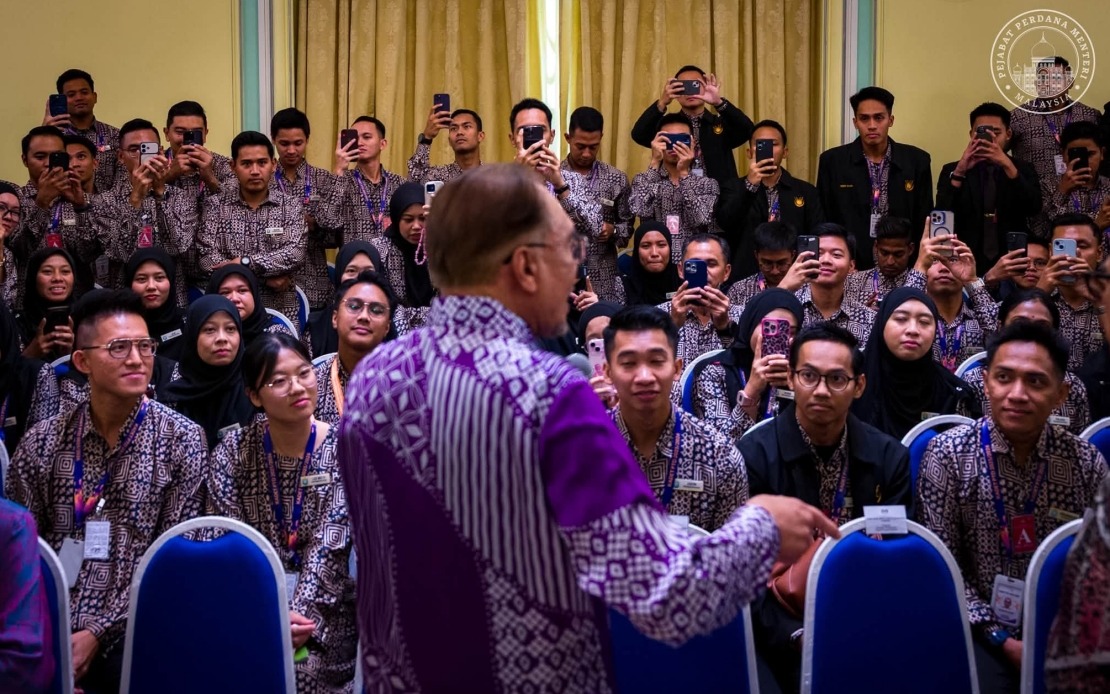
Prime Minister Datuk Seri Anwar Ibrahim has delivered a pointed message to the nation's public sector workforce, emphasising that those in civil service bear a fundamental responsibility to demonstrate integrity alongside professional competence, while remaining open to reform and transformation. Speaking during an engagement with Administrative and Diplomatic Service (PTD) officer cadets participating in the Postgraduate Diploma in Public Management programme at his Putrajaya office, Anwar outlined what he views as non-negotiable principles for modern governance in Malaysia.
The Prime Minister's remarks underscore growing recognition within government circles that institutional renewal and cultural change within the civil service are prerequisites for delivering on the administration's reform agenda. His emphasis on "the courage to embrace change" signals that maintaining the status quo is no longer tenable, particularly as Malaysia faces mounting pressures to improve service delivery, reduce bureaucratic inefficiency, and rebuild public confidence in state institutions. The focus on next-generation PTD cadets—Malaysia's highest-ranking civil servants—suggests deliberate effort to instil reform-minded thinking at the apex of the bureaucracy.
Anwar's framing of public service as a duty that transcends individual or departmental interests represents an implicit critique of compartmentalised, siloed governance that has historically characterised Malaysia's administrative machinery. By explicitly stating that national and public interests must supersede all other considerations, the Prime Minister is signalling intolerance for the kind of parochialism and inter-agency competition that has sometimes hindered whole-of-government policy implementation. This messaging carries particular weight given recurring complaints from businesses and citizens about inconsistent enforcement of regulations and conflicting directives across different governmental bodies.
The emphasis on efficiency alongside integrity reflects Anwar's apparent determination to combat perceptions that Malaysia's bureaucracy has become bloated and slow-moving. This dual focus addresses a persistent tension in public sector reform: the need to strengthen ethical standards and accountability mechanisms without paradoxically slowing decision-making processes or deterring capable individuals from pursuing civil service careers. In Southeast Asia's competitive landscape, where neighbouring economies have achieved leaner, more responsive public administrations, Malaysia's ability to maintain competitive governance standards will increasingly determine investor confidence and citizen satisfaction.
Integrity, as emphasised by the Prime Minister, carries multiple dimensions in the Malaysian context. Beyond the conventional understanding of financial probity and absence of corruption—issues that have occupied substantial attention in recent years—integrity encompasses professional honesty, intellectual rigour in policy analysis, and transparency in administrative decision-making. Anwar's invocation of this principle to a cohort of elite civil service cadets suggests expectations that rising leaders will model exemplary conduct and actively champion cultural transformation within their respective agencies and departments.
The timing of these remarks to PTD cadets merits consideration. The Postgraduate Diploma in Public Management programme represents a crucial developmental stage for officers destined for senior leadership positions within Malaysia's governmental apparatus. By directly engaging with these individuals during their professional formation, Anwar is attempting to embed reform orientations and ethical frameworks at the formative stage, potentially creating a cohort of administrators more aligned with the administration's modernisation objectives than were their predecessors. This generational approach acknowledges that systemic change within large bureaucracies typically requires cultivation of new leadership cohorts rather than wholesale replacement of existing personnel.
For Malaysian citizens and businesses, the practical implications of Anwar's message could prove substantial. A public service genuinely committed to embracing change and prioritising public interest over institutional convenience should theoretically translate into faster processing of licences and permits, more consistent application of regulations across regions and sectors, and greater responsiveness to citizen grievances. The reference to "good governance" specifically signals attention to transparency, accountability, and rule of law—dimensions of governance that consistently rank as concerns in public opinion surveys and business environment assessments across Malaysia.
The Prime Minister's statement also carries implicit messaging to civil servants concerned about ongoing reform initiatives and institutional restructuring. By framing change as a necessary and honourable component of public service, rather than as a threat or disruptive imposition, Anwar appears to be attempting to reposition reform narratives within the bureaucracy. This rhetorical reframing could prove important in managing potential resistance from entrenched interests within the civil service who may view efficiency drives, accountability mechanisms, or institutional reorganisation as threatening established hierarchies or comfortable practices.
Context matters considerably here. Malaysia's civil service has faced sustained criticism over recent years regarding effectiveness, morale, and public perception. Recruitment and retention challenges, particularly in technical and specialised fields, have reflected broader concerns about civil service attractiveness relative to private sector alternatives. By articulating a vision of public service as a meaningful vocation centred on national purpose and ethical conduct, rather than merely as employment, Anwar may be attempting to elevate the prestige and purposefulness associated with civil service careers—potentially assisting recruitment and retention efforts.
The focus on principled leadership, combined with capability requirements, reflects international best practice in public administration. Effective governance increasingly depends on civil servants who can navigate complex policy domains, manage stakeholder relationships, and make sound judgments under uncertainty—competencies that cannot be reduced to rule-following or procedural adherence. Anwar's emphasis on both integrity and the capacity to drive change suggests recognition that Malaysia's public sector must combine ethical standards with intellectual agility and innovation.
Looking forward, whether these principles translate into measurable improvements in public sector performance will depend substantially on implementation mechanisms, resource allocation, and sustained leadership commitment. Rhetoric about reform and integrity is considerably more common in government statements than meaningful institutional change. The real test will be whether departments and agencies across Malaysia's governmental spectrum actually restructure incentive systems, accountability frameworks, and operational procedures to genuinely reward efficiency, ethical conduct, and citizen-centredness. For Malaysia's economy and society, the success or failure of this civil service transformation agenda could significantly influence national competitiveness and institutional legitimacy over the coming decade.

