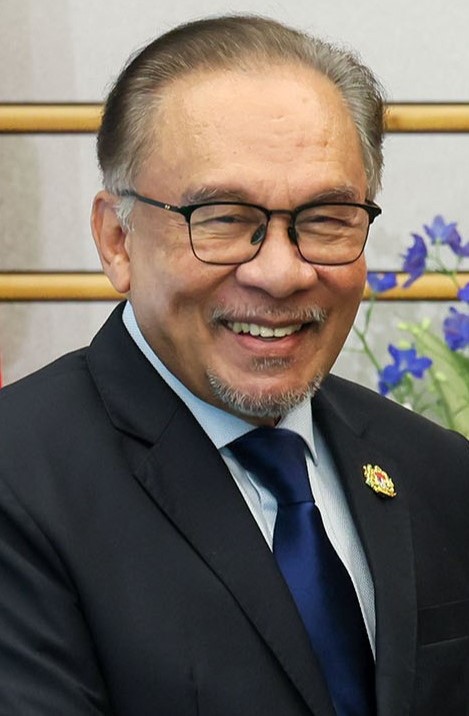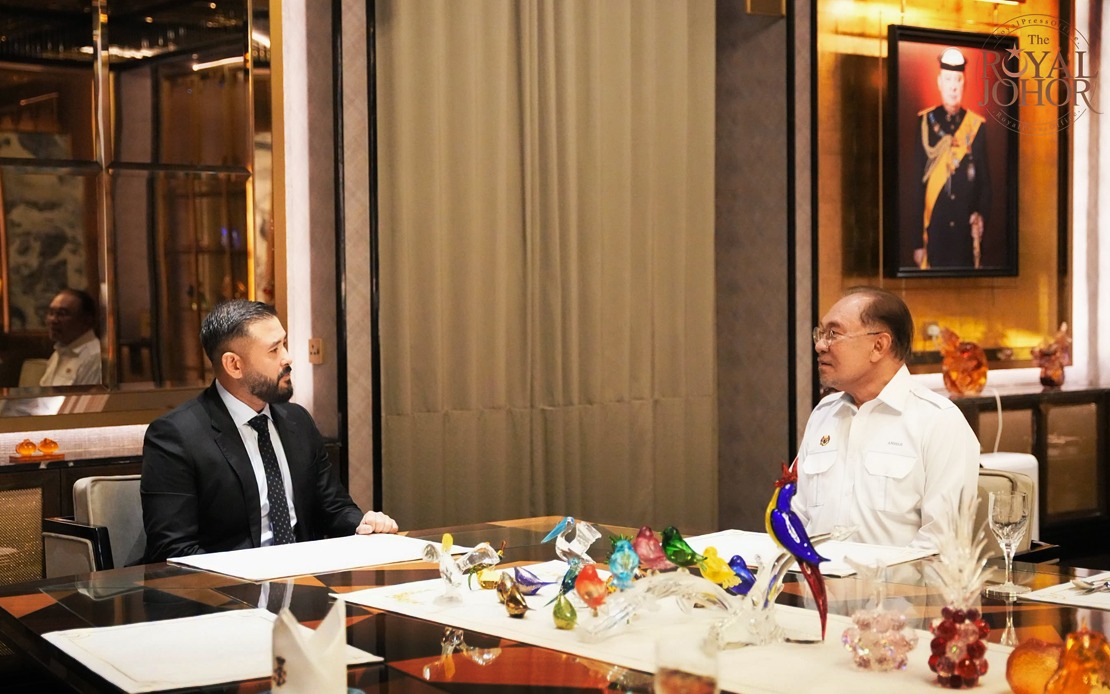
Prime Minister Datuk Seri Anwar Ibrahim has publicly acknowledged the Johor Regent, Tunku Mahkota Ismail, for extending a gesture of goodwill by granting him an audience in Kuala Lumpur. Speaking at an event in Tangkak on June 22 where Pakatan Harapan unveiled its slate of candidates for the 16th Johor state election, Anwar used the occasion to communicate a broader message about the appropriate role of royal institutions in Malaysia's political framework.
The Prime Minister's remarks reflected an underlying tension in Malaysian politics over how the monarchy should be positioned relative to electoral contests and partisan competition. Anwar specifically cautioned political parties—both within and outside the ruling coalition—against invoking the names and authority of the royal household to bolster their campaigns or deflect criticism. His observation that certain political actors "do not even dare engage in political fights, (yet) you use the King's name" carried an implicit rebuke to opposition elements he believed were attempting to leverage monarchical prestige for electoral advantage.
For Malaysian readers, this dynamic carries particular significance given the constitutional role of the Malay Rulers in the country's governance architecture. The Sultans and Regents function not merely as ceremonial figureheads but as custodians of Islam and Malay customs, with consultative influence over executive decisions. The fact that Anwar felt compelled to publicly defend his meeting with the Johor Regent—and to explicitly deny any political calculations behind it—underscores how sensitive the intersection of monarchy and partisan politics remains in the Malaysian consciousness.
Anwar's framing of the audience with Tunku Mahkota Ismail as substantive rather than symbolic reveals his strategy for managing relationships with state rulers while leading the federal government. He disclosed that during their meeting he had briefed the Regent on infrastructure and development projects that the Anwar-led administration has implemented across Johor, thereby anchoring the encounter in policy discussion rather than political pageantry. This approach reflects a deliberate effort to normalise executive-level engagement with the royalty without triggering accusations of currying favor or exploiting institutional prestige.
The gathering itself—held at Padang Bukit Gambir Extreme Park in Tangkak to announce PH candidates—drew senior coalition figures including DAP secretary-general Anthony Loke Siew Fook and Amanah president Datuk Seri Mohamad Sabu. Their presence reinforced the multi-ethnic character of the coalition, a crucial positioning for Johor where voter demographics span Malay-Muslim, Chinese, and Indian communities. The ceremonial unveiling of candidates in such a public setting serves multiple functions: it energises grassroots party workers, signals the coalition's organisational readiness, and provides a platform for leadership messaging.
Anwar's broader comments on his approach to the Malay Rulers paint a picture of consultation and respect tempered by assertiveness. He acknowledged that within these relationships, disagreement occurs naturally—he and the sultans sometimes advance counter-views to one another—yet he characterised his government's posture as one of good faith engagement. This narrative is particularly relevant for Southeast Asian readers who understand that the relationship between elected executives and hereditary monarchs requires careful calibration across cultures with deep royalist traditions.
The Prime Minister's explicit reference to Sultan Ibrahim, the current Yang di-Pertuan Agong, and his willingness to share counter-views while accepting royal counsel suggests a model of constitutional monarchy in which the sovereign retains substantive advisory authority without attempting to override elected government decisions. This equilibrium has historically defined Malaysia's system, though recent years have witnessed periodic friction between state rulers and federal administrations over matters ranging from royal expenditure to religious policy.
For Johor specifically, the relationship between the federal government and the Sultanate carries outsized weight. Johor is Malaysia's second-largest state by population and economy, and its ruler commands considerable respect within UMNO-affiliated circles and beyond. The Johor Regent, as the second-most prominent figure in the state hierarchy, acts as a key intermediary between palace politics and public administration. Anwar's investment in cultivating this relationship—and in publicly validating it—reflects recognition that Johor remains pivotal to any coalition's electoral prospects.
The election context cannot be overlooked. Johor voters will soon render judgment on the performance of both state and federal governments. Anwar's pre-emptive messaging about development achievements and his emphasis on respectful royal engagement serve to counter opposition narratives that may position PH as disrespectful toward traditional institutions. In Malaysian political discourse, questions about commitment to Islam, the monarchy, and Malay-Muslim interests frequently surface during campaigns, and Anwar appears determined to establish that his government takes such concerns seriously.
Yet there remains an interpretive tension in Anwar's public statements. His assertion that accepting an audience with Tunku Mahkota Ismail "answers petty political campaigns" implies that his political opponents have been exploiting royal connections or invoking royal displeasure to undermine his government. Without naming specific critics, he has signalled awareness of narratives circulating within opposition circles. This defensive posture, even when clothed in the language of principle, hints at the continuing vulnerability of the PH coalition on matters of institutional respect and legitimacy.
The emphasis on consultation and dialogue with the monarchy also reflects Anwar's broader political philosophy. Throughout his career, he has advocated for inclusive governance and institutional pluralism, even when his own power has been constrained. Now that he occupies the Prime Minister's office, he appears committed to demonstrating that pluralism extends upward to encompass the royal hierarchy, not merely downward to include civil society. This approach may enhance his legitimacy among traditional constituencies while simultaneously reassuring them that constitutional change or institutional disruption is not on the federal government's agenda.
As Malaysia navigates post-pandemic recovery and prepares for crucial electoral contests, the careful management of relationships between elected leadership and hereditary institutions will remain central to political stability. Anwar's public gratitude to the Johor Regent, far from being a mere courtesy, constitutes a significant statement about how federal-state relations and executive-royal relations ought to function within Malaysia's constitutional framework. For regional observers and Malaysian stakeholders alike, these dynamics merit close attention as they ultimately shape the legitimacy and resilience of Malaysia's political system.