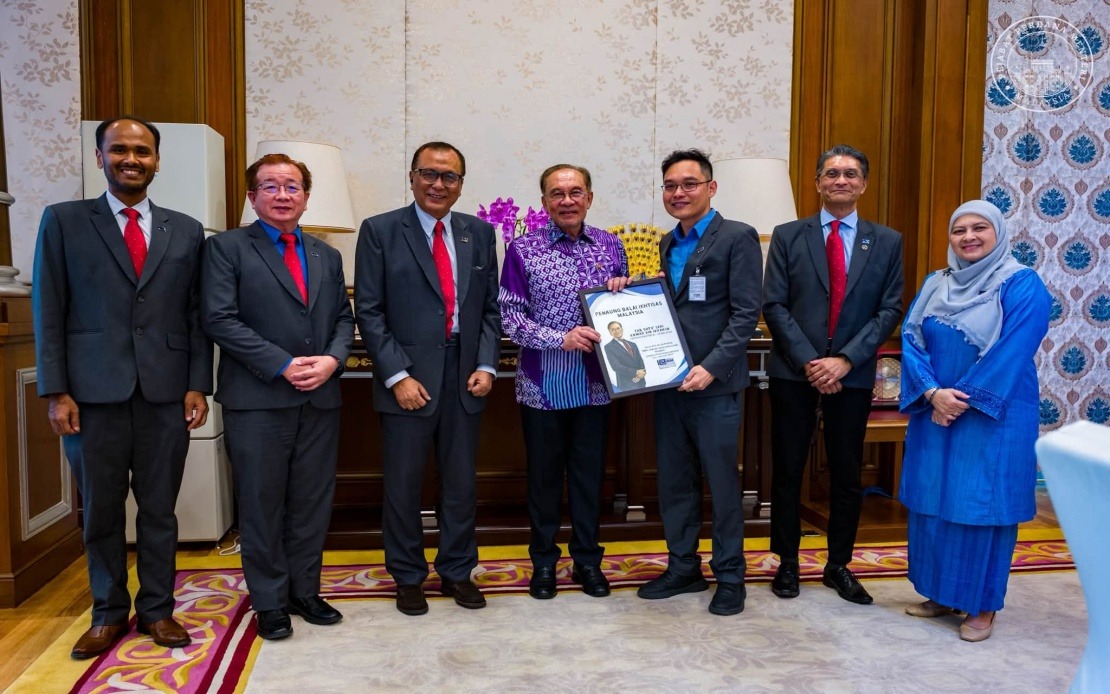
Prime Minister Datuk Seri Anwar Ibrahim has signalled that preparing Malaysia's professional workforce for artificial intelligence and nurturing skilled talent will remain central to the government's economic strategy. During discussions with a delegation from Balai Ikhtisas Malaysia (BIM), also known as the Malaysian Professional Centre, Anwar underscored how these twin priorities fit within broader efforts to establish Malaysia as a credible regional hub for professional excellence. The meeting, which followed a courtesy visit from BIM led by its president Prof ChM Dr Juan Joon Ching, reflects mounting recognition that professional competitiveness increasingly depends on digital fluency and adaptability in an AI-driven economy.
The emphasis on AI readiness carries particular weight for Malaysia's future trajectory. As artificial intelligence reshapes industries from finance and healthcare to manufacturing and services, professionals who lack foundational AI literacy risk being left behind in competitive labour markets. The government's focus on preparing the professional class signals an understanding that Malaysia cannot afford to lag behind regional peers like Singapore and South Korea in this critical domain. By engaging with organizations like BIM—which represents Malaysia's professional community—the administration is attempting to bridge the gap between policy intentions and on-the-ground implementation, ensuring that AI training and development programmes reach those who shape Malaysia's knowledge economy.
Talent development emerged alongside AI as equally pressing. Malaysia has long grappled with brain drain, as talented professionals seek opportunities abroad where they perceive greater remuneration, innovation environments, or career progression. The government's stated commitment to nurturing talent with integrity and competitive edge suggests recognition that retaining and developing home-grown expertise is vital for long-term prosperity. By partnering with professional bodies, the government hopes to create ecosystems where Malaysian talent can flourish domestically, reducing incentives to migrate and building local capacity in high-value sectors.
Anwar's framing of professionals as strategic partners in national competitiveness reflects a shift in how government views the professional class. Rather than treating them as passive beneficiaries of policy, the administration positions them as active agents in driving innovation and advancing the MADANI agenda—the government's overarching vision for the people's wellbeing. This collaborative approach is significant because it acknowledges that sustained economic growth requires alignment between government direction and professional sector capabilities. Professionals working in law, engineering, finance, architecture, and medicine hold considerable influence over how Malaysia develops and competes globally.
The MADANI agenda, which emphasizes prosperity, sustainability, and inclusion, provides the broader context for these discussions on professional development. Within this framework, AI readiness becomes not merely a technological issue but a social one—determining who gains access to high-income opportunities and whether Malaysia can create quality employment at scale. Similarly, talent development directly supports the agenda's ambition of raising living standards through innovation-driven growth. When Anwar speaks of nurturing talent with vision to lead Malaysia ahead, he is articulating a long-term national strategy rooted in human capital rather than resource extraction alone.
The Malaysian context adds further complexity to these discussions. Malaysia competes with neighbouring Thailand, Indonesia, and Vietnam for foreign investment and regional influence. Each is racing to position itself as a technology and innovation hub. Malaysia's traditional advantages—a relatively educated workforce, established financial sector, and political stability compared to some neighbours—are being eroded as competitors invest heavily in AI infrastructure and talent pipelines. BIM's engagement with the Prime Minister suggests the professional community is alert to these dynamics and seeking government partnership to enhance Malaysia's standing.
Acceptance of the invitation to Hari Ikhtisas Malaysia, the event honouring professionals' contributions to national development, carries symbolic weight beyond ceremony. Prime ministerial attendance elevates the event's profile, signalling that professional excellence matters at the highest levels of government. For professionals themselves, such recognition can be motivating, especially if it translates into concrete support for development programmes, research funding, and career advancement pathways. The government's willingness to honour professional contributions suggests confidence that this sector will deliver on economic and innovation targets.
The discussion also reflects longer-term demographic and economic shifts. Malaysia's working-age population is gradually aging, while automation and AI accelerate job displacement in lower-skill sectors. Upskilling the existing professional workforce becomes critical for maintaining economic dynamism. Additionally, as Malaysia seeks to move up global value chains, the competitive advantage increasingly shifts from labour cost to intellectual capital and innovation. Professionals who can leverage AI tools, lead digital transformation, and innovate in their respective fields become indispensable.
Strengthening ties between government and professionals, as Anwar emphasized, requires more than rhetorical commitment. It demands investment in continuous learning programmes, research partnerships, regulatory frameworks that encourage professional innovation, and career structures that reward excellence. Malaysia's success in positioning itself as a regional professional hub will depend on whether government backing translates into tangible support mechanisms and whether the professional community feels genuinely empowered to shape Malaysia's future.
The meeting with BIM thus represents more than a routine diplomatic courtesy. It encapsulates government recognition that Malaysia's competitive advantage in an increasingly AI-driven, knowledge-intensive global economy rests fundamentally on developing and retaining world-class professional talent. Whether this recognition translates into effective policy implementation and sustained resource commitment will largely determine Malaysia's economic trajectory over the next decade.

