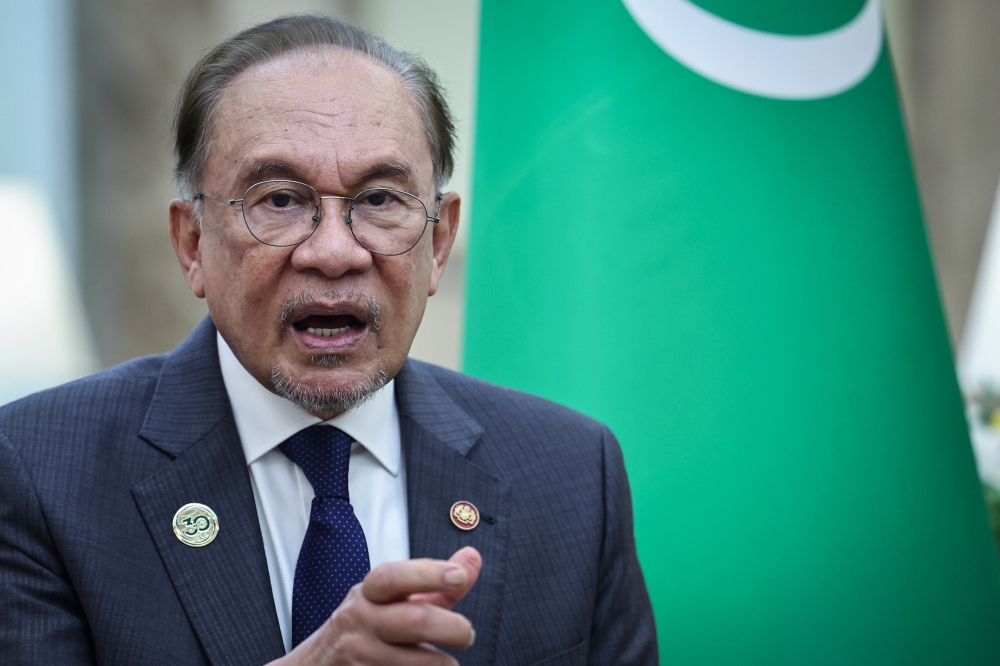
Prime Minister Datuk Seri Anwar Ibrahim has paid his respects to the late John L. Esposito, one of the world's most influential scholars on Islam and international relations, describing him as a beacon of wisdom who dedicated his life to fostering genuine dialogue between the Muslim world and the West. The Georgetown University professor, who passed away recently, earned widespread recognition across the Islamic world for his balanced, nuanced scholarship that challenged stereotypes and promoted mutual understanding during a period marked by considerable geopolitical tension.
Esposito's passing represents a significant loss for interfaith scholarship and academic discourse in the region. Through his prolific writing, extensive research, and institutional leadership, he shaped how millions of people understood Islam and Muslim societies at a critical juncture in global history. His work became particularly influential from the late twentieth century onwards, as Western nations grappled with questions about Islam's role in modern politics and society. Rather than adopting sensationalist approaches common in some media coverage, Esposito grounded his analysis in rigorous historical research and direct engagement with Muslim communities across multiple continents.
Anwar's tribute underscores the particular resonance Esposito's scholarship held throughout Southeast Asia and the broader Muslim world. The scholar's books, lectures, and public commentary reached beyond academic circles, influencing policymakers, journalists, and educated publics seeking authoritative perspective on complex religious and political issues. His willingness to engage substantively with Islamic movements and political developments, neither condemning them wholesale nor uncritically celebrating them, set him apart from many Western observers. This measured approach earned him credibility among diverse audiences, from government officials to civil society leaders.
During his long academic career, Esposito served as director of Georgetown University's Center for Muslim-Christian Understanding, a position that allowed him to institutionalise dialogue and collaborative research across religious and cultural boundaries. The centre became a gathering place for scholars, activists, and officials interested in promoting evidence-based understanding of Islam and Muslim-majority regions. His leadership demonstrated a commitment to practical bridge-building rather than merely theoretical engagement with questions of religious coexistence.
The scholar's influence extended into specific policy conversations relevant to Malaysia and the region. His analyses of Islamic movements in Southeast Asia, North Africa, and the Middle East helped international audiences recognise the diversity within Islam and the particular contexts shaping political developments in Muslim societies. Rather than treating Islam as a monolithic force, Esposito's work highlighted regional variations, historical specificities, and the agency of Muslim actors in shaping their own societies. This approach proved invaluable for policymakers and analysts seeking nuanced understanding beyond simplistic civilisational frameworks.
Esposito's passing arrives at a moment when his core message—that meaningful dialogue between Islam and the West remains both possible and necessary—continues to deserve serious attention. The geopolitical landscape has shifted considerably since he began his academic work, yet the fundamental challenges he addressed persist. Rising global instability, ongoing conflicts affecting Muslim-majority regions, and polarised public discourse in many Western countries underscore the relevance of his lifetime commitment to fostering cross-cultural comprehension and intellectual honesty.
The scholar's legacy encompasses numerous influential publications that became standard texts in university courses across the United States, Europe, and Asia. Works examining Islamic political movements, the relationship between Islam and democracy, and the experiences of Muslims in Western societies shaped how entire generations understood these critical issues. His ability to communicate complex ideas in accessible language contributed to public intellectual discourse while maintaining scholarly rigour. This dual capacity—to inform both academic specialists and general audiences—distinguishes his contribution to global knowledge.
In the Malaysian context, Esposito's scholarship offered valuable perspective for a multi-religious society navigating its own questions about Islam's role in public life. His examinations of how different Muslim-majority societies balanced religious tradition with modern governance, secularism with religious identity, and national unity with community autonomy provided comparative frameworks useful for local analysis. Southeast Asian intellectuals and officials found in his work tools for thinking through regional challenges without importing wholesale frameworks developed in different geographical and historical contexts.
Anwar's decision to publicly mourn Esposito reflects the esteem in which he held the scholar's contribution to human understanding and peaceful coexistence. As Prime Minister of a nation committed to interfaith harmony and moderate Islam, Anwar recognises the particular importance of intellectuals like Esposito who demonstrate through rigorous scholarship that appreciating Islam's complexity and recognising Muslim agency need not mean abandoning critical analysis or intellectual honesty. The scholar's passing removes from the world a voice that Malaysia, Southeast Asia, and the broader global community will struggle to replace.

