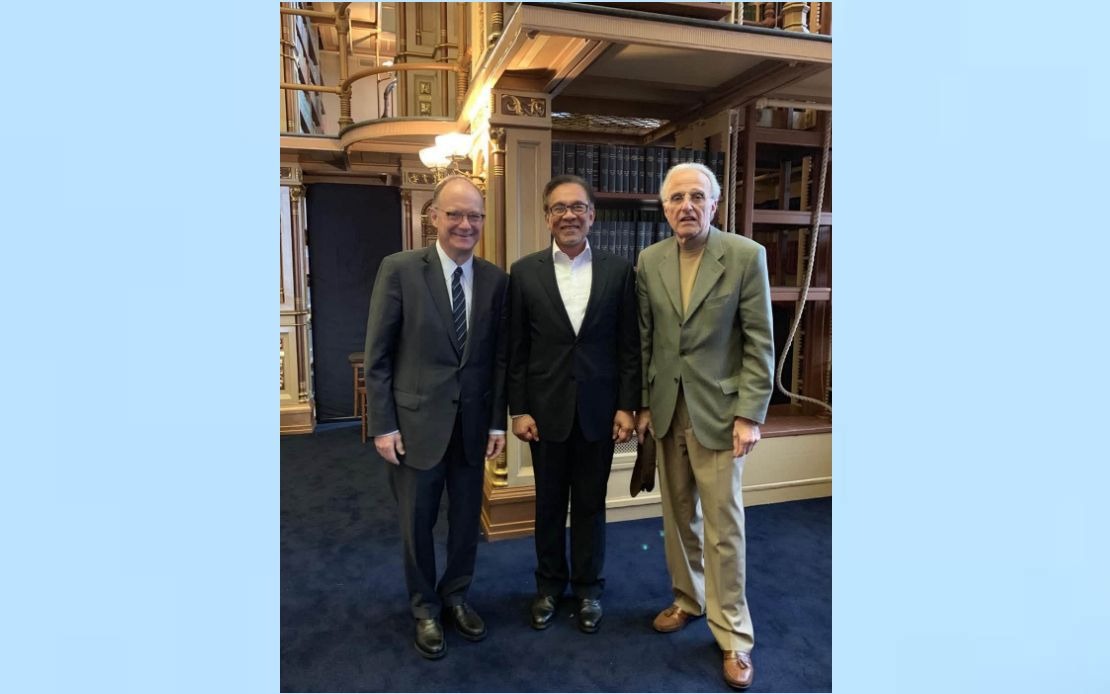
Prime Minister Datuk Seri Anwar Ibrahim has expressed deep sorrow at the passing of Professor John L. Esposito, a towering figure in Islamic scholarship whose work shaped Western understanding of Islam for generations. In a Facebook tribute on July 16, Anwar highlighted the profound intellectual and personal impact Esposito had on his own life and on global conversations about religion and civilisation.
The relationship between Malaysia's premier and the Georgetown University scholar extended across more than five decades, beginning in the early 1970s when they first encountered one another. That long arc of friendship provided Anwar with a unique vantage point from which to assess Esposito's extraordinary contribution to bridging the gap between the Islamic world and Western academia. For a Malaysian leader navigating complex questions of identity, faith, and international relations, Esposito's scholarship offered both intellectual rigour and a model of principled engagement.
Esposito's most enduring institutional legacy was the Centre for Muslim-Christian Understanding at Georgetown University, which he founded to create formal space for scholars from different religious traditions to engage substantively with one another. This initiative was neither abstract nor merely symbolic; it represented a deliberate attempt to move beyond polemics and toward genuine intellectual exchange at a time when such conversations were increasingly fraught. Anwar noted that Esposito's broader body of work, including his co-authorship of Makers of Contemporary Islam, provided frameworks for understanding the diversity and complexity within the Muslim world itself—a corrective to oversimplified narratives that dominated much Western commentary.
The Prime Minister's characterisation of Esposito as someone who "built bridges where others were content to build civilisational barriers" speaks to the scholar's countercultural stance within both Western academia and public discourse. During periods when clash-of-civilisations narratives dominated, Esposito insisted on the possibility and necessity of mutual comprehension. His work demonstrated that understanding Islam required engagement with primary sources, historical context, and the voices of Muslims themselves—not external impositions of meaning.
Esposito's books aimed at general audiences proved particularly influential in shaping public opinion at critical junctures. "What Everyone Needs to Know About Islam" and "Who Speaks for Islam?" made sophisticated analysis accessible without sacrificing accuracy or nuance. This democratisation of Islamic studies was especially consequential in the immediate aftermath of September 11, 2001, when Western governments and publics desperately needed frameworks for comprehending Islam that moved beyond caricature and fear. Esposito's accessible yet rigorous approach offered an alternative to both inflammatory rhetoric and defensive apologetics.
Anwar's personal reflection underscores a dimension of Esposito's character often overlooked in assessments focused solely on his publications. The Prime Minister emphasised that Esposito possessed a rare combination of scholarly discipline and human warmth, being "as generous in private conversation as he was rigorous on the page." This suggests that Esposito's influence extended through mentorship and personal relationships as much as through his published work, particularly for Muslim leaders seeking to engage constructively with the West without compromising their own intellectual integrity or religious commitments.
For Malaysia specifically, Esposito's passing carries particular significance. As a Muslim-majority nation navigating its own complex relationship with the West, with diverse religious communities within its borders, and with aspirations toward interfaith harmony, Malaysia has long benefited from scholarship that rejects false dichotomies between Islam and modernity, between faith and reason, between Muslim identity and participation in global affairs. Esposito's work provided intellectual validation for approaches that many Malaysian policymakers and scholars had themselves been pursuing.
The tribute also reflects a broader Malaysian diplomatic orientation. Anwar's consistent emphasis on interfaith dialogue and civilisational understanding has made him a natural interlocutor with figures like Esposito. The relationship between Malaysia's leader and this influential Western scholar exemplifies the kind of intellectual engagement that can transcend geographical and cultural boundaries when rooted in genuine respect and shared commitment to understanding rather than judgment.
Looking forward, Esposito's scholarship will likely continue shaping how subsequent generations engage with Islam and Muslim societies. His insistence that understanding requires listening to Muslim voices themselves, that Islam encompasses remarkable diversity, and that Muslims and the West need not be locked in perpetual conflict, remains countercultural enough to retain power. Malaysian scholars, policymakers, and students will continue drawing on his work as they navigate their own questions about identity, modernity, and international engagement.
Anwar's farewell extended to Esposito's widow, Jean, and to the broader community of colleagues and students influenced by his teaching and mentorship. The Prime Minister's assertion that Esposito remained "to the end, a true friend to the Muslim world" captures both the scholarship and the character of a man who devoted his life to demonstrating that genuine understanding across religious and cultural lines remains possible, necessary, and profoundly worthwhile.

