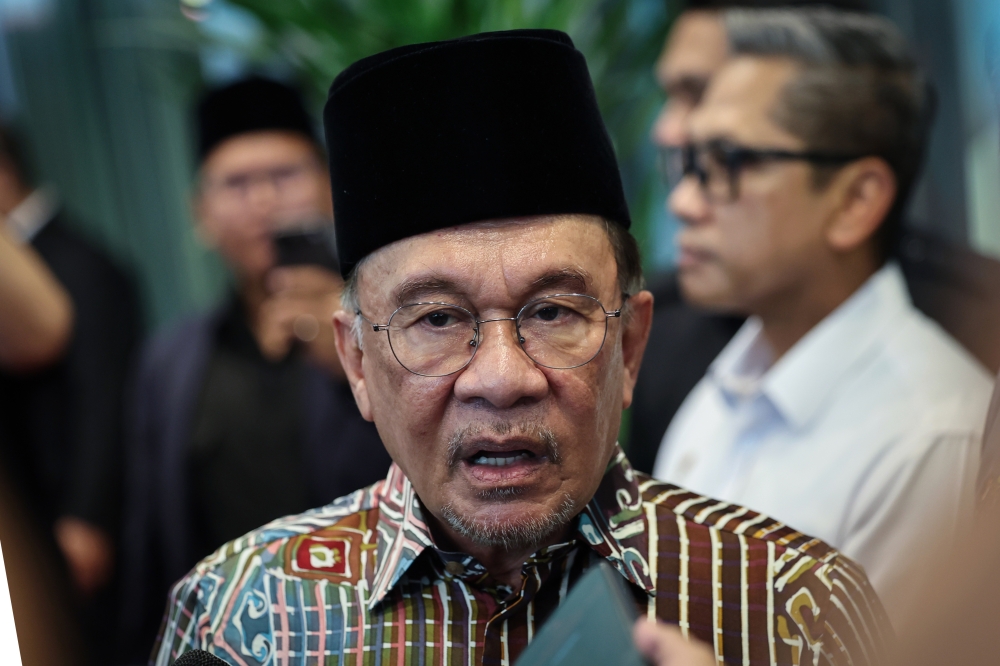
Prime Minister Datuk Seri Anwar Ibrahim has instructed law enforcement and relevant authorities to launch a comprehensive investigation into circumstances surrounding the deaths of three police officers in Beaufort, as the incident raises critical questions about officer safety and operational protocols in Malaysia's eastern states.
The Prime Minister's intervention signals the gravity with which the federal government views the incident, particularly given the prominent position of police forces within Malaysia's security apparatus and the public concern surrounding officer welfare. Anwar's directive emphasizes three key requirements: the investigation must be conducted with complete transparency, carried out with appropriate urgency, and delivered without delay to ensure timely accountability and closure for the affected families and the broader law enforcement community.
Beaufort, located in Sabah's interior region, represents one of Malaysia's more remote and operationally challenging jurisdictions for police deployment. The town has periodically featured in national security discussions due to its proximity to maritime borders and historical incidents requiring coordinated law enforcement responses. The deaths of serving officers in this location underscore ongoing operational complexities that border districts face in maintaining order and managing security threats.
The Prime Minister's personal directive reflects broader institutional scrutiny of police operational procedures, particularly in frontier areas where officers frequently operate with limited immediate backup and face distinct environmental and logistical constraints. Such investigations often examine multiple dimensions including adherence to safety protocols, adequacy of training and equipment, clarity of operational orders, and whether preventative measures were sufficiently robust given the circumstances.
Transparency has become an increasingly significant focus in Malaysian law enforcement oversight, particularly following previous incidents that generated public concern. By explicitly prioritizing this dimension, Anwar's directive signals that the government expects investigators to operate under heightened public accountability and to make findings accessible to relevant stakeholders. This approach reflects evolving governance standards that emphasize institutional credibility and public confidence in official processes.
The Beaufort incident will likely trigger reviews of police deployment protocols across Sabah and potentially other frontier regions. Safety considerations in remote stations often involve questions about staffing levels, emergency response capabilities, communication infrastructure, and coordination with other security agencies. Investigators will presumably examine whether current arrangements adequately protect officers working in these challenging environments.
Families of the deceased officers and their colleagues within the Beaufort police station will be anticipating both thorough investigation and official support mechanisms. Malaysian police culture traditionally emphasizes camaraderie and institutional solidarity, meaning that incidents resulting in officer deaths typically generate significant emotional responses within the service and heightened expectations regarding official responsiveness from senior leadership.
The timing and nature of Anwar's intervention suggests that initial reports prompted sufficient concern at the highest governmental level to warrant direct Prime Ministerial involvement rather than reliance on standard institutional channels. This pattern typically indicates either unusual circumstances surrounding the deaths or public and media attention that demands senior-level engagement and visible government action.
Sabah's law enforcement landscape operates within distinct geographical and administrative contexts that differentiate it from Peninsular operations. Officers in eastern Malaysian states frequently confront dispersed population centers, challenging terrain, and maritime security considerations that shape their operational environment. Understanding these contextual factors will be essential for investigators assessing whether procedures were appropriately calibrated for local conditions.
The investigation's findings will likely inform policy discussions across multiple government agencies responsible for security sector operations and personnel safety. Recommendations emerging from this process may lead to protocol revisions, additional resource allocation to frontier stations, or enhanced training initiatives designed to address identified gaps. Such investigations increasingly serve dual purposes as both accountability mechanisms and instruments for institutional improvement.
Public reaction to the incident and the government's response will be monitored closely, particularly in Sabah where community relations with law enforcement agencies carry political and social significance. How thoroughly and impartially the investigation proceeds will substantially influence public confidence in official processes and perceptions of whether the police force adequately prioritizes member safety. The Prime Minister's personal involvement signals commitment to meeting these expectations, though actual execution will determine whether the directive translates into meaningful accountability and institutional learning.

