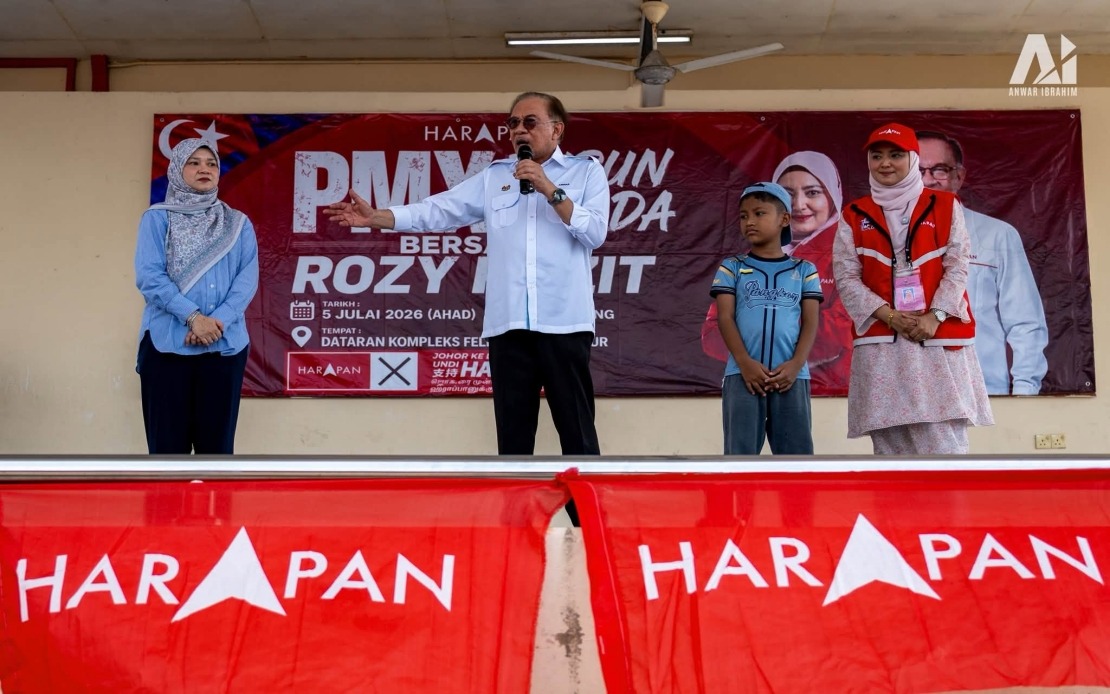
Prime Minister Datuk Seri Anwar Ibrahim has opened up about an encounter that left a lasting impression on him—a chance meeting with nine-year-old Muhammad Afif Ikhwan at Felda Palong Timur in Segamat, where the boy had journeyed through an oil palm plantation alongside his grandmother in the hope of seeing the nation's leader. The encounter, which lasted only briefly, moved the Prime Minister so profoundly that he subsequently arranged for an associate to visit young Muhammad Afif and present him with a bicycle as a memento of the meeting.
In a Facebook post reflecting on the incident, Anwar Ibrahim elaborated on what he described as the remarkable determination behind the boy's quest. The Prime Minister noted that what might seem to observers like an inconsequential childhood dream had been significant enough to inspire Muhammad Afif's grandmother, 58-year-old Rosimah Mohammad from Kampung Pudu in Segamat, to navigate her motorcycle through the challenging terrain of oil palm plantation tracks. This act of devotion by the elderly woman was undertaken solely to grant her grandson the opportunity to be in the Prime Minister's physical presence, even if only for a fleeting moment.
The pivotal moment itself unfolded when the boy managed to reach his small hand through the gathered crowd, and the Prime Minister reciprocated by shaking hands with him before inviting Muhammad Afif onto the stage at the Felda venue. Reflecting on this exchange, Anwar Ibrahim expressed genuine surprise at the profound emotional resonance the brief interaction had generated. He acknowledged that he had not anticipated such a momentary connection could carry such weighty significance for the young boy or create such a lasting impression that would compel him to take the gesture further.
Beyond the personal narrative, the Prime Minister used the occasion to articulate a broader philosophical message about the imperative of maintaining human compassion amid the demands of high office. He emphasised that regardless of how demanding the management of national affairs becomes, or how pressing the major challenges facing the country may seem, public servants must remain committed to demonstrating genuine concern for others and exhibiting humanity in their interactions. This sentiment reflects a leadership philosophy that prioritises connection with citizens at the grassroots level, particularly vulnerable populations in rural areas such as Felda settlements.
The story of Muhammad Afif and his grandmother also underscores the aspirations that exist within Malaysia's agricultural communities. The Felda scheme, which encompasses thousands of families dependent on palm oil cultivation, represents a significant demographic that has historically felt distant from national leadership. By highlighting this encounter, Anwar Ibrahim sends a signal that the government acknowledges and values the dreams and dignity of citizens living in these settlements, however modest those dreams may appear to urban observers.
Anwar Ibrahim articulated his hope that this brief encounter would crystallise into a cherished memory that would inspire Muhammad Afif throughout his formative years. The Prime Minister expressed confidence that the experience would motivate the boy to pursue his education diligently and ultimately contribute meaningfully to his family unit, his local community, and the broader Malaysian nation. Such aspirational messaging is significant in contexts where young people from disadvantaged rural backgrounds may lack visible role models or believe their circumstances limit their potential.
The gesture of presenting a bicycle to the boy carries symbolic weight beyond its material value. For a child in a rural plantation area, a bicycle represents mobility, independence, and access—practical assets that can facilitate schooling and broader community engagement. The fact that the Prime Minister personally ensured this gift was delivered demonstrates a commitment to translating emotional connection into tangible support, even in small ways that might ordinarily be overlooked by higher levels of government.
Rosimah Mohammad's determination to traverse oil palm plantation terrain on a motorcycle reflects broader patterns of sacrifice observed among family members in rural Malaysia who pursue opportunities, however slim, for their relatives to access better prospects or experiences. Her willingness to undertake this journey reveals the deep investment extended family members make in supporting younger generations' aspirations and hopes. Such stories, when elevated to national discourse through leadership platforms, validate the experiences and struggles of rural Malaysian communities.
The incident also highlights the power of human-centred governance and the value of direct engagement between political leaders and ordinary citizens. In an era where political communication often flows through formal channels and media intermediaries, spontaneous moments of genuine human connection can resonate deeply and build trust in institutions. For families in Felda communities who may feel marginalised within Malaysia's development narrative, such acknowledgement from the Prime Minister carries disproportionate significance.
Moving forward, the story of Muhammad Afif represents an opportunity to examine how Malaysia's government engages with rural communities and addresses the developmental gaps between urban and agricultural regions. The Felda scheme, while historically important to Malaysia's economy, has faced challenges including declining commodity prices and demographic pressures. Stories like this, when coupled with substantive policy attention, can help ensure that rural constituents receive equitable attention and investment in education, infrastructure, and economic opportunity.
The Prime Minister's reflection on this encounter ultimately conveys a message about the human dimension of governance—that behind statistics and policy frameworks exist individual aspirations and family bonds that deserve recognition and respect. Whether this sentiment translates into concrete improvements in support for Felda communities and rural Malaysian families remains to be seen, but the public acknowledgement itself represents an important step toward centering the lived experiences of ordinary Malaysians in national conversation.

