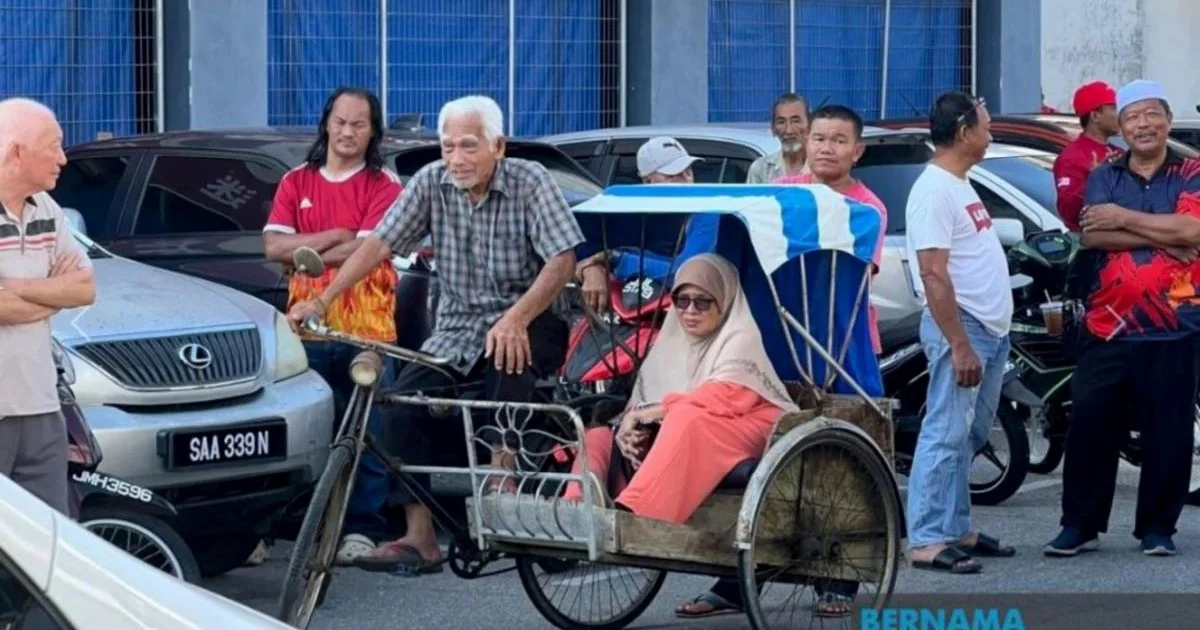
Prime Minister Datuk Seri Anwar Ibrahim has publicly acknowledged the heartfelt gesture of an elderly man whose determination to fulfil his wife's dying wish demonstrates the profound human connections that transcend age, station, and circumstance. The 86-year-old trishaw rider, driven by compassion and devotion to his spouse, pedalled his bicycle-rickshaw nearly a kilometre to secure a meeting with the nation's leader, an endeavour that has touched the Prime Minister's heart and resonated with many Malaysians confronted with the poignancy of the moment.
The incident underscores a dimension of Malaysian society often overshadowed by political discourse and economic headlines—the persistence of traditional livelihoods and the dignity of those who continue working well into their later years. Trishaw riding remains a visible yet frequently overlooked component of urban transportation in cities across Malaysia, operated predominantly by ageing individuals whose livelihood depends on physical exertion that most would find prohibitive at such an advanced age. The trishaw operator's willingness to undertake this journey, despite the physical toll such effort would demand of someone in their ninth decade, speaks to a value system where family bonds and honouring a spouse's wishes supersede personal hardship.
Anwar's public expression of gratitude carries significance beyond mere courtesy. By acknowledging this act, the Prime Minister has validated the experiences of Malaysia's elderly working population and highlighted the intersecting challenges of ageing, economic vulnerability, and the absence of adequate social safety nets for those forced to remain economically active. The gesture serves as a subtle reminder to policymakers of the lived realities of senior citizens who, rather than enjoying retirement, continue to navigate the rigours of daily labour to sustain themselves and their families.
The story resonates particularly in the Malaysian context, where traditional transport operators have seen their economic relevance diminished by motorised alternatives and modern ride-hailing services. Trishaws, once the backbone of urban short-distance mobility, now occupy a niche market servicing tourists and nostalgic travellers in heritage zones. For the elderly drivers who depend on this income, adaptation has often proved impossible, and the transition to retirement remains unattainable. This narrative, then, becomes emblematic of broader questions about economic inclusion, the dignity of labour, and whether contemporary Malaysia adequately supports its ageing citizens.
The wife's wish to meet the Prime Minister, though the source material does not elaborate on her circumstances, hints at a personal story of significance—perhaps a long-held dream, a moment of closure, or an acknowledgment she wished to convey directly. The fact that her husband would undertake considerable physical exertion to facilitate this meeting illustrates the enduring commitment in long-term partnerships and the lengths to which individuals will go to honour their spouse's desires. In an era increasingly characterised by instrumental relationships and transactional interactions, such devotion carries a quiet power.
Anwar's response demonstrates political acumen alongside genuine empathy. By publicly recognising this encounter, the Prime Minister aligns himself with values of respect for elders, appreciation for dedication, and acknowledgment of the ordinary citizenry whose lives comprise the nation's fabric. Such moments, whether spontaneous or orchestrated, contribute to political perception and public sentiment. They provide counterweight to perceptions of distant leadership and suggest a Prime Minister attentive to human stories beyond the corridors of power.
The implications for Malaysia's approach to elderly welfare warrant consideration. The country's demographic profile is shifting, with projections indicating a rapidly ageing population over the coming decades. Current policies and institutional frameworks for supporting seniors remain inadequate in many respects. Stories like this, while touching, should not substitute for systematic social protection. The narrative danger lies in celebrating individual resilience and family devotion as alternatives to comprehensive, state-level solutions for elderly poverty and economic security.
For younger Malaysians and international observers, the incident offers a window into local culture and values. It demonstrates the continued reverence for political leadership in Malaysian society and the willingness of citizens to undertake personal effort to access their elected representatives. It also illustrates the persistence of informal economies and the centrality of family obligations in Malaysian life, even when these circumstances reflect underlying structural vulnerabilities.
The trishaw rider's journey also underscores the practical accessibility challenges facing Malaysia's elderly. While the distance of nearly a kilometre might seem modest, undertaking it on foot or via a manually-powered vehicle at 86 years old represents a significant physical endeavour. The encounter implicitly raises questions about public infrastructure, transport accessibility, and whether Malaysia's cities adequately accommodate those with reduced mobility. Accessible, affordable, and dignified options for elderly citizens to navigate urban spaces remain aspirational rather than guaranteed.
Anwar's public thanks, while appreciated by the elderly couple involved, ideally serves as a catalyst for broader reflection. The story should prompt conversations about pension adequacy, healthcare access for seniors, alternative livelihoods for ageing workers, and whether rapid modernisation has left behind those unable to compete in contemporary labour markets. Malaysia's response to its ageing population will define the country's social character and determine whether future generations face similar circumstances to those confronting today's elderly workers.
Ultimately, the trishaw rider's pedalled pilgrimage represents both an inspiring testament to human devotion and a subtle indictment of systemic inadequacies. While celebrating individual virtue and family loyalty, society must simultaneously ensure that such extraordinary efforts become unnecessary—that elderly citizens enjoy security, dignity, and access to their leaders without requiring physical sacrifice. The Prime Minister's acknowledgment is welcome; transforming it into substantive policy improvements for Malaysia's seniors would represent the genuine tribute such dedication deserves.

