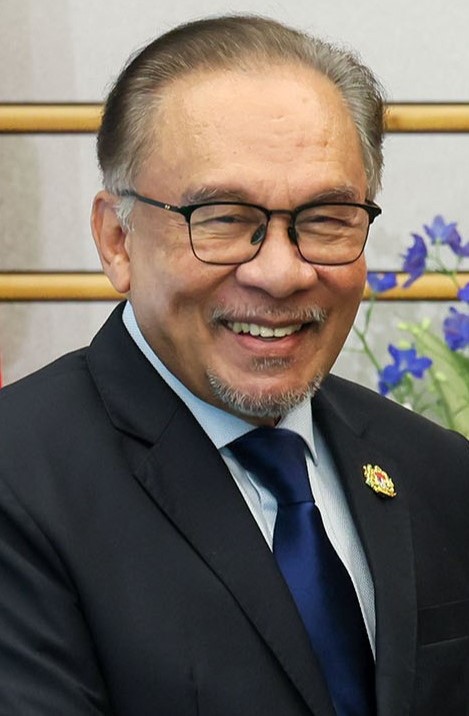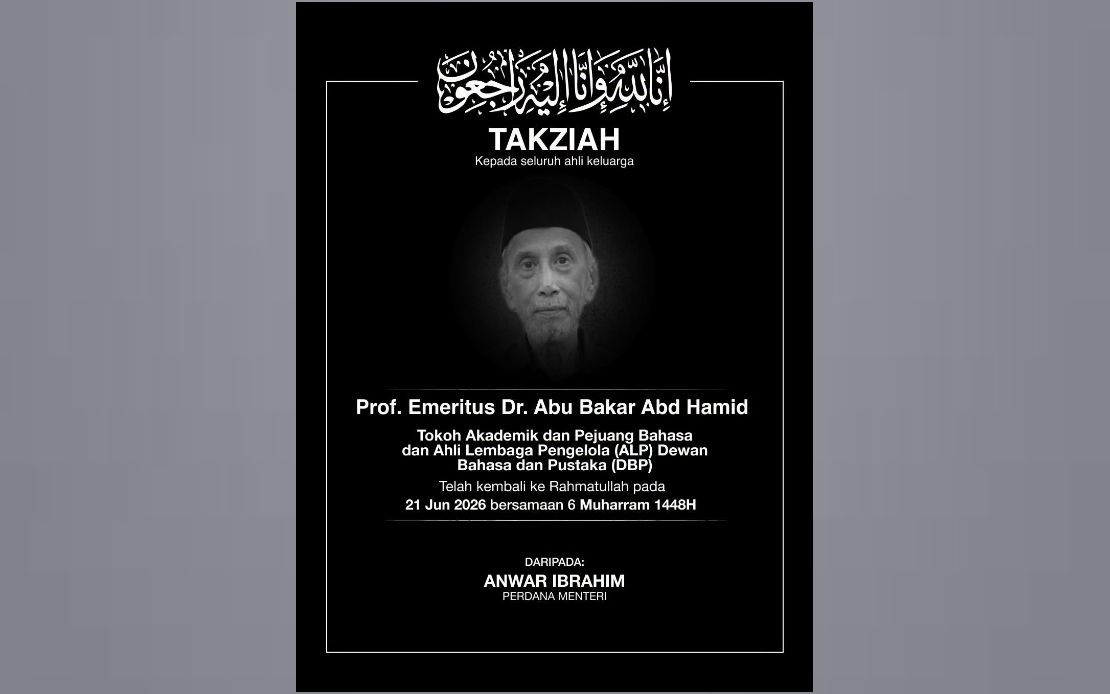
Prime Minister Datuk Seri Anwar Ibrahim has expressed deep sorrow following the death of Professor Emeritus Datuk Abu Bakar Abd Hamid, one of Malaysia's most influential voices in Malay literature and academic institution-building. The prominent scholar, who passed away on Sunday, June 21, left behind a legacy spanning decades of contributions to the nation's intellectual landscape and educational infrastructure. Through a Facebook statement, Anwar reflected on both the academic stature and personal warmth of a figure who shaped not only his own education but also the trajectory of Malaysian higher learning.
Abu Bakar's death occurred suddenly at his residence in Petaling Jaya, Selangor, at approximately 10.30pm on June 21, following a brief illness marked by respiratory distress. He was subsequently interred at the Bukit Kiara Muslim Cemetery on Monday. The loss has resonated across Malaysia's academic and cultural sectors, where his intellectual influence remains deeply embedded in institutional memory and scholarly tradition.
The Johor-born academic's most enduring institutional legacy lies in his pivotal role in establishing Universiti Kebangsaan Malaysia, where he served as joint secretary of the founding committee in 1968. This contribution positioned him among the architects of modern Malaysian higher education at a transformative moment in the nation's development. Beyond UKM, he spent significant years at Universiti Malaya, where he held the position of deputy vice-chancellor from 1987 onwards, wielding considerable influence over academic policy and institutional direction during a period of rapid expansion in tertiary education.
Abu Bakar's scholarly expertise centred on Malay literature, an intellectual domain in which he achieved international recognition and respect. His work helped establish Malay literary studies as a rigorous, methodologically sophisticated discipline worthy of serious academic engagement. Throughout his lifetime, he accumulated numerous accolades acknowledging his groundbreaking contributions to the field, reflecting the high esteem in which he was held by peers and institutions across the region.
Beyond academia, Abu Bakar demonstrated commitment to broader national narratives through his chairmanship of Bernama, the Malaysian National News Agency, a position he held from 1996 to 2000. This appointment reflected trust in his judgment regarding the dissemination of information and the framing of national discourse during a pivotal period in Malaysia's media landscape. His stewardship of a news organisation further illustrated his multifaceted engagement with questions of public knowledge and cultural representation.
Anwar's tribute carries particular resonance given his personal relationship with the deceased. As a former student of Abu Bakar, Anwar spoke from lived experience of being mentored by someone whose passion for knowledge extended beyond formal curriculum delivery. He characterised Abu Bakar as an educator distinguished not merely by academic credentials but by an infectious enthusiasm for learning and intellectual inquiry. This personal dimension adds weight to official recognition, suggesting that Abu Bakar's influence operated through direct human connection as much as through institutional frameworks.
The Prime Minister's public mourning reflects broader acknowledgment that Abu Bakar's passing represents a severing of direct links to Malaysia's post-independence nation-building era. Those who worked alongside him during the establishment of UKM in 1968 represented a generation of intellectuals deeply invested in constructing the ideological and institutional foundations of the newly independent state. The loss of such figures inevitably creates gaps in institutional memory and reduces the living pool of those who can speak authentically about pivotal moments in Malaysian educational history.
Malay literature, the intellectual domain Abu Bakar championed throughout his career, occupies a distinctive position within Malaysian cultural and educational policy. As an official national language, Malay receives institutional support and curricular prominence unavailable to other languages in the Malaysian system. Abu Bakar's scholarly work contributed substantially to elevating Malay literary expression as a subject worthy of sophisticated critical analysis, helping to position it within international humanities discourse rather than confining it to parochial or nationalist frames.
The convergence of roles that Abu Bakar occupied—university administrator, literary scholar, news agency chairman—illuminates the expectations placed upon Malaysia's intellectual elite during the latter twentieth century. Unlike contemporary academic specialisation, his generation operated across multiple institutional domains simultaneously, wielding influence through positions that spanned education, culture, and information management. This polymathic approach to public intellectual work reflected different understandings of expertise and civic responsibility than prevail in contemporary fragmented specialisation.
For Malaysian readers and Southeast Asian observers of regional intellectual history, Abu Bakar's death marks the passage of a figure who bridged post-colonial nation-building ambitions with scholarly rigour. His contributions to Malay literary studies helped establish intellectual frameworks through which the nation could examine its own cultural production and historical consciousness. The educational institutions he helped establish continue to shape generations of Malaysian students, perpetuating influence that extends far beyond his direct lifetime.
Anwar's invocation of Abu Bakar as a cherished teacher, combined with formal recognition of his institutional achievements, underscores the holistic appreciation deserved by those who dedicated careers to building and maintaining Malaysia's intellectual infrastructure. The Prime Minister's public grief signals to Malaysian society the importance of acknowledging such figures before they pass, ensuring their contributions receive recognition while still living. Abu Bakar's legacy, embedded in institutions and in the minds of countless former students and colleagues, will continue shaping Malaysian intellectual and literary discourse for generations to come.