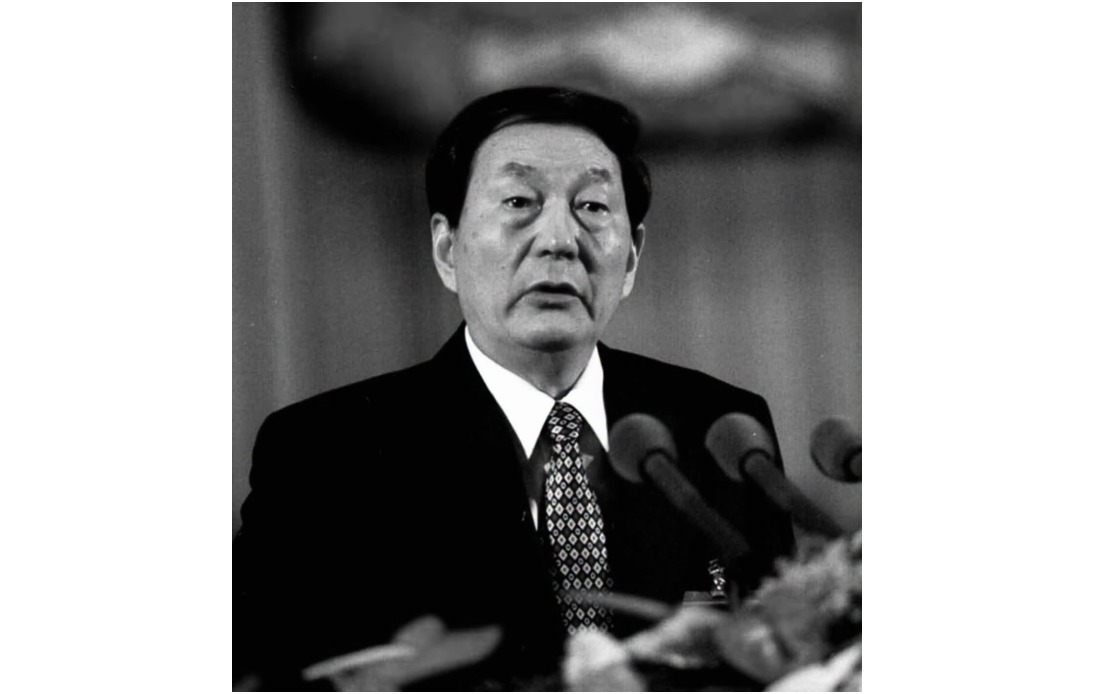
Prime Minister Datuk Seri Anwar Ibrahim has paid tribute to former Chinese Premier Zhu Rongji following the statesman's death at age 97, acknowledging the profound impact the late leader had on both China's trajectory and Malaysia's relationship with Beijing. In a Facebook post, Anwar characterised Zhu as one of the pivotal figures behind China's emergence as a global economic force, emphasising the personal connection forged between the two leaders during formative decades of economic cooperation.
Zhu's tenure as Premier from 1998 to 2003 marked a transformative period in Chinese economic policy. During those years, he spearheaded market-oriented reforms that fundamentally restructured the state-owned enterprise sector, a process that many analysts credit with unlocking productivity gains across the Chinese economy. His stewardship also proved instrumental in navigating China's entry into the World Trade Organisation, a milestone that opened vast opportunities for global commerce and integrated the Chinese economy into international systems in unprecedented ways.
The bilateral relationship between Malaysia and China during the 1990s benefited considerably from Anwar's direct engagement with Zhu and other Chinese leadership figures. Anwar's account highlights how both nations worked methodically to deepen economic and financial linkages during that critical decade, laying groundwork that continues to structure how Malaysia and China do business today. These foundations have proven sufficiently robust to weather various geopolitical shifts and trade disruptions over subsequent decades.
Anwar's recollection of personal interactions with Zhu reveals the depth of their relationship beyond formal diplomatic channels. The Prime Minister described visits to culturally significant locations, including Confucius' ancestral home village and Tai Shan, as well as sites connected to Admiral Zheng He, the 15th-century Ming dynasty explorer. These journeys appear designed not merely as ceremonial state visits but as opportunities for substantive conversation and cultural exchange between two intellectually engaged leaders.
A particularly notable moment in their relationship came during what Anwar describes as a visit to Zhu's personal library. Rather than a perfunctory tour, the former Premier thoughtfully selected Chinese classical texts from his own collection for Anwar to receive, suggesting an investment in cultivating shared intellectual understanding between Malaysia and China. Such gestures, though small in isolation, often carry weight in the context of high-level diplomatic relationships, signalling a desire to transmit cultural values and philosophical frameworks.
Anwar's characterisation of Zhu emphasises both intellectual acuity and moral seriousness. The Prime Minister describes the late statesman as possessing exceptional character, animated by a deep sense of national duty that transcended personal ambition. This framing positions Zhu within a particular tradition of Chinese governance—the scholar-official devoted to statecraft rather than self-enrichment. For Malaysian policymakers and observers, such tributes underscore how China's modern economic achievements were engineered not through happenstance but through deliberate choices made by leaders willing to undertake politically difficult reforms.
The timing of Zhu's death comes amid a period of heightened international scrutiny regarding China's economic direction and international role. His legacy as someone who successfully opened China to market mechanisms and global trade architectures provides a historical reference point for ongoing debates about China's economic model. In particular, his success in managing the transition of state-owned enterprises offers lessons relevant to developing economies in Southeast Asia, including Malaysia, which continue to calibrate the balance between state direction and market forces in their own economies.
Zhu's willingness to embrace economic liberalisation during the late 1990s—a period when such moves faced scepticism from various quarters—demonstrates the kind of strategic vision that underpins successful structural transformation. His reforms created space for entrepreneurship, technological innovation, and productivity growth while maintaining state influence over strategic sectors. This mixed model has become instructive for policymakers across Asia seeking pathways to modernisation that do not require wholesale abandonment of state capacity.
For Malaysian-Chinese relations specifically, Zhu's passing represents the loss of a figure who bridged critical decades in bilateral engagement. Leaders of his generation, who negotiated the transition from ideological competition to economic partnership, have grown smaller in number. Anwar's tribute implicitly acknowledges that the relationships and frameworks built during Zhu's premiership remain valuable assets for current Malaysian policymakers navigating complex regional dynamics and competing great-power interests.
The condolences extended by Anwar to Zhu's family and to China more broadly reflect the significance attached to the late Premier within Malaysian diplomatic circles. His economic reforms enabled the rapid expansion of Chinese manufacturing capacity and export competitiveness, transformations that have directly shaped regional trade patterns, investment flows, and manufacturing networks that Malaysia participates in and depends upon. In this sense, Zhu's legacy extends well beyond China's borders into the economic structures that shape contemporary Southeast Asia.
Zhu's death also marks a generational transition in Chinese leadership and international relations. Many of the officials who helped negotiate China's integration into the global economic system are now passing from the scene. Anwar's personal recollections and expressions of esteem serve to preserve institutional memory of how those relationships were constructed, offering younger generations of Malaysian leaders insights into the foundations upon which current Malaysia-China cooperation rests.

