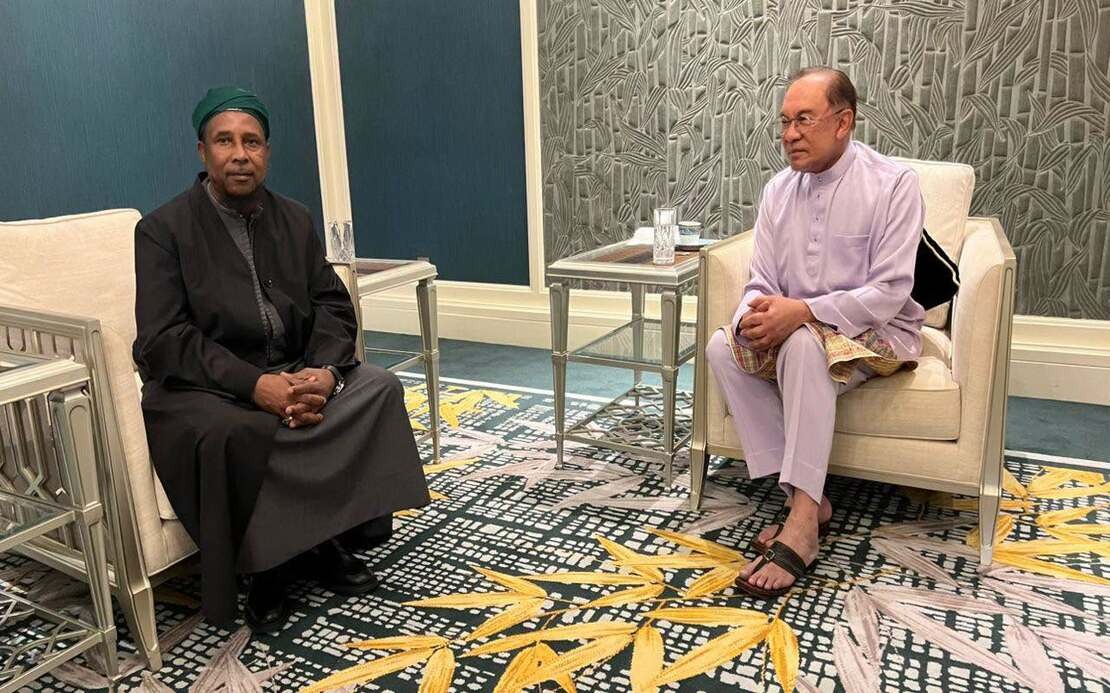
Prime Minister Datuk Seri Anwar Ibrahim has received a parting visit from Gambian Islamic scholar Sheikh Muhammad Haydara Al-Jilani, marking the conclusion of an extended religious and educational tour across Malaysia. The encounter, which took place on June 26, occurred during the observance of the Day of Ashura, a significant date in the Islamic calendar that holds particular spiritual importance for many Muslim communities. Anwar's decision to schedule this meeting during this blessed Friday reflected an intention to harness the moment for spiritual purposes benefiting the nation.
During his month-long sojourn in Malaysia, Sheikh Muhammad Haydara Al-Jilani conducted a comprehensive series of knowledge-dissemination and dhikr programmes at multiple venues throughout the country. These gatherings formed part of a structured dakwah initiative, representing efforts to strengthen Islamic learning and spiritual practice among Malaysian Muslim communities. The scholar's travels encompassed various locations, enabling him to reach diverse audiences and contribute to religious discourse across different regions.
Through his official Facebook statement, Anwar articulated the spiritual dimension of the farewell meeting, emphasising that it provided a suitable occasion to request the scholar's supplications on behalf of the Malaysian populace. The Prime Minister articulated three interconnected wishes: that the nation would enjoy continued prosperity, achieve enduring peace, and experience collective well-being. These entreaties reflect broader concerns about national stability and the welfare of all citizens.
Anwar's framing of the encounter demonstrates how Malaysian political leadership engages with visiting religious figures and incorporates spiritual practices into diplomatic engagement. By positioning the meeting within the sacred context of Ashura and requesting prayers for national prosperity, the Prime Minister aligned political courtesy with religious observance. This approach underscores the significance of Islamic scholarship and spiritual guidance within Malaysia's political culture.
The timing of Sheikh Al-Jilani's month-long visit and subsequent departure reflects growing engagement between Malaysia and West African Islamic scholars. Such educational exchanges contribute to the development of transnational Islamic networks and allow for the cross-pollination of religious thought and practice. The scholar's presence across multiple Malaysian locations suggests substantial demand for his teachings and indicates receptivity to external Islamic intellectual perspectives within local communities.
The dakwah programmes conducted throughout the visit likely included Quranic recitation, spiritual discourse, and religious instruction designed to deepen faith and knowledge among participants. These gatherings serve multiple functions within Islamic communities: they facilitate theological learning, strengthen communal bonds, and provide forums for reflection on spiritual matters. The involvement of respected international scholars elevates the profile of such programmes and attracts broader participation.
From a broader Southeast Asian perspective, Malaysia's hospitality toward visiting Islamic scholars reflects the region's position as a major hub for Islamic learning and a destination for religious exchanges. The country's sophisticated infrastructure, pluralistic society, and institutional capacity enable it to host such programmes effectively. These interactions also strengthen Malaysia's soft power within the Islamic world and reinforce its standing as a centre for moderate Islamic thought and practice.
The respectful farewell extended by the Prime Minister carries symbolic weight in diplomatic relations between Malaysia and The Gambia. By personally receiving the scholar at the conclusion of his visit, Anwar demonstrated Malaysia's commitment to fostering cultural and religious ties with African nations. Such gestures, though often overlooked in broader geopolitical analyses, contribute to building goodwill and strengthening bilateral relationships at multiple levels.
Sheikh Muhammad Haydara Al-Jilani's month-long visit represents the kind of grassroots religious engagement that complements formal government-to-government relations. By conducting knowledge-sharing sessions and dhikr gatherings across the country, the scholar contributed to Malaysia's diverse Islamic landscape and engaged with communities interested in deepening their spiritual understanding. The breadth of his engagement suggests that his visit resonated with substantial segments of the Muslim population.
The Prime Minister's invocation of divine blessings for Malaysia's continued mercy and protection contextualises the farewell within Malaysia's ongoing search for stability and progress. In a region characterised by complex geopolitical challenges and rapid social change, religious figures and spiritual practices occupy important roles in national discourse. The explicit linking of the farewell meeting with prayers for national well-being reflects this integrated approach to governance and spirituality.
For Malaysian readers, this encounter underscores the ongoing vitality of Islamic intellectual exchange and the country's role as a venue for international religious engagement. The visit of Sheikh Al-Jilani and the Prime Minister's substantive engagement with his departure illustrate how Malaysia navigates the intersection of religious life and political leadership. As the nation continues to develop its role within the global Islamic community, such exchanges with respected foreign scholars will likely remain important components of cultural and diplomatic strategy.

