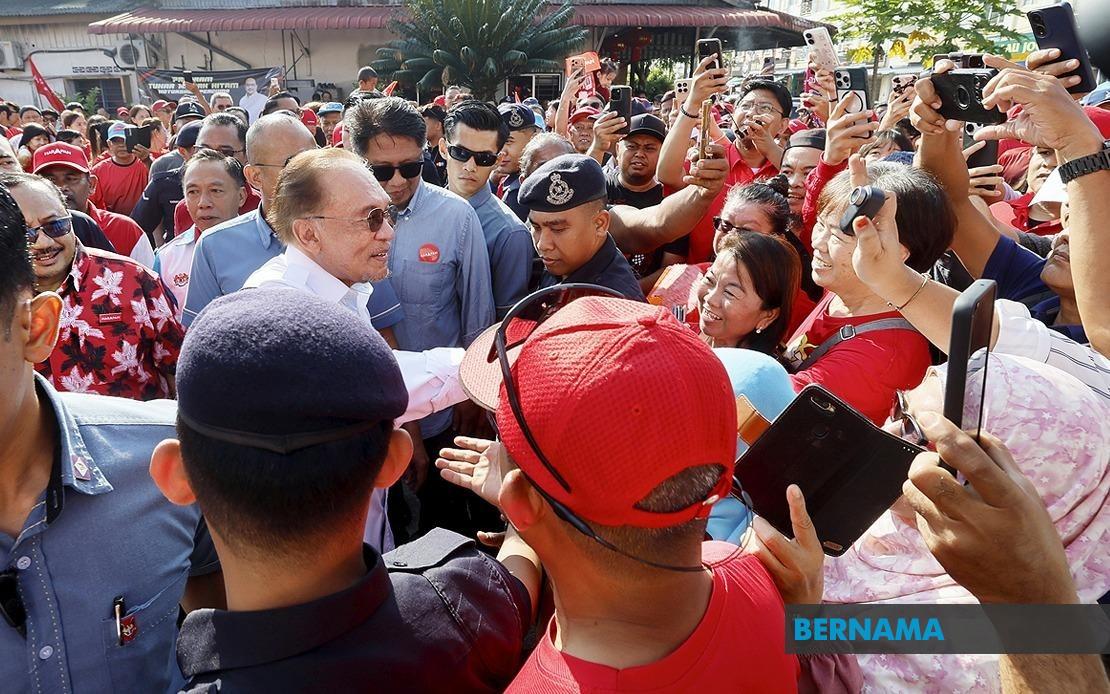
Prime Minister Datuk Seri Anwar Ibrahim came face-to-face with Abdul Razak Pelangga, 86, and his wife Jamilah Samsudin, 64, during a campaign event in Johor over the weekend, reconnecting with the couple whose determination to meet the nation's leader had sparked widespread admiration across social media platforms. The reunion took place in Senggarang whilst the Prime Minister was attending the "Yok! Meriahkan Johor! Undi Harapan" programme ahead of the state election scheduled for Saturday.
Abdul Razak and Jamilah had previously captured public hearts after peddling a trishaw nearly a kilometre through the streets of Senggarang to encounter Anwar during his Sunday breakfast visit to a local eatery. The incident reflected the deep respect some voters harbour for the Prime Minister, whilst also illustrating the lengths elderly constituents are prepared to travel in pursuit of meaningful political engagement. For an octogenarian to manually propel a trishaw over such a distance underscores both his physical determination and the symbolic weight of the moment.
During their second meeting, Anwar engaged in casual conversation with Abdul Razak, making light-hearted remarks about the pensioner's impressive physical capacity to pedal the trishaw across the town. The Prime Minister expressed genuine gratitude towards the couple for their steadfast support, acknowledging the effort they had expended. Such personal interactions between senior political leaders and voters can carry significant weight in Malaysian electoral contexts, where direct engagement and recognition often reinforce community bonds and political loyalty.
The event drew participation from several prominent figures within the Pakatan Harapan coalition structure. Datuk Fahmi Fadzil, who serves as both the party's Communications director and the Minister of Communications, was present throughout the programme. Additionally, three PH candidates contesting in the upcoming election attended, namely Onn Abu Bakar standing for Senggarang, Mohd Khuzzan Abu Bakar representing Semerah, and Felicia Poh Rui Ling contesting the Penggaram seat.
The timing of this reunion proved strategically significant within the broader electoral calendar. The 16th Johor State Election represents a crucial electoral test for the ruling coalition as it seeks to consolidate its position within one of Malaysia's largest and most influential states. With early voting having concluded the previous Tuesday, the campaign entered its final intensive phase, making personal connections with voters increasingly valuable for all contesting parties.
The couple's story resonates with broader themes in Malaysian politics regarding accessibility and the relationship between elected officials and ordinary citizens. In a nation where urban-rural divides and age demographics shape electoral dynamics significantly, instances of elderly voters making substantial personal efforts to meet national leaders carry symbolic importance. Abdul Razak's trishaw journey became emblematic of grassroots political engagement, transcending mere campaign narrative to represent genuine civic participation.
For the Johor electorate, such moments can influence local perceptions of political candidates and parties. The visibility of the Prime Minister personally acknowledging supporters from their own state, particularly in smaller towns like Senggarang rather than exclusively in urban centres, demonstrates commitment to inclusive campaigning. This approach contrasts with political models that concentrate heavily on major population centres, potentially helping coalitions maintain support across geographically dispersed communities.
The incident also highlights the significance of social media in modern Malaysian politics. The original trishaw journey generated substantial online conversation, transforming a local news story into nationwide discourse. When Anwar subsequently acknowledged the couple publicly, he effectively validated the social media narrative whilst simultaneously demonstrating that senior leadership remains attentive to viral moments of ordinary citizen engagement. This dynamic reflects how contemporary politics increasingly operates within interconnected digital and physical spaces.
Abdul Razak and Jamilah's story emerged during a period when Malaysian politics continues navigating broader questions about coalitional stability and voter motivation. As Johor prepares to cast ballots, such personalised interactions between leaders and constituents may prove influential in determining electoral outcomes. The couple's unwavering determination to meet Anwar, coupled with his receptiveness to their gesture, exemplifies the softer dimensions of political campaigning that occasionally resonate more powerfully than policy announcements or formal manifesto presentations.
The narrative also underscores demographic considerations relevant to Malaysian electoral politics. With an ageing population and significant numbers of elderly voters across the country, political parties increasingly recognise that appealing to older constituents requires more than institutional messaging. Personal recognition, accessibility, and demonstrated respect for elder citizens can substantially influence voting behaviour within this demographic segment. Abdul Razak and Jamilah's public interaction with the Prime Minister sends implicit signals about how the coalition values contributions from mature voters.
Looking towards Saturday's state election, the Senggarang constituency where this reunion occurred remains competitive within the broader Johor contest. PH's candidate for the seat, Onn Abu Bakar, benefits from the positive media coverage and community sentiment generated by the couple's trishaw journey and subsequent reunion. However, electoral outcomes depend on numerous factors beyond individual symbolic moments, including local constituency dynamics, candidate credentials, and broader policy considerations influencing voter decision-making across the state.

