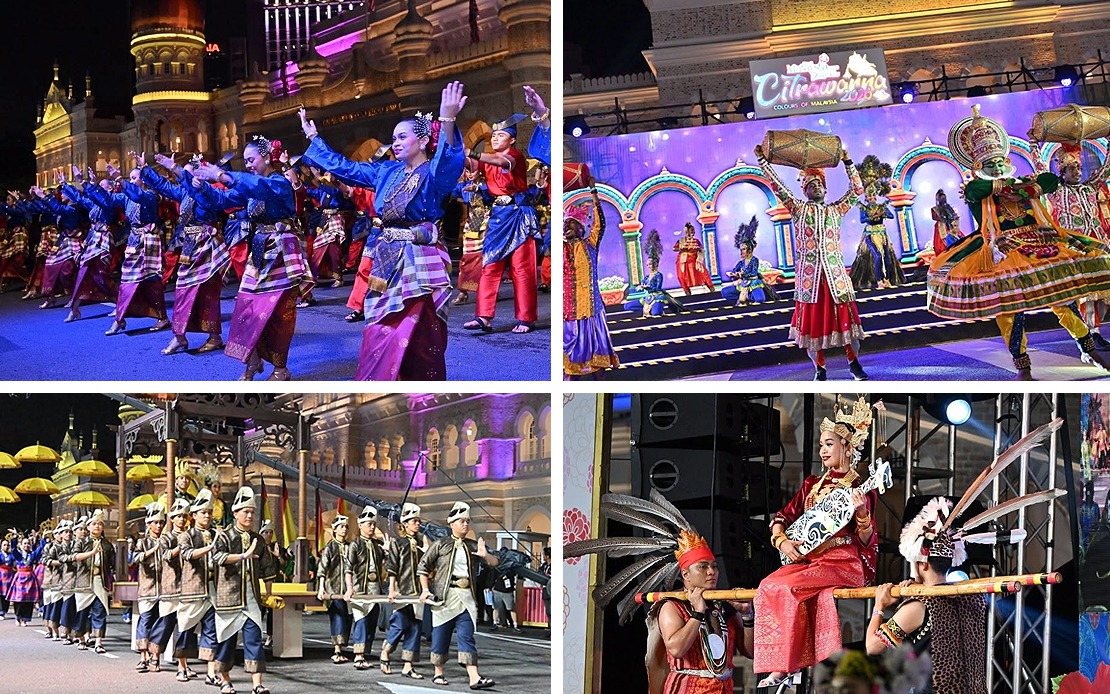
Prime Minister Datuk Seri Anwar Ibrahim officially opened Citrawarna 2026 on July 25 at Kuala Lumpur's iconic Dataran Merdeka, marking a significant milestone in Malaysia's ambitious tourism rebranding effort under the Visit Malaysia 2026 campaign. The launch ceremony, attended by senior government officials including Tourism, Arts and Culture Minister Datuk Seri Tiong King Sing and Chief Secretary to the Government Tan Sri Shamsul Azri Abu Bakar, underscores the federal government's commitment to positioning cultural heritage as a cornerstone of the nation's tourism strategy.
Citrawarna 2026 represents a comprehensive cultural showcase designed to celebrate Malaysia's diverse artistic traditions and multicultural identity to both domestic audiences and international visitors. The event draws strategic partnerships with Kuala Lumpur City Hall, Warisan Kuala Lumpur, the National Department for Culture and Arts, Istana Budaya and the National Textile Museum, creating a coordinated platform that weaves together government agencies, cultural institutions and private stakeholders in a unified promotional effort. This collaborative approach reflects a broader recognition that tourism competitiveness increasingly depends on authentic, well-curated cultural experiences rather than conventional beach and resort attractions.
The centrepiece of Citrawarna 2026 is the Colours of Parade, an elaborate procession mobilising 3,500 dancers representing all 13 states, the three Federal Territories and Malaysia's various ethnic and religious communities. This unprecedented scale of cultural mobilisation serves multiple purposes: it provides visible representation to communities across the federation, creates photogenic content for social media amplification, and delivers a visceral demonstration of Malaysian pluralism to international audiences increasingly interested in authentic multiculturalism. For visitors, the parade functions as an accessible entry point to understanding Malaysia's complex social fabric and artistic heritage beyond conventional tourism narratives.
Beyond the parade itself, the three-day festival encompasses four thematic pillars that segment cultural experience into digestible categories for diverse visitor preferences. The Colours of Flavour component directly engages culinary tourism, a rapidly expanding segment within international travel spending, by featuring over 70 food and beverage stalls showcasing regional Malaysian cuisines. The Colours of Culture axis provides educational and participatory experiences through 20 activity booths where visitors can engage directly with traditional practices, heritage demonstrations and hands-on learning opportunities. The Colours of Arts element, supported by 10 dedicated crafts stalls, targets the growing market of cultural tourists seeking authentic artisanal products and artist interactions.
Tourism Malaysia's data indicates that the event has already proven effective in converting interest into actual visitation. The organisers report attracting more than 700 international tourists through specially designed tourism packages, with visitors originating from an geographically diverse range of markets including China, India, Japan, Vietnam, Southeast Asian neighbours, and Western European countries such as Italy, France, Switzerland and the Netherlands. This geographic distribution suggests that Citrawarna 2026's appeal transcends traditional regional tourism patterns, indicating that cultural events possess significant potential in Malaysia's strategy to diversify visitor sources beyond concentrated East Asian markets.
The inclusion of Kazakhstan among the represented nations hints at Malaysia's broadening diplomatic and tourism outreach toward Central Asian markets, a relatively untapped but growing source of international travellers with increasing disposable income. Similarly, the attraction of visitors from Mauritius demonstrates how cultural programming can appeal to diaspora communities and culturally-aligned audiences beyond conventional geographic tourism zones. These patterns suggest that Malaysia's cultural tourism strategy is gradually shifting from destination-driven promotion toward interest-driven segmentation, targeting niche cultural audiences regardless of geographic proximity.
For Malaysia's domestic tourism industry and creative sectors, Citrawarna 2026 carries significant implications beyond its immediate event footprint. The festival provides commercial platforms for small and medium enterprises operating in food, crafts and entertainment sectors, creating temporary but meaningful revenue opportunities during the campaign period. More strategically, the event generates content and case studies that support Malaysia's positioning as a serious cultural tourism destination, helping justify infrastructure investments in heritage preservation and cultural institution development that might otherwise struggle for budget allocation amid competing development priorities.
The Visit Malaysia 2026 campaign context underscores why the government has committed substantial resources to Citrawarna 2026. With international tourism competition intensifying across Southeast Asia, Malaysia risks being displaced by competitors investing heavily in experiential tourism. Thailand's cultural tourism initiatives and Vietnam's heritage promotion have proven effective in capturing growing numbers of culturally-motivated visitors. Citrawarna 2026 functions as Malaysia's strategic response, demonstrating that the nation possesses comparable cultural depth and artistic vitality while offering the distinctive advantage of multicultural authenticity that reflects Malaysia's actual social composition rather than commercialised cultural curation.
Prime Minister Anwar's personal attendance at the launch carries political symbolism beyond routine event participation. His direct engagement with cultural programming signals that arts and heritage development constitutes a genuine government priority rather than peripheral ministry responsibility, a message that carries weight within bureaucratic hierarchies and budget negotiations. This high-level endorsement may accelerate adoption of cultural tourism concepts within state governments and encourage local administrations to develop complementary programming that extends Citrawarna's impact beyond the capital city.
The festival's emphasis on inclusivity—with all states and Federal Territories represented—addresses a perennial challenge in Malaysian national programming: ensuring that regional development benefits and national visibility extend beyond Klang Valley-concentrated initiatives. By mobilising dancers and cultural contingents from peripheral states, Citrawarna 2026 provides visibility platforms for communities often marginalised in national tourism narratives while distributing some economic benefits from cultural tourism promotion beyond the capital.
Looking forward, the success metrics for Citrawarna 2026 extend beyond immediate visitor numbers and expenditure figures. The event's lasting value depends on whether it catalyses sustained international interest in Malaysia's cultural offerings, whether it inspires repeat visitation and longer stays, and whether it translates cultural experience into broader destination loyalty. For Malaysia's tourism sector and creative industries, Citrawarna 2026 represents an investment in repositioning the nation as a culturally sophisticated destination, a transformation essential if Malaysia is to compete effectively in the evolving global tourism marketplace.

