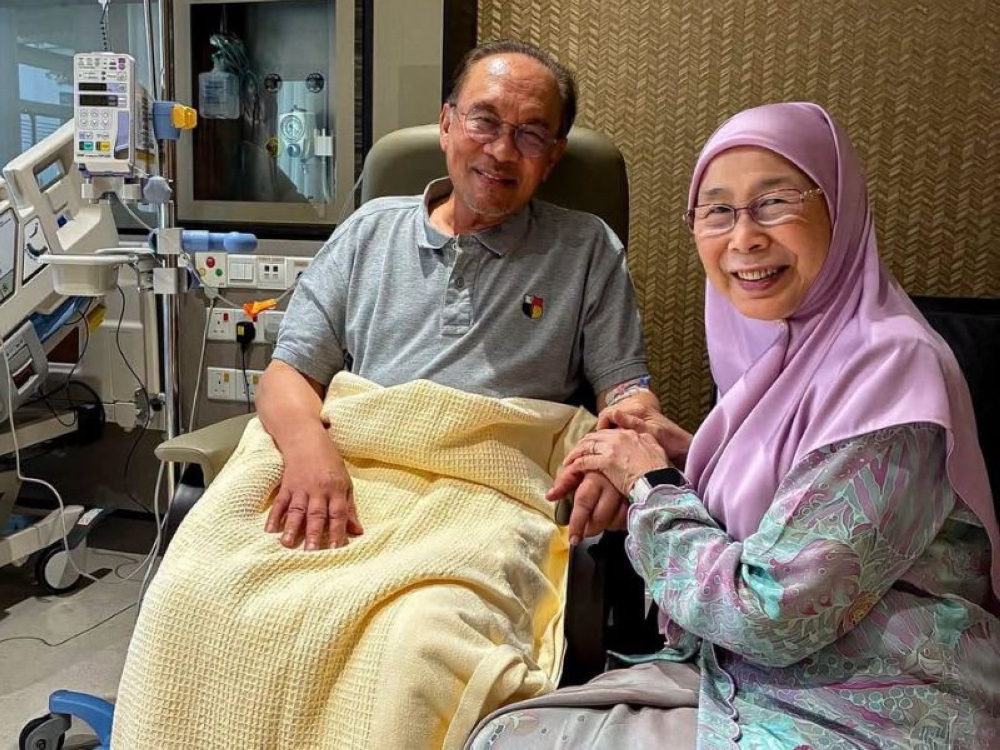
Prime Minister Datuk Seri Anwar Ibrahim is set to leave hospital today after undergoing a hernia operation, according to an update from his wife Datuk Seri Dr Wan Azizah Wan Ismail. The announcement signals that the surgical procedure proceeded without complications and that the Prime Minister's recovery is progressing as anticipated, allowing him to convalesce at his residence rather than remain under hospital observation.
The decision to discharge Anwar Ibrahim reflects standard medical practice for hernia repairs, which are typically minimally invasive procedures in most cases. Such operations generally carry low complication rates, and patients are often able to return home within a day or two provided there are no unforeseen issues. The timing of the discharge suggests the medical team attending to the Prime Minister determined that continued inpatient care was unnecessary, and that home-based recovery with appropriate follow-up support would be sufficient.
Anwar Ibrahim's brief hospitalisation underscores the importance of timely medical intervention for health conditions that, while manageable, require surgical attention. Hernias can worsen if left untreated and may lead to serious complications if the protruding tissue becomes trapped or strangulated. By addressing the condition promptly, the Prime Minister has ensured that a potentially problematic health issue does not escalate into a more serious medical emergency during his tenure in office.
The Malaysian government has made no official statements regarding any disruption to the Prime Minister's work schedule as a result of the procedure. While Anwar Ibrahim is expected to rest during the initial recovery period, many senior government officials continue to handle state business from home during convalescence, particularly when the procedures involved are relatively routine. The Prime Minister's office has likely established protocols to ensure continuity of government operations and urgent matters can still be addressed as needed.
For Malaysian observers and international observers monitoring the country's political leadership, the successful completion of this medical procedure without apparent complications is a reassuring sign of institutional stability. Any prolonged absence of the Prime Minister or significant health setback could have triggered concerns about governmental continuity, given the importance of the office. The efficient handling of this health matter demonstrates that Malaysia's executive structures have provisions in place for managing such situations.
The transparency demonstrated by Anwar Ibrahim's wife in updating the public about the surgical procedure and expected discharge reflects evolving standards around political leadership and public health communication. In previous decades, such medical details regarding prime ministers would often have been kept confidential or disclosed only sparingly. Modern expectations in Malaysia and across democratic societies increasingly favour openness about the health status of senior leaders, allowing citizens to make informed assessments about governmental continuity and leadership capacity.
Recovery from hernia surgery typically involves restrictions on physical activity and heavy lifting for several weeks, though most patients can resume normal daily activities within a relatively short timeframe. For a Prime Minister, this generally means avoiding strenuous exercise and refraining from activities requiring significant abdominal engagement, while still being able to manage desk-based work and official duties that do not require extended standing or travel. The exact duration of any work restrictions will be determined by Anwar Ibrahim's medical team based on the specific nature of the surgical repair performed.
This health matter carries implications not only for governmental operations but also for discussions about succession planning and institutional preparedness in Malaysian politics. While this particular situation appears to be a routine medical procedure with a straightforward recovery, it serves as a reminder of the importance of having clear protocols and designated persons to assume responsibilities during any period when the Prime Minister is unable to perform his duties fully. Malaysia's constitutional framework does provide for such contingencies, though the practical implementation during temporary medical absences remains a lesser-discussed aspect of governance.
The incident also highlights the resource availability within Malaysia's healthcare system for treating senior government officials. Private healthcare facilities in Kuala Lumpur have the capability to manage such procedures efficiently, allowing for rapid diagnosis, treatment, and discharge. This reflects the broader capabilities of Malaysia's medical infrastructure, though access to such expedited care remains concentrated among those with significant resources, raising broader questions about healthcare equity that extend beyond this specific situation.
As Anwar Ibrahim returns home to continue his recovery, Malaysia's government machinery will continue functioning through its various departments, ministries, and the Cabinet system. The Prime Minister's temporary reduction in direct engagement, while he recuperates, will serve as a practical test of institutional resilience and the depth of governmental capacity that extends beyond any single individual. The smooth handling of this situation will likely provide confidence to both domestic constituencies and international observers regarding Malaysia's governmental stability during this particular administration.

