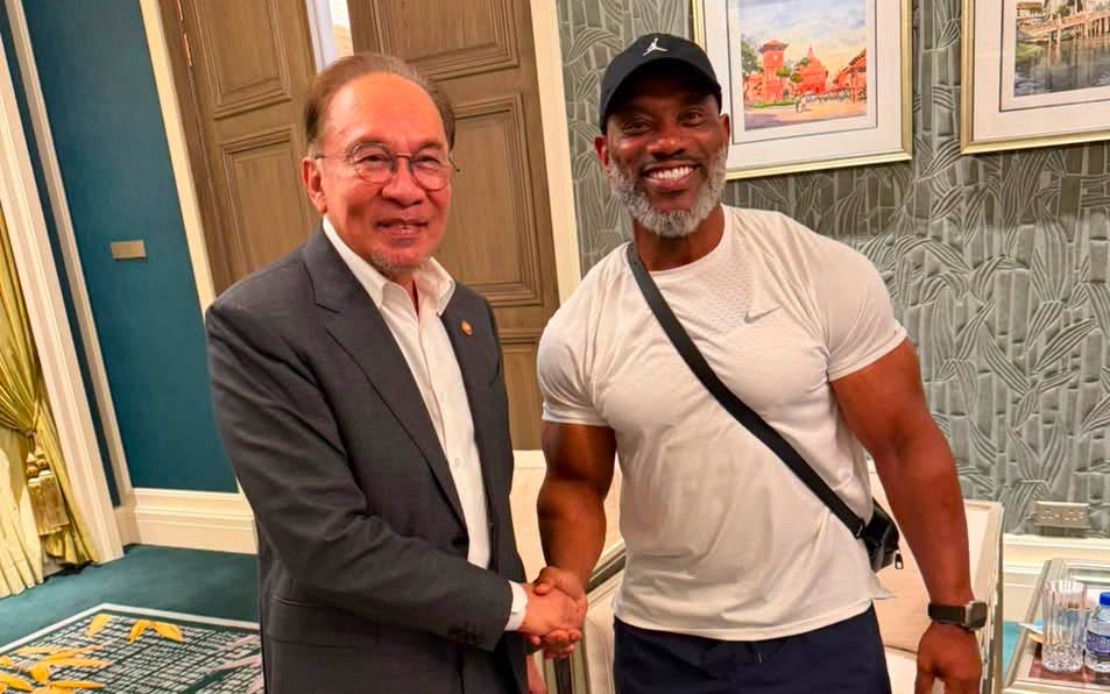
Prime Minister Datuk Seri Anwar Ibrahim took to social media on July 1 to express his enthusiasm following an encounter with Dexter Jackson, one of the sport of bodybuilding's most decorated athletes. The meeting in Kuala Lumpur highlighted the Malaysian leader's engagement with international sporting figures and his appreciation for athletic achievement at the highest level.
In a Facebook post accompanying a photograph of the two shaking hands, Anwar shared his admiration for Jackson's accomplishments and hinted at a renewed commitment to personal fitness. The casual yet genuine tone of the post reflected the prime minister's approachability and willingness to engage with diverse personalities from the global sports community.
Dexter Jackson, at 56 years old, carries credentials that place him among the most accomplished competitive bodybuilders in history. His résumé includes victory in the 2008 Mr Olympia competition, widely regarded as the sport's premier championship, and the 2012 Masters Mr Olympia title, which recognizes excellence among veteran competitors. These achievements underscore his longevity and consistent performance across different age categories and eras of professional bodybuilding.
Perhaps Jackson's most remarkable distinction lies in his dominance of the Arnold Classic, an elite bodybuilding competition held annually. With nine championship titles to his name, Jackson holds the record for the most victories in this prestigious event, surpassing other legendary competitors and cementing his legacy as one of the sport's most consistent performers. This achievement is particularly significant given the calibre of competitors who have challenged him across multiple decades of professional bodybuilding.
The meeting between Anwar and Jackson reflects Malaysia's broader role as an international destination for major events and gatherings. As a leader of a Southeast Asian nation with growing influence in regional and global affairs, Anwar's engagement with international sporting personalities serves multiple purposes. It demonstrates Malaysia's connectivity to global networks and the country's capacity to attract figures of international renown.
Anwar's self-deprecating comment about needing to return to the gymnasium resonates with many Malaysians who balance demanding professional responsibilities with personal health objectives. The remark, while lighthearted, also sends a broader message about the importance of fitness and wellness, themes that align with public health initiatives across Malaysia and the region.
Bodybuilding, while less mainstream than football or badminton in Malaysia, maintains a dedicated following. The sport's emphasis on discipline, dedication, and long-term commitment mirrors values that leaders often champion in public discourse. Jackson's career trajectory, spanning decades at the elite level, exemplifies these principles and offers a model of sustained excellence that transcends the specific context of competitive bodybuilding.
The encounter also illustrates how international sporting engagements create informal diplomatic opportunities. Such meetings, captured and shared through social media, contribute to Malaysia's public image as an open, internationally-connected nation. For younger Malaysians interested in fitness and bodybuilding, the visibility of their prime minister meeting a world champion provides both inspiration and validation of these pursuits.
Dexter Jackson's longevity in competitive bodybuilding is particularly noteworthy in an era when many athletes retire or decline in performance after their thirties. His success at the Masters Mr Olympia level demonstrates that excellence can be maintained and even refined with age, a message that carries broader cultural significance in societies grappling with ageing populations and evolving attitudes toward athletic achievement across the lifespan.
The informal nature of this engagement—documented through a social media post rather than an official state function—reflects contemporary leadership styles. Anwar's willingness to share personal moments and genuine reactions humanizes political figures and creates connections with constituents who appreciate authenticity. The straightforward enthusiasm expressed in the post likely resonated with audiences far beyond the bodybuilding community.
Such international encounters, while sometimes dismissed as merely social, contribute to the soft power dimensions of Malaysia's international presence. They demonstrate cultural openness, appreciation for global excellence, and the country's capacity to engage meaningfully with personalities and communities worldwide. For Malaysia's sporting community, particularly those involved in strength sports, the visibility of such meetings at the highest levels of government provides recognition and encouragement.
The meeting encapsulates a broader trend of Malaysian political and public figures engaging more openly with international networks and diverse communities. As Malaysia continues to position itself as a significant player in regional and global affairs, these types of interactions contribute to an image of dynamism, openness, and genuine interest in the wider world. Whether through bodybuilding or other domains, such connections help weave Malaysia more firmly into international cultural and sporting conversations.

