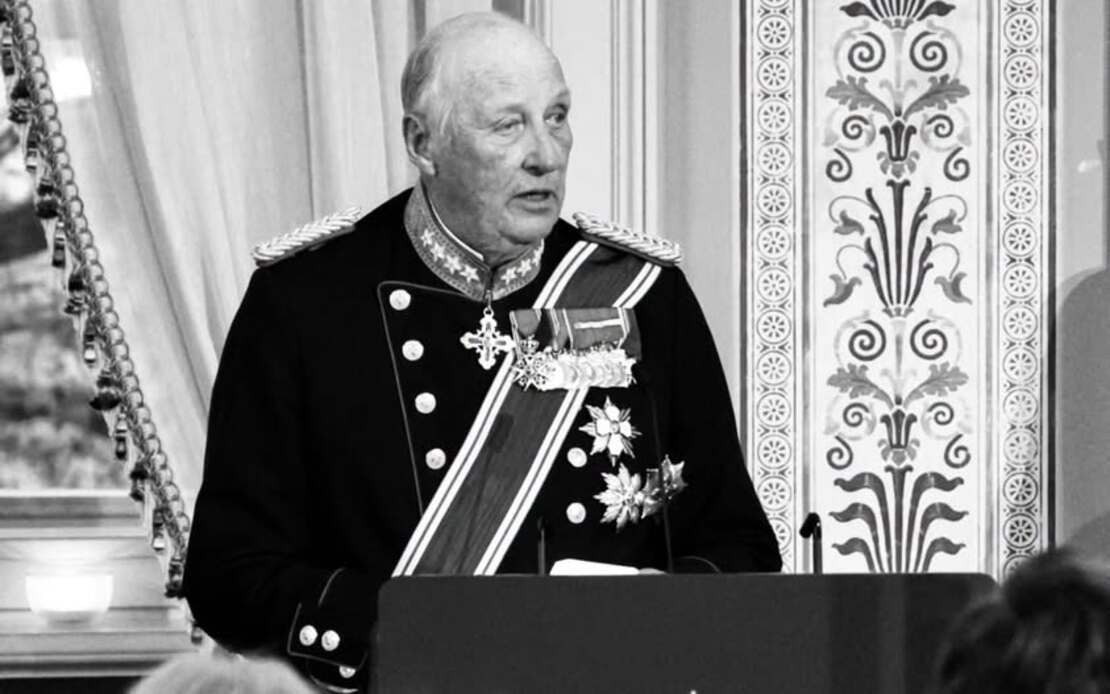
Prime Minister Datuk Seri Anwar Ibrahim has conveyed Malaysia's official condolences to the Norwegian people following the passing of King Harald V, who died on Friday at the age of 89 while undergoing treatment at the National Hospital in Oslo. The Malaysian leader released a statement honouring the late Scandinavian monarch, reflecting on his legacy as a unifying figure whose perspective on national identity carried significant meaning for contemporary societies grappling with questions of belonging and diversity.
Anwar highlighted a particularly striking aspect of King Harald's leadership: his eloquent articulation of what Norwegian citizenship truly encompassed. According to the Prime Minister's account, the deceased sovereign had explicitly recognised and celebrated Norway's multicultural character, acknowledging that citizens with familial origins spanning Afghanistan, Pakistan, Poland and numerous other nations held equal claim to Norwegian identity. This dimension of King Harald's reign distinguished him as a monarch who consciously worked to bridge the gap between historical national identity and the lived reality of modern, increasingly diverse Nordic societies.
The Malaysian Prime Minister drew a broader philosophical lesson from King Harald's approach to nationhood, one that carries particular resonance within Southeast Asia's own tapestry of diverse communities and religions. Anwar observed that the Norwegian king understood a fundamental principle: nations derive their true strength not from cultural homogeneity or narrow definitions of belonging, but from the dignity and respect accorded to all inhabitants, regardless of their ethnic or geographic origins. This reflection suggests a deliberate parallel between Norway's experience and Malaysia's own constitutional commitment to plural society and the Social Contract.
Beyond matters of national identity, Anwar identified another crucial dimension of King Harald's character and reign: his sense of duty regarding solemn oaths and his steadfast commitment to honouring pledges undertaken. For a constitutional monarchy, this quality carries particular weight, as the reigning sovereign serves as custodian of institutional values and democratic norms. King Harald's demonstrated fidelity to his obligations appears to have impressed upon the Malaysian Prime Minister a broader meditation on leadership integrity and the importance of constancy in public service.
The late King's medical situation underscores the vulnerabilities even prominent world figures face to health challenges in advanced age. He had been hospitalised since August 17, receiving cortisone treatment for hemolytic anemia, a blood disorder affecting the body's capacity to produce healthy red blood cells. His hospitalisation and subsequent passing marked the end of a lengthy reign during which he became one of Europe's elder statesmen and a familiar figure in international diplomatic circles.
King Harald V's death represents a significant transition for Norway's constitutional monarchy and carries broader implications for Scandinavian politics and European stability. The succession of his son, Crown Prince Haakon, continues Norway's line of monarchical succession and ensures institutional continuity. For Malaysia, the passing of the Norwegian sovereign provides an opportunity to reflect on bilateral relations between two nations separated geographically but connected through shared commitments to constitutional governance, parliamentary democracy, and multilateral engagement.
The expression of condolences from Malaysia's Prime Minister reflects established diplomatic protocol while simultaneously serving as an affirmation of the values King Harald embodied. By emphasising the Norwegian king's inclusive vision of nationhood and his emphasis on upholding commitments, Anwar positioned Malaysia within an international community of nations that shares fundamental convictions about inclusive governance and institutional integrity. This framing becomes particularly relevant given Malaysia's ongoing navigation of its own pluralistic society and the periodic debates surrounding national cohesion and social unity.
Norway and Malaysia, while operating in distinct geographical and cultural contexts, both function as constitutional monarchies with parliamentary systems of government. Both nations have grappled with questions of integrating diverse populations—whether through immigration in Norway's case or through Malaysia's historical social contract accommodating multiple ethnic and religious communities. King Harald's explicit recognition of multicultural belonging thus offers a model that transcends Nordic particularities and speaks to universal challenges confronting modern nations.
The bilateral relationship between Malaysia and Norway encompasses trade, academic exchange, and cultural cooperation. Norway's experience in managing natural resource wealth through sovereign wealth mechanisms has occasionally drawn Malaysian interest, particularly regarding governance and sustainability questions. The diplomatic gesture from Anwar's government thus serves not only as formal mourning but as a reaffirmation of Malaysia's place within the global community of democratic nations and its respect for international peers navigating similar institutional challenges.
The passing of long-reigning monarchs typically occasions reflection on historical legacy and the arc of their influence across decades of change. King Harald V's reign spanned significant transformations in European politics, from the Cold War's aftermath through globalisation's intensification, European integration debates, and contemporary discussions about immigration and national identity. His consistent advocacy for inclusive nationalism positioned him as a progressive voice among Europe's traditional institutions, lending weight to Anwar's selection of these particular aspects for commemoration in Malaysia's official condolences.

