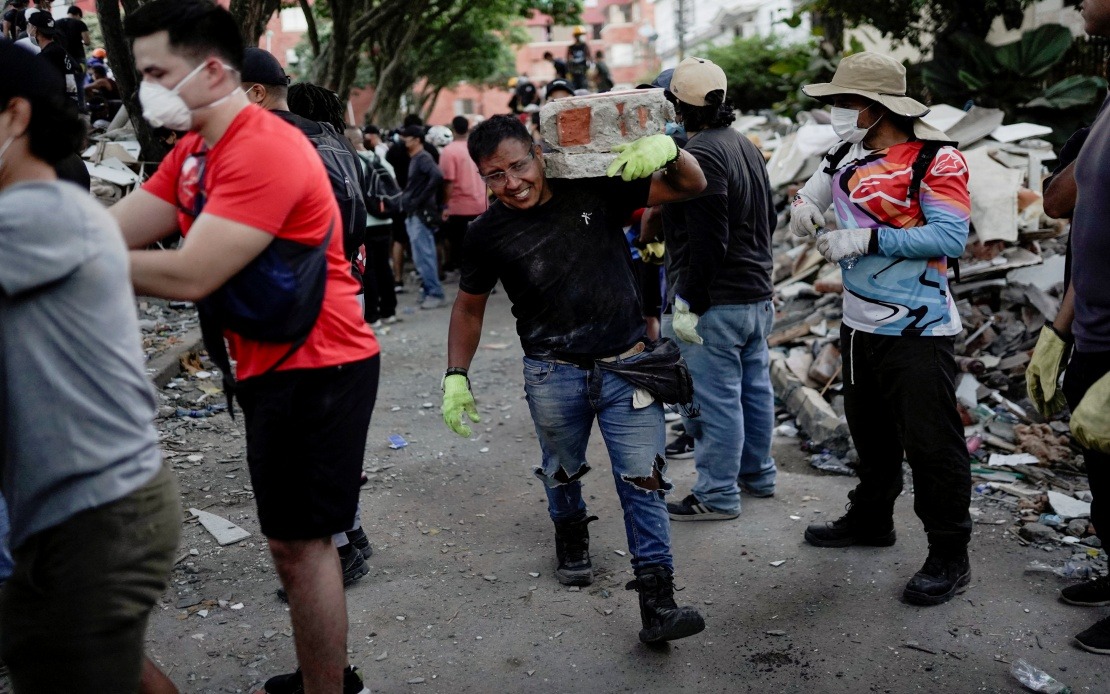
Prime Minister Datuk Seri Anwar Ibrahim has conveyed Malaysia's deepest sympathies to the people of Colombia in the aftermath of a catastrophic earthquake that devastated the country's western regions. The tremor, which registered 7.4 on the magnitude scale, struck on Monday and ranks among the most powerful seismic events to impact the nation in recent decades, leaving widespread destruction and significant loss of life in its wake.
Anwar articulated Malaysia's commitment to standing alongside Colombia during this period of crisis through a statement posted on his social media platform. The Prime Minister emphasised that the entire Malaysian Government and its citizens share in the grief of Colombian families who have lost loved ones in the disaster. His message underscores the importance that Malaysia places on extending humanitarian gestures and international support to nations facing natural calamities, reflecting the country's broader commitment to global solidarity during times of emergency.
The earthquake's impact has been particularly severe across several densely populated urban centres in western Colombia. The epicentre was located in the Chocó region, but the tremor's destructive force radiated outward to affect major cities including Cali, Pereira, and Manizales. These population centres have experienced substantial structural damage to buildings and infrastructure, with rescue operations ongoing to locate survivors trapped beneath rubble. The preliminary death toll exceeding 100 individuals continues to rise as rescue teams assess the full extent of the catastrophe.
Anwar specifically acknowledged the heroic efforts of emergency responders and volunteer organisations working tirelessly in challenging circumstances. The ongoing aftershocks following the initial earthquake present additional hazards for both survivors and rescue personnel, complicating search and recovery operations. The Prime Minister's recognition of these brave individuals reflects Malaysia's understanding of the crucial role that frontline workers play in minimising casualties and facilitating recovery during natural disasters.
The earthquake's timing and magnitude have drawn international attention, with numerous nations expressing concern and offering assistance. Malaysia's rapid response through official government communication demonstrates the country's active engagement with the global community on humanitarian issues. For Malaysian readers and policymakers, such natural disasters serve as reminders of the unpredictable nature of seismic activity in different regions and the importance of preparedness in earthquake-prone nations.
In his statement, Anwar extended prayers for the swift recovery of those injured and for the safe discovery of individuals still missing. This compassionate messaging balances official diplomatic protocol with genuine human concern, recognising that behind statistics lie personal tragedies affecting families and communities. The acknowledgment of those still unaccounted for highlights the ongoing uncertainty and distress experienced by Colombian families in the immediate aftermath of the disaster.
Malaysia's positioning of itself as part of the broader international community in supporting Colombia reflects the nation's diplomatic stance toward global crises. As a developing nation with its own vulnerabilities to natural disasters—including earthquakes in certain regions and exposure to typhoons and flooding—Malaysia understands intimately the challenges that strike nations face during emergency situations. This shared vulnerability creates a foundation for solidarity that transcends geographical or political boundaries.
The 7.4-magnitude classification places this earthquake among the most significant seismic events globally in recent years. For context, earthquakes of this magnitude can cause severe damage to buildings, particularly older structures or those not constructed to modern seismic safety standards. In developing regions where building codes may not be uniformly enforced, such earthquakes typically result in disproportionately high casualties compared to similar events in nations with stricter construction regulations.
Anwar's message also implicitly calls upon the international community to mobilise resources for Colombia's recovery. This includes not only immediate rescue and medical assistance but also longer-term reconstruction support. For Malaysia, which has experience in both providing and receiving international disaster assistance, there is recognition that recovery from such disasters extends far beyond the initial emergency response phase, requiring sustained commitment and resources over months or years.
The disaster underscores the importance of earthquake preparedness infrastructure and early warning systems in vulnerable regions. While Colombia has experienced significant earthquakes historically, the intensity and location of this particular event may have caught some communities off-guard. In Southeast Asia, where multiple nations sit on or near active fault lines, the Colombian earthquake serves as a sobering reminder of the need for continuous investment in disaster preparedness, public education, and resilient infrastructure development.
From a diplomatic perspective, Anwar's timely expression of condolences reinforces Malaysia's commitment to maintaining warm relations with nations across the globe. Such gestures, particularly when made at the highest government level, help strengthen bilateral ties and demonstrate Malaysia's values regarding international cooperation and humanitarian responsibility. The messaging also resonates domestically, showing Malaysian citizens that their government remains engaged with global affairs and maintains sensitivity to human suffering regardless of geographical distance.

