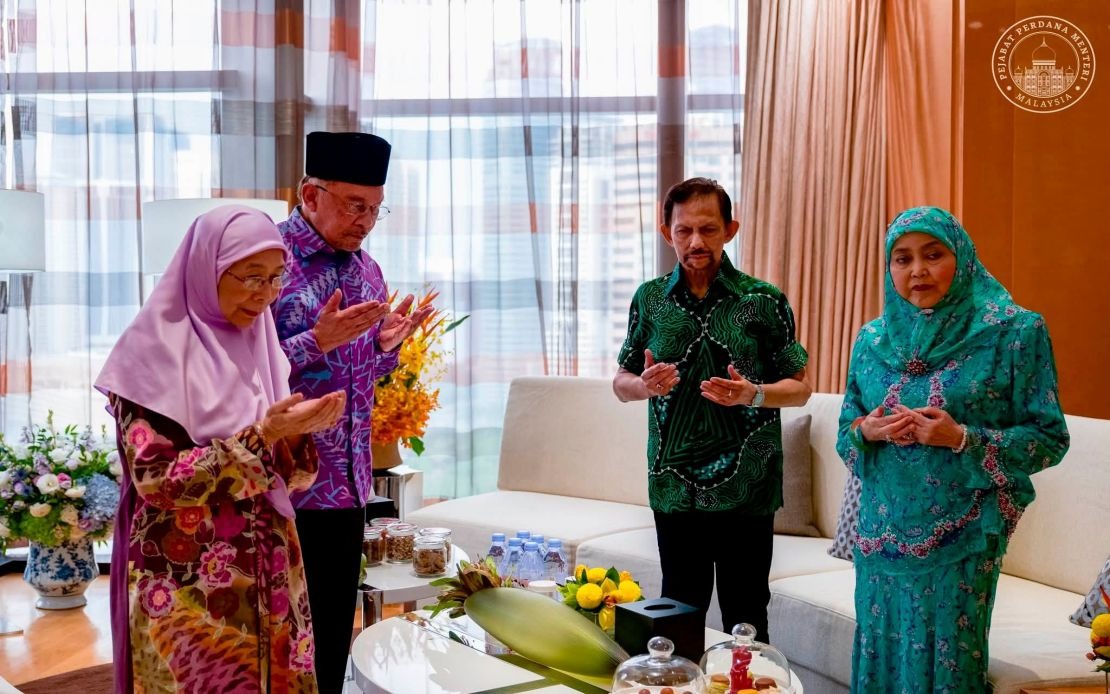
Prime Minister Datuk Seri Anwar Ibrahim has extended formal congratulations to Sultan Hassanal Bolkiah, the Sultan of Brunei, marking the monarch's milestone 80th birthday on July 15. In a statement shared on social media, Anwar conveyed warm wishes on behalf of the Malaysian Government and its people, underscoring the significance of the occasion for Malaysia's closest neighbour in Southeast Asia.
The Prime Minister's greeting carried diplomatic weight beyond ceremonial pleasantries, with Anwar expressing hope that Sultan Hassanal Bolkiah would continue to guide Brunei Darussalam with the wisdom and prudence that have characterised his lengthy reign. Such public acknowledgements from Malaysia's leadership serve to reinforce the close personal and institutional bonds between the two monarchies and their respective governments, reflecting the high regard in which the Brunei Sultan is held across the region.
In his message, Anwar specifically highlighted the bilateral relationship, stating his aspiration that Malaysia and Brunei Darussalam would deepen their existing cooperation in pursuit of mutual benefit for both nations and their citizens. This emphasis on strengthened ties carries particular relevance given the shared history, geography, and cultural connections between Malaysia and Brunei, as well as their coordinated positions on various regional and international matters.
Sultan Hassanal Bolkiah was born on July 15, 1946, in Bandar Brunei, which is now known as Bandar Seri Begawan. He ascended to the throne as the 29th Sultan of Brunei in 1967, bringing with him a vision of modernisation while maintaining the sultanate's Islamic traditions and constitutional monarchy framework. His nearly six-decade reign has witnessed Brunei's transformation from a colonial entity into an independent nation and economic powerhouse, largely driven by its extensive oil and natural gas reserves.
A significant milestone in Sultan Hassanal Bolkiah's historical standing came following the death of Queen Elizabeth II in September 2022. With her passing, the Brunei Sultan became the world's longest-reigning monarch currently in office, a distinction that reflects both the stability of his personal rule and the broader political continuity that Brunei has enjoyed under his leadership. This status has elevated his profile considerably on the international stage, making him an elder statesman figure within the Commonwealth and the wider Asian community.
The birthday congratulations from Malaysia's Prime Minister reflect the importance that Kuala Lumpur places on its relationship with Brunei at all levels of government. Malaysia and Brunei maintain substantial diplomatic, economic, and security partnerships, with cooperation spanning multiple sectors including trade, energy, maritime issues, and regional security concerns. The two nations are also integral members of the Association of Southeast Asian Nations (ASEAN), where they often coordinate their positions on matters of regional interest.
Brunei's strategic location on the island of Borneo, coupled with its significant hydrocarbon reserves, makes it an important economic and geopolitical actor in Southeast Asia despite its relatively small population. Malaysia's neighbouring provinces of Sabah and Sarawak share both land and maritime borders with Brunei, creating natural channels for bilateral engagement and cooperation. The close geographical proximity has facilitated numerous joint initiatives in border management, environmental protection, and economic development.
Sultan Hassanal Bolkiah's reign has been marked by a commitment to blending modernity with Islamic principles, a balancing act that has drawn both domestic and international attention. His introduction of Sharia law as a cornerstone of Brunei's legal system, while maintaining the sultanate's role as a constitutional monarchy, represents a distinctive approach to governance that has shaped the nation's identity. This approach has often made Brunei a reference point in discussions about Islamic governance and the compatibility of tradition with contemporary statehood.
The personal relationships between Malaysia's and Brunei's leadership have traditionally been cordial and substantive, with regular high-level visits and consultations forming part of the diplomatic calendar. Prime ministerial and royal visits between the two nations serve to renew commitments and address matters of mutual concern. The warm tone of Anwar's birthday message reflects this tradition of courteous diplomatic engagement while also serving to signal Malaysia's commitment to maintaining and enhancing its partnership with Brunei.
As Sultan Hassanal Bolkiah enters his ninth decade, questions about succession and the long-term trajectory of Brunei's governance have naturally arisen in some circles, though such matters remain primarily the purview of the sultanate's internal constitutional processes. His sons, including Crown Prince Al-Muhtadee Billah, have been prepared for future roles, ensuring continuity of governance and royal tradition. Meanwhile, the Sultan himself continues to maintain an active role in national and regional affairs.
The broader context of Malaysia-Brunei relations is one of pragmatic cooperation tempered by the recognition of distinct national interests. Both nations navigate a complex regional environment where great power competition, maritime claims, and economic competition shape strategic calculus. Their shared ASEAN membership and commitment to regional stability provide a framework for ongoing collaboration and dialogue on matters ranging from the South China Sea to pandemic response and economic integration initiatives.
Sultan Hassanal Bolkiah's continued reign represents a source of stability not only for Brunei but also for the wider Southeast Asian region. His birthday milestone offers Malaysia and other neighbouring countries an occasion to reflect on the importance of strong leadership and stable governance in facilitating regional prosperity and security. As Anwar's congratulations demonstrate, Malaysia remains invested in the continued wellbeing and success of its closest neighbours, understanding that regional harmony and cooperation benefit all parties involved.

