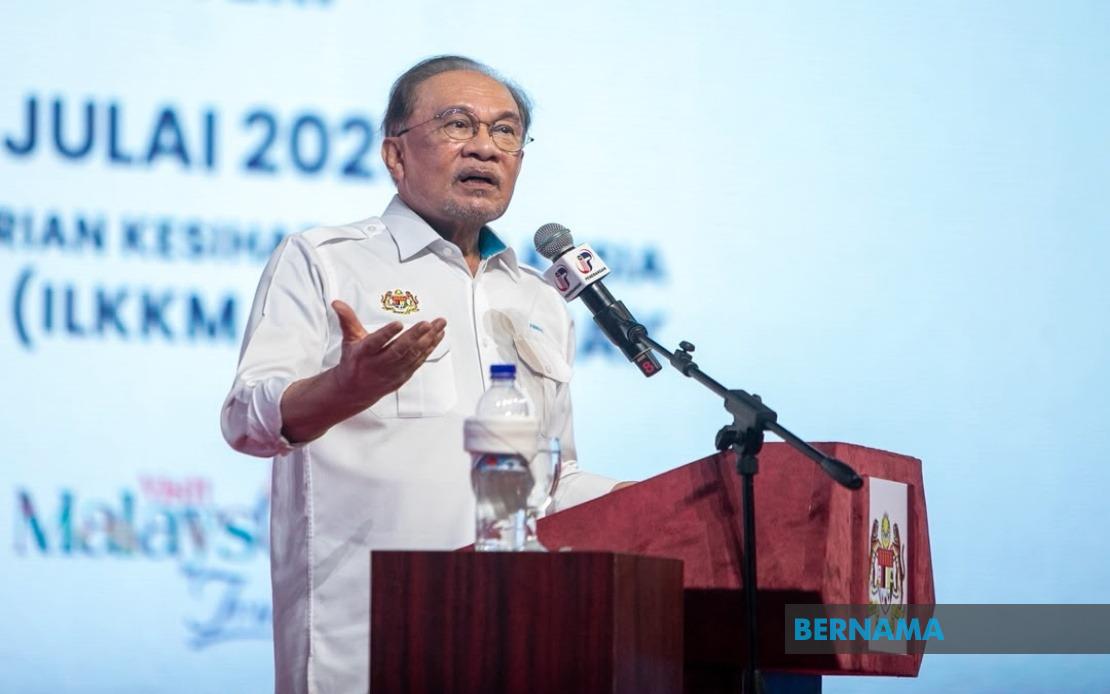
Prime Minister Datuk Seri Anwar Ibrahim has called on Malaysia's younger generation to develop a deeper appreciation for the country's journey to independence, emphasizing that the freedoms enjoyed today were secured through tremendous personal sacrifice by previous generations. Speaking during the official launch of the 2026 National Month and Fly the Jalur Gemilang Campaign in Ipoh, Anwar highlighted the importance of understanding rather than merely celebrating the nation's historical struggles, particularly as Malaysia approaches significant commemorations of its independence.
Anwar's remarks underscore a growing concern among political leaders that contemporary Malaysians, particularly those born well after 1957, may lack sufficient awareness of the costs incurred in achieving national independence. The Prime Minister framed the initiative as an opportunity to move beyond surface-level patriotism, suggesting that meaningful National Month observances should prompt serious reflection on historical realities. By connecting flag-flying campaigns to historical education, Anwar attempted to position national symbols as tools for deeper civic engagement rather than mere annual traditions.
The struggle for Malaysian independence, as Anwar reminded his audience, demanded enormous human tolls from the independence fighters and their communities. Beyond the political and diplomatic negotiations that characterized the final push toward 1957, the journey involved bloodshed, physical hardship, and emotional sacrifice from those who dedicated themselves to the cause. Anwar's deliberate use of the phrase "blood, sweat and tears" served to convey the magnitude of what preceding generations endured, a rhetorical choice that reflects a particular concern about contemporary disconnection from historical memory.
The Prime Minister's address reflects broader regional patterns in Southeast Asia where post-independence generations increasingly distance themselves from the narratives that shaped their nations. In Malaysia's case, this generational gap has implications for social cohesion and national identity at a time when the country faces economic pressures, internal political divisions, and shifting global circumstances. By emphasizing historical understanding, Anwar appears to be advocating for patriotism rooted in knowledge rather than sentiment, a distinction that carries significance for how Malaysians understand their obligations to one another and their nation.
The 2026 National Month campaign, launched in Ipoh with the participation of key government figures including Communications Minister Datuk Seri Fahmi Fadzil, National Unity Minister Datuk Aaron Ago Dagang, and Perak Menteri Besar Datuk Seri Saarani Mohamad, represents an attempt to refresh how the government approaches annual patriotic observances. Rather than treating August as simply another month featuring flag decorations and official ceremonies, the initiative appears designed to encourage sustained engagement with historical questions about how the nation was formed and what independence actually means in contemporary context.
Anwar's framing of independence as something that must be understood rather than simply inherited suggests a recognition that younger Malaysians may feel insufficient connection to historical narratives they encounter primarily through textbooks or official speeches. By asking the current generation to actively revisit historical pages and then translate that knowledge into renewed commitment to national symbols, the Prime Minister was attempting to create a more dynamic relationship between history and present-day citizenship. This approach acknowledges that patriotism divorced from understanding can become hollow or vulnerable to alternative narratives.
The emphasis on appreciation for past sacrifices also carries implicit messages about national unity and social responsibility. In a country where communal relations remain occasionally tense and where economic anxieties can fracture social bonds, appeals to shared historical struggle serve important functions. By reminding all Malaysians of a moment when diverse communities worked toward a common objective, Anwar was reinforcing the idea that national cohesion depends on remembering that prior generations transcended their own differences to achieve independence collectively.
The timing of these remarks, with the 2026 campaign launching nearly seven decades after independence, underscores that Malaysia is approaching a inflection point where personal memory of the independence struggle has almost entirely passed from living memory. Within the next decade or so, virtually no Malaysian will have direct recollection of pre-independence life or the immediate post-1957 period. This reality makes official initiatives to preserve and transmit historical understanding increasingly crucial if the nation wishes to maintain continuity in how it understands itself.
For Malaysian readers and regional observers, Anwar's address signals that the government intends to use the approaching years to deepen national conversation about identity and history rather than simply marking time with routine ceremonies. Whether this translates into substantive changes in education curricula, public discourse, or civic engagement remains to be seen, but the rhetorical positioning suggests an awareness that younger Malaysians require more sophisticated engagement with their nation's past than conventional patriotic appeals can provide. The success of such efforts will depend significantly on whether government resources and political will align with these stated intentions.

