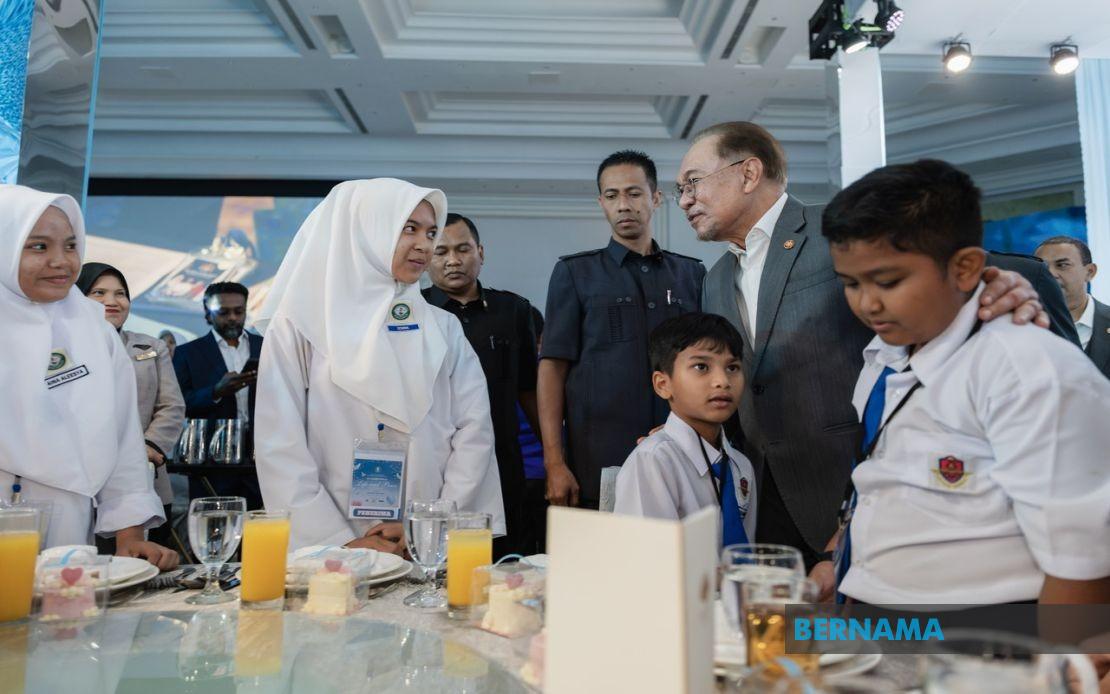
Prime Minister Datuk Seri Anwar Ibrahim has underscored a fundamental principle in education that extends beyond examination results and academic rankings: the cultivation of character and compassion in young Malaysians must stand as a cornerstone of childhood development. Speaking at a celebration event in Kuala Lumpur on July 15, Anwar articulated his conviction that intellectual capability divorced from kindness and respect creates individuals who, despite their scholastic prowess, may inflict harm upon society.
Addressing approximately 700 pupils representing 47 schools across Kuala Lumpur and Putrajaya gathered for the "Celebration of Life and Peace" event, the Prime Minister posed a direct challenge to young learners about the true purpose of education. His message reframed the conventional hierarchy of educational priorities, questioning the predominance of examination-driven metrics in Malaysian schools. He articulated that attending school encompasses multiple objectives: acquiring knowledge, developing wisdom, and becoming virtuous individuals who understand their responsibilities to others. This holistic framework reflects evolving international thinking about education's role in society, particularly in Southeast Asia where rapid economic development has sometimes overshadowed character building.
Anwar's intervention comes at a moment when Malaysian schools grapple with persistent concerns about student welfare and interpersonal conduct. Bullying incidents continue to surface across educational institutions, sometimes with tragic consequences. The Prime Minister's direct appeal to schoolchildren to avoid bullying behaviour signals governmental awareness of these challenges and positions the issue squarely within the national development agenda. His rhetorical question—what value exists in academic intelligence paired with destructive social behaviour—cuts to the heart of debates about education's purpose in contemporary Malaysia.
The event itself embodied the principles Anwar articulated. Organised by the ERM Foundation to celebrate the birthdays of children, many of whom face economic hardship or health challenges, it demonstrated an alternative approach to recognising youth. Each attendee received RM500 in cash assistance, access to meals, and entertainment—practical acknowledgment that childhood development occurs within material and emotional contexts. The foundation's founder, Xin'er, explained the philosophy underpinning such initiatives: many children lack access to meaningful birthday celebrations due to poverty or illness, making collective acknowledgment of their existence an act of affirming their worth and potential.
Anwar's call for intergenerational cooperation positioned parents, educators, and children as shared stakeholders in creating supportive educational environments. He explicitly requested that youngsters commit to academic diligence, respect for teachers, and filial devotion toward parents—virtues traditionally emphasised in Malaysian and broader Southeast Asian cultures. By framing these expectations as promises made to him personally, he humanised leadership and invited direct engagement with young citizens. This rhetorical approach contrasts with purely policy-based directives, creating emotional resonance that may prove more memorable and motivating than legislative mandates.
The attendance of Anwar's wife, Datuk Seri Dr Wan Azizah Wan Ismail, and political secretary Datuk Azman Abidin underscored the administration's commitment to the occasion and the issues it represented. Such participation by senior figures sends institutional signals about the importance of youth welfare and character development within government priorities. In Malaysia's political context, where education frequently features in electoral campaigns and policy announcements, the Prime Minister's presence and message contribute to shaping public discourse around educational values.
Xin'er's remarks about ensuring all children experience peaceful childhoods free from conflict and illness articulated aspirations extending beyond national boundaries. In a region where economic disparities and occasional social instability affect youth development, emphasising universalised rights to safety, happiness, and celebratory moments reflects progressive thinking about childhood as a protected stage deserving resources and intentionality. Her observation that gifts matter less than the emotional warmth surrounding celebrations challenges consumer-driven birthday culture prevalent in affluent societies.
The selection of 47 schools across two federal territories suggests deliberate efforts to reach diverse student populations rather than concentrating on elite institutions. This distribution implies that messages about character, kindness, and anti-bullying initiatives should permeate all educational levels and socioeconomic segments of Malaysian society. Schools serving different communities face varying pressures and challenges; uniformly addressing bullying and character development acknowledges that these concerns transcend geographical or economic boundaries.
For Malaysian educators and parents, Anwar's emphasis offers reinforcement for ongoing efforts to integrate values education alongside academic curricula. Some schools have implemented character development programmes, civic education modules, and anti-bullying initiatives, but consistency and resources remain challenges. The Prime Minister's public platform lends visibility and apparent governmental priority to these efforts, potentially influencing resource allocation and implementation across school systems.
The broader implications for Southeast Asian educational policy merit consideration. As regional economies compete for human capital and innovation capacity, the tension between drilling academic achievement and cultivating emotional intelligence, ethics, and social responsibility intensifies. Malaysia, as a middle-income nation aspiring toward developed status, must simultaneously produce internationally competitive graduates and socially cohesive citizens. Anwar's message suggests the government recognises that these objectives are not contradictory but mutually reinforcing—academically excellent individuals lacking character and compassion may contribute less to national development than well-rounded individuals combining knowledge with integrity.
The event's celebration of children's birthdays through collective acknowledgment and material support carries psychological significance often overlooked in policy discussions. Recognising a child's existence, marking milestones, and providing resources during vulnerable developmental years can influence self-worth, resilience, and future civic participation. For students attending schools in economically challenged communities, such occasions may constitute rare experiences of institutional validation and care. This experiential dimension of educational support complements curricular interventions and policy frameworks.
Moving forward, the challenge lies in translating Anwar's rhetorical commitments into sustained institutional changes. School systems require resources, training for educators, and systemic approaches to conflict resolution and character development. Parents need accessible guidance on raising kind, academically engaged children while managing economic pressures and competing demands on family time. Students themselves require clear expectations, peer support networks, and role models demonstrating that success encompasses far more than examination scores. Only through sustained, coordinated effort across educational institutions, families, and communities can Malaysia actualise the vision of intelligent, compassionate citizens that the Prime Minister articulated.

