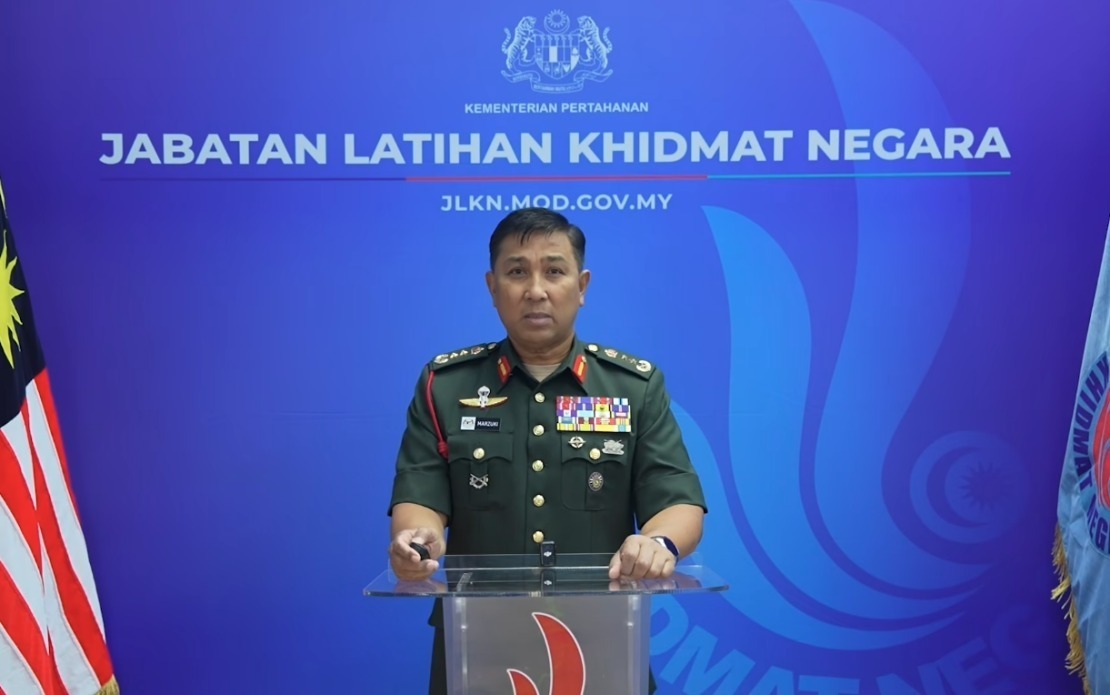
The National Service Training Department has approved voting leave for 77 trainees currently enrolled in the National Service Training Programme's third series for 2026, enabling them to exercise their democratic rights while maintaining the integrity of the mandatory national service initiative. This accommodation reflects efforts by Malaysian authorities to reconcile civic participation with the structured demands of the PLKN programme, which emphasises national cohesion and citizen development across diverse demographic groups.
Major General Datuk Marzuki Mokhtar, the department's director general, outlined the arrangement in a statement, emphasising that the decision preserves trainees' constitutional entitlement to vote without undermining the programme's core educational mission. The approval demonstrates recognition of democratic principles as complementary to rather than conflicting with national service objectives, a positioning that underscores the government's commitment to upholding voting rights across all citizen demographics.
The voting arrangements have been tailored to accommodate state-specific electoral schedules. Of the approved trainees, 31 individuals voting in today's Johor state election have been permitted to defer their camp reporting until tomorrow, allowing adequate time for polling participation and travel. This staggered approach minimises disruption to training schedules whilst ensuring trainees can fulfil electoral obligations without logistical constraints.
A larger cohort of 46 trainees eligible to vote in Negeri Sembilan's election on August 1 will receive two to three days of leave, acknowledging the additional travel time required for those stationed further from polling centres. The department calculated these leave durations based on practical requirements, ensuring trainees can cast ballots and return to camp without excessive programme disruption. This flexibility suggests the PLKN administration views voting participation as sufficiently important to justify brief operational adjustments.
The broader PLKN 3.0 Series 3/2026 programme encompasses 870 confirmed trainees distributed across three training facilities. Camp 505 AW in Pekan, Pahang accommodates the largest contingent of 500 trainees, whilst Camp 515 AW in Kuala Lumpur hosts 250 participants, and Camp 504 AW Bukit Keteri in Perlis manages 120 trainees. This geographical distribution across Peninsular Malaysia reflects the programme's design to expose participants to diverse regional environments and build national consciousness among young Malaysians from different states.
The training cycle, running from July 11 through August 24, represents a concentrated period of civic and physical conditioning intended to inculcate discipline, patriotism, and shared identity among participants. The coordination of voting leave within this timeframe demonstrates how the PLKN administration balances competing institutional objectives—maintaining training continuity whilst respecting constitutional rights that form the foundation of Malaysian democratic governance.
For Malaysian voters and observers of the nation's political development, the trainees' voting participation carries symbolic significance beyond the numerical vote count. These individuals represent the younger generation of Malaysian citizens taking their first steps in formal civic participation, often within structured government-sanctioned environments. Their involvement in state elections signals continuity in democratic engagement and reflects the PLKN programme's integration within broader frameworks of citizenship development.
The department simultaneously issued reminders to prospective trainees for the fourth series of PLKN 3.0 in 2026, particularly those born in 2008 who will form the next cohort. These potential participants are encouraged to monitor official JLKN channels for announcements regarding selection and registration processes. This forward-looking communication reflects standard administrative practice but also underscores the department's ongoing recruitment efforts for the mandatory service programme.
The PLKN initiative, reintroduced as a revamped 3.0 version following previous iterations, remains a cornerstone of Malaysia's approach to youth development and national integration. By facilitating trainees' electoral participation, the department subtly reinforces messaging that democratic citizenship and national service reinforce rather than contradict one another. This positioning may prove significant as the government continues promoting the programme to younger Malaysians and their families, particularly in contexts where mandatory service sometimes faces scrutiny regarding opportunity costs and personal freedoms.
The voting arrangements also reflect practical acknowledgment that PLKN participants originate from constituencies across Malaysia, meaning electoral timelines inevitably intersect with training schedules. Rather than viewing such intersections as administrative inconveniences, the department's approach integrates them as opportunities to normalise voting participation within the trainees' developing understanding of citizenship responsibilities. This institutional flexibility may influence perceptions of the PLKN programme among participants and their communities, potentially framing national service as compatible with rather than detrimental to fundamental rights.
For Southeast Asian observers tracking Malaysia's approach to youth civic engagement and democratic participation, these arrangements offer insights into how the government reconciles structured national programmes with constitutional protections. The relatively straightforward approval process and calculated leave allocations suggest an administration confident in both the PLKN programme's resilience and trainees' commitment despite brief interruptions. Whether this goodwill extends to all forms of civic expression beyond voting, or whether it reflects specific sensitivity to electoral participation, remains an open question regarding the boundaries of democratic engagement within mandatory national service contexts.

