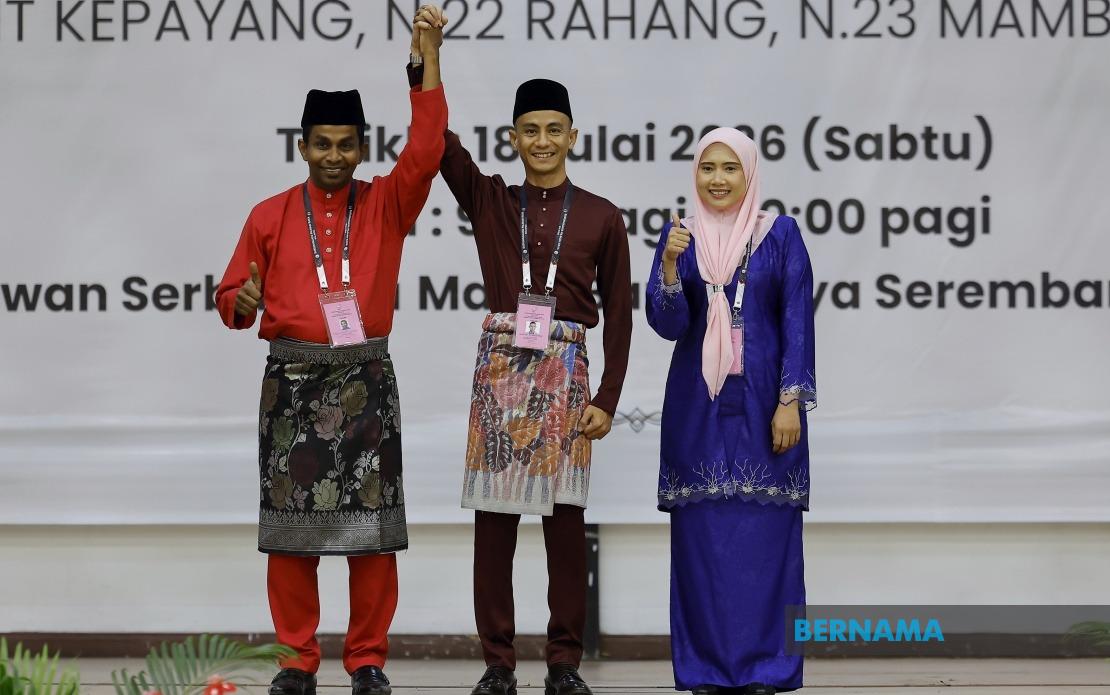
Datuk Ahmad Faez Abdul Razak is stepping into electoral politics for the first time as Pakatan Harapan's candidate for the Labu state seat in Negeri Sembilan's forthcoming 16th state election. The PKR nominee expressed a blend of optimism and apprehension about his inaugural campaign, having invested nearly three years cultivating relationships within the constituency before formally contesting the race.
At the nomination ceremony in Seremban, Ahmad Faez conveyed his conviction that sustained grassroots engagement has positioned him favourably with voters. His lengthy preparation period—almost two years and eight months of community work—reflects a deliberate strategy to establish credibility before the formal campaign season commenced. He attributed growing public backing to the tangible alignment between state-level initiatives and federal government priorities, suggesting that voter confidence in the current administration provides a foundation for his candidacy.
As a property developer by profession, Ahmad Faez intends to leverage his commercial expertise to address a critical tension facing Labu: accommodating significant infrastructure and residential expansion while preserving community welfare. This positioning differentiates him from typical political candidates by explicitly invoking professional credentials to tackle governance challenges. His manifesto prioritises constructing dedicated youth facilities—specifically a community centre and recreational hub—addressing what he identifies as a conspicuous gap in current local infrastructure.
The Labu constituency occupies a strategically important position within Negeri Sembilan's economic landscape. Spanning between 11,000 and 12,000 hectares, the Malaysia Vision Valley (MVV) development corridor encompasses Labu and represents one of the state's most ambitious spatial planning initiatives. This corridor targets industrial and residential expansion, with projections suggesting substantial employment creation for local residents. However, Ahmad Faez acknowledges that managing this transformation requires careful stewardship—rapid growth without strategic oversight risks compromising the social fabric and environmental quality that residents currently value.
The candidate frames his core political message around reconciling these competing imperatives. Rather than positioning development and community protection as opposing forces, he argues that skilled management can harness growth's economic benefits whilst maintaining livelihood standards and community cohesion. For voters concerned about becoming peripheral figures in their own region's transformation, this narrative offers reassurance that expansion will not proceed at the expense of existing residents' interests.
Labu's electoral contest features three candidates, creating a genuinely competitive race. Incumbent assemblyman Mohamad Hanifah Abu Baker, representing Bersatu and Barisan Nasional, secured the seat in 2023 with a 1,640-vote majority over PH-PKR's Datuk Ismail Ahmad, who garnered 10,021 votes. This relatively modest winning margin—approximately five percent of the winner's vote share—suggests the seat remains within contention, particularly if PH consolidates its support and attracts persuadable swing voters. The third candidate, Siti Nur Umaira Hasim, running under BN's banner, adds further complexity to the electoral mathematics.
The constituency's voter composition underscores both its strategic importance and demographic characteristics. The Election Commission's electoral roll, updated to May 31, 2026, lists 32,884 registered voters, comprising 32,869 ordinary voters plus 15 police personnel and their spouses. This total reflects Labu's status as a medium-sized state constituency, with sufficiently large electorate to justify significant political attention yet manageable enough for intensive grassroots mobilisation.
For Pakatan Harapan, recapturing Labu would contribute meaningfully to reversing losses incurred in the 2023 state election. The party's decision to field Ahmad Faez, despite his lack of prior electoral experience, signals confidence in his ground organisation and community standing. This investment in a political newcomer reflects broader PH strategy across Malaysia—refreshing candidate pools and channelling resources toward constituencies deemed recoverable rather than conceding territory entirely.
The electoral timeline provides limited preparation window. The Election Commission has scheduled early voting for July 28, with polling day set for August 1, 2026. This compressed campaign period favours candidates with established constituency presence and existing voter familiarity—a factor potentially advantaging Ahmad Faez given his extended engagement with Labu residents prior to nomination.
For Malaysian observers monitoring Negeri Sembilan politics, the Labu contest exemplifies broader trends reshaping state-level electoral competition. As federal-state policy alignment strengthens and development corridors reshape regional economies, constituencies experience intensifying pressure to balance growth with social stability. Candidates who convincingly articulate management of this balance—rather than simply advocating acceleration or opposition—increasingly resonate with voters navigating rapid transformation.
Ahmad Faez's candidacy also reflects evolving politician profiles within Malaysian political parties. His background in property development brings practical expertise in spatial planning, infrastructure execution, and stakeholder negotiation—skills potentially valuable in constituencies experiencing substantial spatial change. This represents a departure from earlier politician archetypes focused predominantly on administrative or legal backgrounds, suggesting parties increasingly recognise specialist professional credentials as politically marketable.
The Malaysia Vision Valley corridor's expansion carries implications extending beyond Labu itself. Successful management of development in this fast-growing constituency could establish governance models applicable across Negeri Sembilan and comparable growth corridors elsewhere in Malaysia. Conversely, mismanagement—whether through environmental degradation, inadequate social amenities, or community displacement—might trigger electoral backlash affecting parties' prospects across multiple constituencies. This broader significance makes the Labu race instructive for understanding how Malaysian voters evaluate development management during periods of rapid structural economic change.

