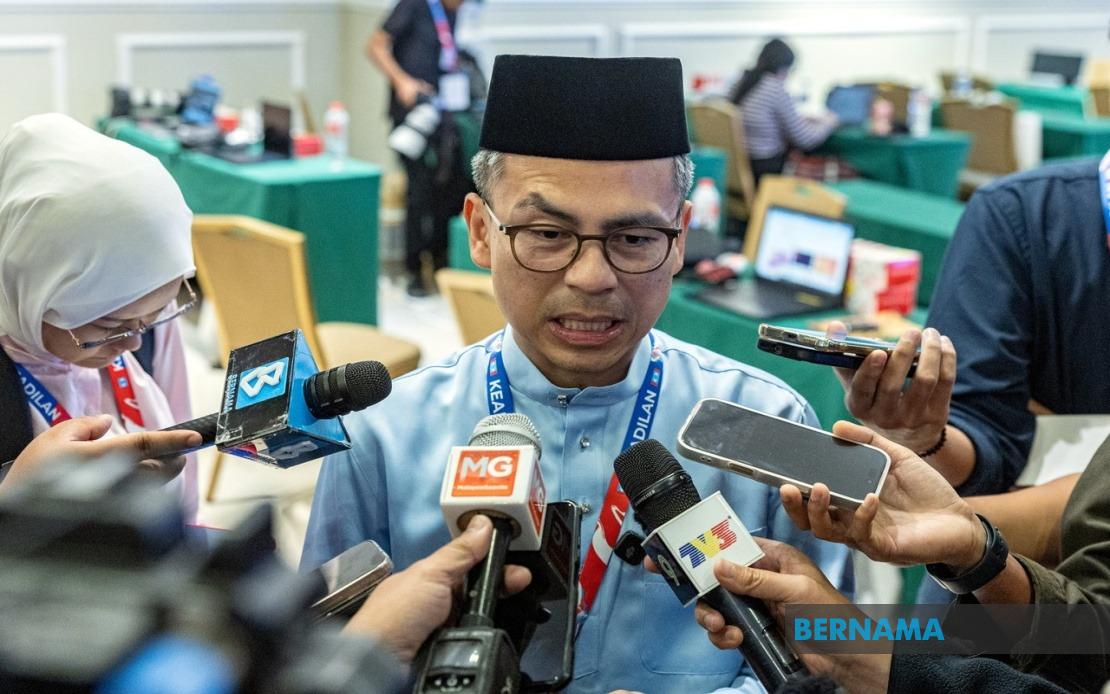
Parti Keadilan Rakyat will overhaul its communication and information dissemination strategy to more effectively convey government initiatives and accomplishments to ordinary Malaysians, addressing a persistent disconnect between policy implementation and public perception. The decision emerged during the PKR National Congress 2026 held at the Melaka International Trade and Exhibition Centre in Ayer Keroh, where party delegates raised multiple proposals centred on improving the flow of information from government to constituents.
Communications Minister Datuk Seri Fahmi Fadzil, who also serves as PKR's Information Chief, acknowledged a fundamental challenge facing the administration: despite considerable macroeconomic progress and various government initiatives, these improvements have not visibly translated into tangible benefits experienced at the household and community level. This perception gap represents a critical vulnerability for the ruling coalition, particularly as it seeks to build public confidence ahead of future electoral contests. Fahmi stressed that bridging this communication divide is essential for both the Communications Ministry and Pakatan Harapan's broader political positioning.
The initiative reflects growing recognition within PKR's leadership that effective governance extends beyond policy implementation to encompassing robust public communication. While the government has undertaken numerous economic and social programmes, their impact and reach remain inadequately communicated to grassroots voters. Fahmi indicated that delegates have prioritised developing more structured and formalised channels through which information about government achievements, particularly those affecting household economics and public welfare, can reach constituents systematically rather than haphazardly.
Fahmi revealed that specific proposals regarding communication enhancements and information dissemination reforms would be formally presented during the congress's concluding session, suggesting these recommendations have substantive backing from party delegates across different branches and regions. The Communications Minister expressed openness to these suggestions and commended branch leaders for demonstrating willingness to assume greater responsibility in disseminating government information within their respective constituencies. This ground-level engagement represents a potential shift towards more decentralised information distribution leveraging PKR's grassroots network.
A key element of the proposed restructuring involves establishing more formal arrangements linking parliamentary-level issues with federal decision-making processes in Putrajaya. Fahmi acknowledged that communication channels between MPs and the capital have historically existed but lack the necessary institutional framework to ensure systematic escalation and resolution of local concerns. By creating formal linkages, PKR aims to ensure that issues identified by elected representatives at constituency level can be promptly addressed through coordinated government responses, ultimately improving both problem-solving effectiveness and public messaging.
The PKR leadership's receptiveness to these proposals signals internal acknowledgment that the party itself requires structural adjustments before expecting improved external communication. Fahmi stated that the Central Leadership Council intends to lead the broader transformation by first implementing necessary changes within PKR's own organisational structures and leadership practices. This inside-out approach suggests the party recognises that credible external messaging depends on demonstrable internal commitment to the communication principles being advocated.
For Malaysian voters and policymakers, this development carries significant implications. Effective government communication directly influences public trust, policy acceptance, and electoral performance. The disconnect between objective economic indicators and household perceptions of wellbeing has troubled governments throughout Southeast Asia, and PKR's recognition of this challenge reflects sophisticated political awareness. The proposed formalisation of information channels and strengthening of dissemination mechanisms could substantially improve how government achievements in infrastructure, fiscal management, and social programmes reach ordinary citizens.
The timing of this initiative, coinciding with the PKR National Congress 2026, suggests the party is preparing for a communication-focused phase in its governance approach. As Malaysia's political landscape continues evolving, with voter expectations increasingly shaped by social media narratives and alternative information sources, traditional government communication structures require modernisation and amplification. PKR's proposed enhancements address this reality by seeking to establish more robust, systematic, and formal information pathways.
Beyond PKR's immediate interests, these communication reforms carry broader significance for the Pakatan Harapan coalition and Malaysian governance generally. Coalition partner coordination in messaging, particularly regarding shared economic and social achievements, remains essential for maintaining public confidence. Improved communication strategies developed through PKR's restructuring could establish models applicable across the coalition, enhancing collective messaging effectiveness.
The underlying challenge that prompted these proposals—that government achievements remain inadequately perceived by the public—reflects a communication gap that demands attention across multiple levels and institutions. Fahmi's leadership of this initiative positions the Communications Ministry as actively addressing systemic messaging weaknesses rather than simply managing day-to-day information flows. Success in this endeavour would require sustained commitment, resource allocation, and genuine structural changes, not merely rhetorical commitment to improved communication.
Moving forward, the effectiveness of PKR's enhanced communication strategy will depend on implementation rigour and resource commitment following the congress's conclusion. The gap between policy achievements and public perception affects electoral viability and governance legitimacy, making this undertaking consequential for Malaysia's political trajectory and the coalition's ability to maintain public support through the remainder of its mandate.

