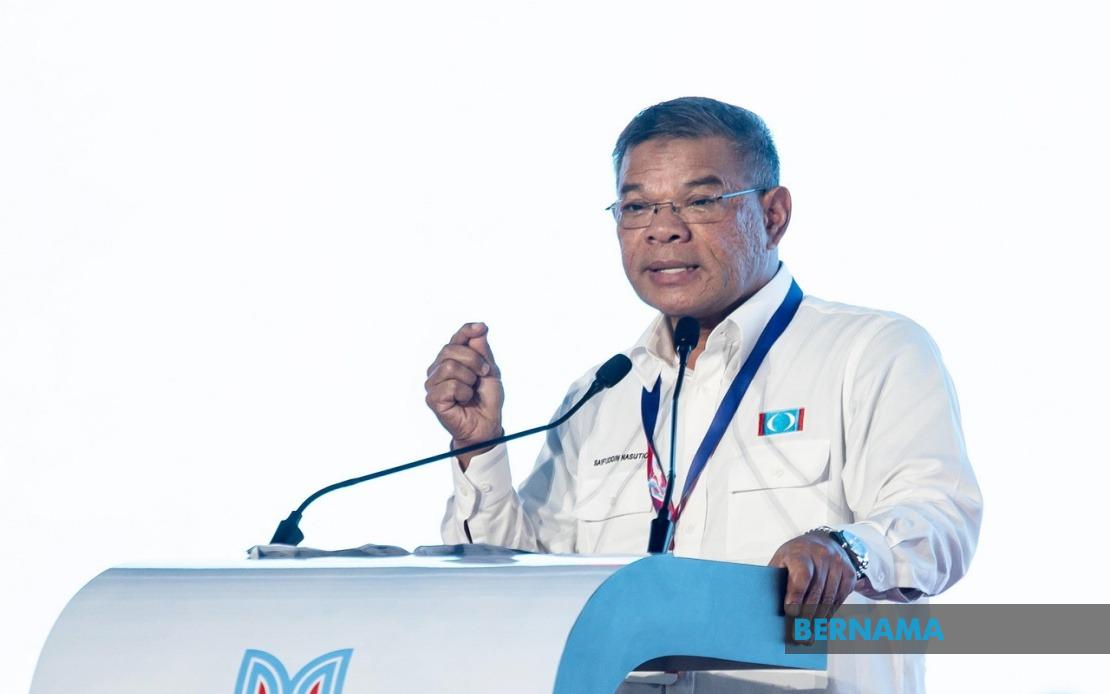
The People's Justice Party (PKR) has made a direct appeal to voters to move beyond the entrenched patterns of identity-based political discourse that have long shaped electoral competition in Malaysia, instead demanding that the government and opposition be judged primarily on their economic track record and ability to improve living standards. Speaking at the party's national congress in Melaka on August 16, Datuk Seri Saifuddin Nasution Ismail, who holds the dual roles of deputy president and Home Minister, articulated this reframing as central to the MADANI Government's political philosophy and its case for re-election.
Saifuddin Nasution characterised the reliance on identity and racial politics as fundamentally unproductive, describing it as a "zero-sum game" incapable of generating solutions to Malaysia's underlying challenges. His argument carries implicit criticism of opposition parties that traditionally mobilise voters along communal lines, suggesting that such appeals offer nothing but hollow competition for limited symbolic gains while the nation's core economic and social problems remain unaddressed. The distinction he drew was deliberate: while acknowledging that multiple identities exist within Malaysia's fabric—Malay, Islamic, Chinese, Indian, Sabahan, and Sarawakian—he contended that the weaponisation of these identities to foment fear represents the genuine pathology afflicting contemporary Malaysian politics.
The Home Minister's framing reflects a strategic calculation by PKR and its coalition partners that economic performance offers firmer electoral ground than communal appeals, particularly as Malaysian voters confront persistent inflation, rising cost of living, and wage stagnation. Rather than compete for dominance in identity-based discourse, this approach seeks to establish a new political vocabulary centred on tangible improvements in household finances and social welfare. Saifuddin Nasution illustrated this through the metaphor of enlarging the "pie of prosperity"—a deliberate choice of language that suggests abundance can be created through better management rather than redistributed through zero-sum claims and counterclaims.
This pivot by PKR's leadership illuminates deeper tensions within Malaysia's political landscape. The party operates within a coalition government that includes components representing diverse ethnic and religious constituencies, yet Saifuddin Nasution's remarks suggest growing frustration with perpetual ethnic-communal framing of policy debates. His assertion that "there are no winners" in identity politics reads as a challenge to opposition narratives that have consistently mobilised around questions of Malay-Muslim primacy, non-Malay rights, and religious authority. By redefining victory as shared prosperity rather than communal advantage, PKR attempts to resettle the terms of political competition.
The deputy president outlined three operational pillars intended to guide the MADANI Government's governance agenda going forward. The first involves expanding economic opportunities through growth-oriented policies that benefit all societal segments rather than distributing restricted windfalls according to identity lines. This represents a significant departure from decades of race-based affirmative action frameworks, though Saifuddin Nasution was careful not to explicitly dismantle existing structures, framing the approach instead as complementary enhancement rather than replacement. The second pillar mandates need-based rather than identity-based welfare assistance, directly challenging the assumption that social support should flow primarily according to ethnic categorisation. This carries particular resonance in a context where Bumiputera policies have long dominated resource allocation debates.
The third commitment centres on institutional integrity and anti-corruption efforts, positioning fiscal discipline as the prerequisite for genuine prosperity expansion. This dimension suggests that PKR views corruption as having consumed resources that could otherwise fund development across all communities, converting what might appear as a technical governance issue into a moral argument about fairness and shared national resources. By linking anti-corruption directly to the well-being of "all segments of society," Saifuddin Nasution implies that communal tensions themselves may partly reflect scarcity artificially created through official malfeasance rather than inherent resource constraints.
A particularly notable dimension of Saifuddin Nasution's remarks involved his reorientation of threat assessment within Malaysia's plural society. Rather than accepting conventional narratives that position different ethnic communities as threats to each other, he identified poverty and social pathologies—specifically drug abuse—as the genuine menaces demanding urgent national attention. This reframing proves significant for Malaysian readers contemplating the sources of vulnerability in their own communities, shifting focus from communal demographic anxiety toward shared challenges that degrade all populations regardless of ethnicity. The implicit argument holds that identity-based politics misdirects public attention toward manufactured grievances while genuine hazards to social cohesion proliferate.
For Southeast Asia's broader political context, PKR's repositioning carries considerable weight as a model of how multi-ethnic coalitions might sustain themselves beyond the ethnic patronage networks that have characterised the region's governance structures. Should the party successfully mobilise voters around performance metrics rather than communal identity, it could establish alternative patterns of political competition that other pluralistic societies across the region might emulate or adapt. Conversely, sustained reliance on identity politics by opposition forces could widen the gap between the coalition's forward-looking framing and traditional electoral mobilisation strategies, creating opportunities for disruption should economic performance deteriorate.
Saifuddin Nasution explicitly tasked party members with intensifying efforts to publicise the MADANI Government's accomplishments, indicating that rhetoric alone cannot sustain this political repositioning without demonstrable improvements in economic conditions. This places significant pressure on the administration to deliver tangible gains in employment, wages, and cost-of-living relief, particularly among younger voters who represent the electoral frontier. The emphasis on youth engagement suggests PKR recognises that generational cohorts with less investment in historical communal narratives may prove more receptive to performance-based appeals, though execution of this strategy remains contingent on visible economic results in coming months.
The Home Minister's call effectively challenges Malaysian voters to evaluate their political choices through an unfamiliar lens, asking them to resist ingrained patterns of communal political thinking in favour of comparative governance assessment. Whether this invitation proves compelling depends partly on competing narratives offered by opposition parties and partly on whether the MADANI Government can credibly demonstrate that its economic policies are producing broadly distributed benefits. The coming electoral cycle will test whether identity politics has truly exhausted its mobilising power or whether Saifuddin Nasution's appeal represents an aspiration ahead of its time.

