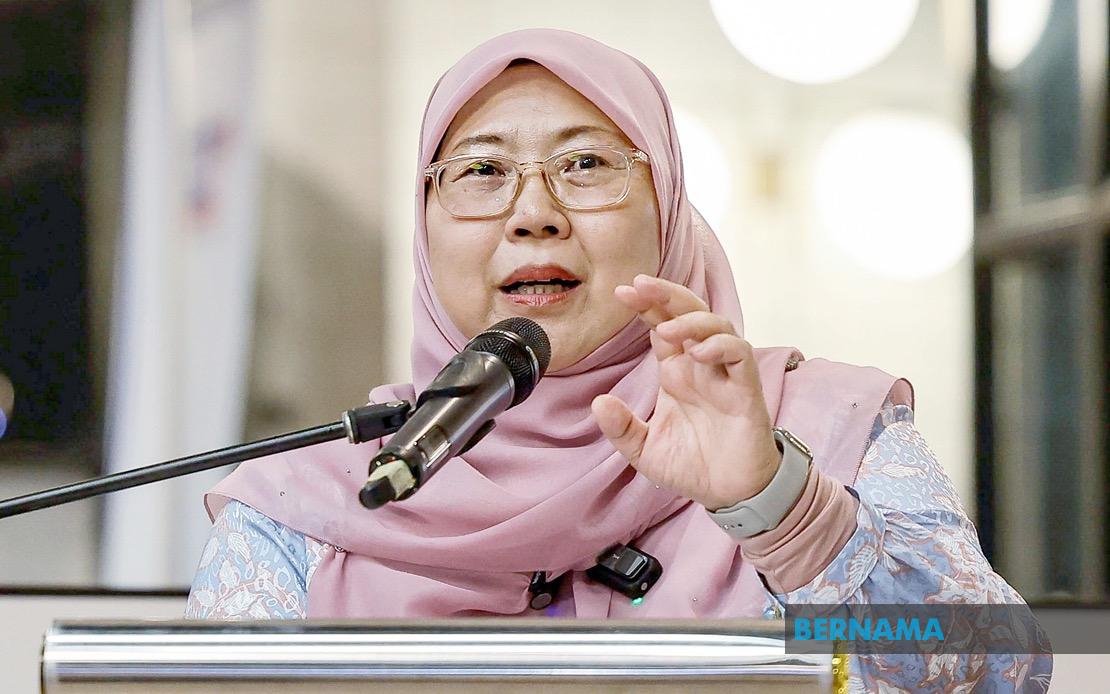
The political leadership of Pakatan Harapan has moved to clarify the coalition's approach to the upcoming Negeri Sembilan state election, striking a careful balance between flexibility and unified purpose. PKR secretary-general Datuk Dr Fuziah Salleh articulated a position that acknowledges the legitimate autonomy of individual coalition members to chart their own electoral paths, while simultaneously anchoring all strategic decisions to the foundational commitment of serving the state's residents and advancing their material interests.
At a press engagement in Seremban on July 18, Fuziah emphasized that PKR and the broader Pakatan Harapan alliance respect the prerogative of every party to formulate its distinct approach and tactical framework for navigating the 16th Negeri Sembilan State Election. This framing is notably inclusive, suggesting an institutional maturity within the coalition that recognizes diversity of opinion as potentially strengthening rather than fragmenting the alliance. However, she immediately qualified this pluralistic stance by underscoring a non-negotiable red line: regardless of specific partisan strategies adopted at the state level, all political decisions must ultimately serve the interests and reflect the aspirations of Negeri Sembilan's electorate.
The messaging reveals a coalition attempting to project both cohesion and flexibility—a delicate political calculus particularly relevant in the context of Malaysian state elections, where local dynamics often diverge from national political alignments. The appeal to people-centric governance reflects a calculated pivot away from internal coalition dynamics and towards the bread-and-butter issues that typically determine electoral outcomes at the state level. Fuziah articulated this priority set explicitly: PKR remains steadfastly concentrated on advancing public welfare, generating economic opportunities, alleviating the cost of living burden, ensuring balanced development across the state, and establishing systems of transparent governance underpinned by institutional integrity.
As Deputy Domestic Trade and Cost of Living Minister, Fuziah's portfolio directly intersects with several of the policy priorities she outlined, lending personal credibility to PKR's stated focus areas. The emphasis on cost of living is particularly resonant in contemporary Malaysia, where inflation and purchasing power have emerged as dominant voter concerns across demographic and geographic boundaries. This suggests that Pakatan Harapan intends to ground its Negeri Sembilan campaign in material, tangible governance outcomes rather than abstract ideological positioning.
Fuziah further contextualized the coalition's commitment to maintaining effective implementation of the national development agenda whilst simultaneously protecting public welfare—framing this dual obligation as the foundational principle guiding every political move undertaken by PKR and Pakatan Harapan. This language serves multiple functions: it signals continuity with the coalition's national governance record, it positions local state election strategies as extensions of broader national policy, and it creates a framework in which diverse tactical approaches can coexist without appearing contradictory.
The PKR secretary-general's acknowledgment that differences in political strategy during state elections constitute normal practice reflects realistic political pragmatism. She characterized such differentiation as an inevitable feature of politics itself, describing the discipline as fundamentally "the art of the possible." This philosophical framing suggests the coalition has internalized lessons from previous electoral cycles where overly rigid centralized coordination sometimes produced suboptimal outcomes at the state level. By permitting tactical variation whilst maintaining strategic alignment on core values, Pakatan Harapan may be pursuing a more sophisticated coalition management approach.
Nevertheless, Fuziah issued a pointed directive to the broader PKR and Pakatan Harapan organizational machinery across Negeri Sembilan: all party structures are expected to maintain concentrated focus, demonstrate rigorous discipline, and execute campaign activities with unwavering determination. The objectives are crystalline—securing public confidence and defending the Pakatan Harapan electoral mandate that the coalition currently holds in the state. This language establishes clear performance expectations whilst avoiding the appearance of micromanagement, trusting lower-level party operatives to translate strategic direction into tactical execution appropriate to local conditions.
The institutional backdrop for this announcement is significant. The 36-seat Negeri Sembilan State Legislative Assembly was formally dissolved on June 5, following the standard constitutional procedures governing state elections. The Election Commission has established a structured electoral timeline: early voting sessions are scheduled for July 28, with general polling day fixed for August 1. This compressed campaign window—less than seven weeks from dissolution to election—intensifies the practical pressures on all contesting parties to mobilize organizational resources rapidly and efficiently.
For Pakatan Harapan specifically, the Negeri Sembilan election carries particular strategic weight. The state represents one of the coalition's more contested political territories, where the balance between incumbent advantages and opposition mobilization capabilities remains genuinely competitive. Losing the state would constitute a significant political setback for the coalition at the national level, whilst retaining control would provide momentum for future electoral contests. This context lends weight to Fuziah's emphasis on unity of purpose despite tactical flexibility.
The coalition's positioning also reflects awareness that Malaysian voters increasingly distinguish between national and state-level political dynamics. Negeri Sembilan residents may support Pakatan Harapan at the federal level while entertaining alternative options in state contests, or vice versa. By emphasizing local governance capacity, tangible welfare improvements, and responsive administration, rather than national coalition politics, Pakatan Harapan is attempting to address these state-specific voter considerations.
Moreover, the articulation of respect for individual party autonomy within the coalition framework addresses latent tensions that periodically surface within Pakatan Harapan. Democratic Action Party (DAP), Amanah, and PKR have historically pursued distinct electoral strategies and organizational philosophies. Fuziah's statement essentially permits these differences to flourish in the Negeri Sembilan context, provided they ultimately serve the shared coalition objective of defending the state government. This represents a mature acknowledgment that coalition longevity depends upon accepting diversity rather than imposing uniformity.
The Deputy Minister's final exhortation to PKR and broader Pakatan Harapan cadres encapsulates the coalition's Negeri Sembilan strategy: maintain disciplined focus on people-oriented governance messaging, execute campaign activities with determination, and prioritize building voter confidence over inter-party political maneuvering. Whether this calibration of institutional flexibility combined with unified messaging proves electorally effective will become evident once campaigning intensifies through the compressed July-August timeline. For Malaysian political observers, the Negeri Sembilan contest will provide a revealing test of Pakatan Harapan's capacity to balance coalition coherence with tactical pluralism in a competitive state electoral environment.

