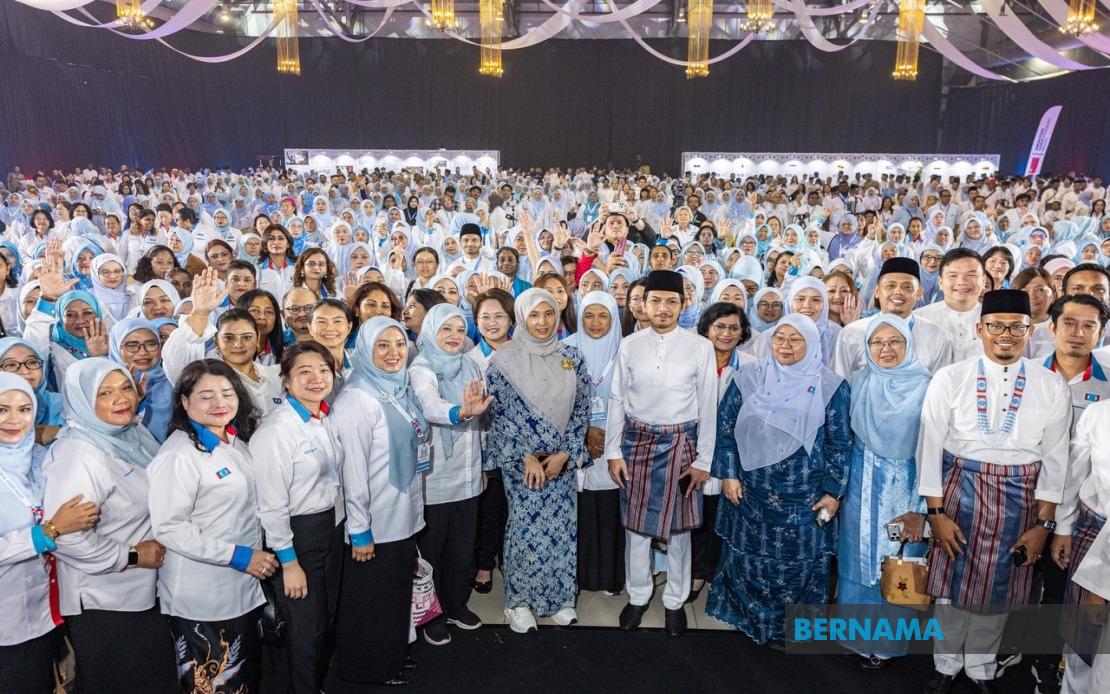
Parti Keadilan Rakyat leadership gathered in Melaka this week to confront a difficult reality: the party's recent electoral performance suggests structural weaknesses that extend beyond public sentiment. Speaking at the 2026 Angkatan Muda Keadilan National Congress, youth wing chief Muhammad Kamil Abdul Munim delivered a candid assessment that the opposition-turned-ruling coalition party must fundamentally reinvent how it communicates with voters and mobilises support at the community level if it hopes to succeed in future elections.
Muhammad Kamil's remarks reflect growing concerns within PKR that the party's narrative—the core story it tells voters about its purpose and vision—has become insufficiently compelling. In Malaysian politics, where emotional connection and ideological clarity drive grassroots participation, a party's ability to articulate why voters should support it remains paramount. The AMK chief's diagnosis suggests that PKR's messaging has grown muddled or lost resonance, particularly among younger and more politically engaged segments that historically powered reformist movements in the country.
The party faces a peculiar challenge distinct from traditional opposition dynamics. Since joining government through the Pakatan Harapan coalition, PKR has struggled to maintain the unified identity that once defined it. The party must simultaneously present itself as a reform-oriented force while managing the pragmatic compromises inherent in coalition governance. This tension has proven difficult to navigate in public communication, leaving potential supporters uncertain about the party's core commitment and direction.
Muhammad Kamil's reference to recent electoral setbacks in Sabah, Johor, and Negeri Sembilan underscores a pattern troubling to party strategists. These contests revealed that despite PKR's presence in the federal government and its brand recognition, the party could not convert public familiarity into actual votes at critical moments. This gap between awareness and support indicates systemic organisational deficiency—specifically, the absence of robust machinery capable of translating sympathetic sentiment into reliable electoral performance.
Grassroots strength, as Muhammad Kamil emphasised, represents the unglamorous but essential foundation of electoral politics. A strong grassroots organisation means trained party workers, committed volunteers, effective communication networks, and community presence that reaches voters in their neighbourhoods and workplaces. For PKR, these mechanisms appear to have atrophied, particularly in constituencies where the party expected competitive performances. Building this infrastructure requires sustained investment of time and resources that differs markedly from the excitement of national campaign moments.
The historical reference to 1998 carries particular weight in this context. PKR emerged during a moment of mass mobilisation following Anwar Ibrahim's sacking from the Mahathir government. The party rode waves of public anger and reformist energy, with ordinary citizens serving as informal party machinery. That organic movement eventually translated into governing coalitions. However, Muhammad Kamil's observation suggests that PKR cannot indefinitely rely on episodic surges of public emotion. Sustained electoral success requires permanent organisational infrastructure that functions effectively regardless of whether voters are energised by immediate crises or political developments.
Wanita PKR chief Fadhlina Sidek's contribution to the congress emphasised the need for systematic self-examination and honest acknowledgment of weaknesses. Her call for delegates to translate leadership speeches into concrete action agendas signals an attempt to move beyond rhetorical exercises toward practical implementation. For Malaysian political parties, this represents a meaningful shift—too often, internal congresses serve primarily as theatrical events rather than catalysts for genuine organisational change.
The timing of this congress, scheduled for 2026, reflects preparation for the next federal election cycle. Malaysian electoral dynamics suggest that coalition formations and the relative strength of opposition versus government parties will significantly influence that contest. PKR's current repositioning efforts aim to ensure the party competes effectively in whatever political alignment emerges. This requires addressing weaknesses now rather than attempting remedies during campaign season.
The implicit tension in PKR's situation deserves recognition: the party simultaneously occupies government and must operate as though preparing to return to opposition. This dual posture demands extraordinary organisational discipline and clear ideological messaging. Parties in coalition government face constant pressure to moderate positions and compromise principles; maintaining grassroots enthusiasm under such circumstances proves exceptionally difficult. PKR's leadership appears increasingly aware that the party's reform identity—its historical differentiator—risks becoming obscured by routine governing responsibilities.
For Malaysian voters and observers, PKR's current self-examination suggests broader questions about Malaysia's political ecosystem. Can reformist parties maintain vigour and distinctive identity once absorbed into governing coalitions? How do opposition-origin parties communicate effectively when they hold partial government power yet lack majority control? These questions extend beyond PKR to shape Malaysian democracy's trajectory over the coming years.
The party's turn toward grassroots strengthening and narrative renewal also reflects recognition that Malaysian politics increasingly favours ground-level organisation over top-down messaging. Social media fragmentation, rising voter sophistication, and declining traditional media consumption mean that political parties must build genuine community connections rather than relying on broadcast communication. PKR's stated commitment to this shift suggests understanding that electoral success requires both compelling ideas and effective delivery mechanisms.
Moving forward, observers should monitor whether PKR translates congress resolutions into structural organisational changes. History demonstrates that political parties frequently conclude internal meetings with ambitious reformist commitments that subsequently dissipate without sustained implementation. The difference between rhetoric and reality in PKR's renewal efforts will determine whether the party can genuinely strengthen its grassroots capacity and clarify its political narrative before the next election cycle tests those improvements.

