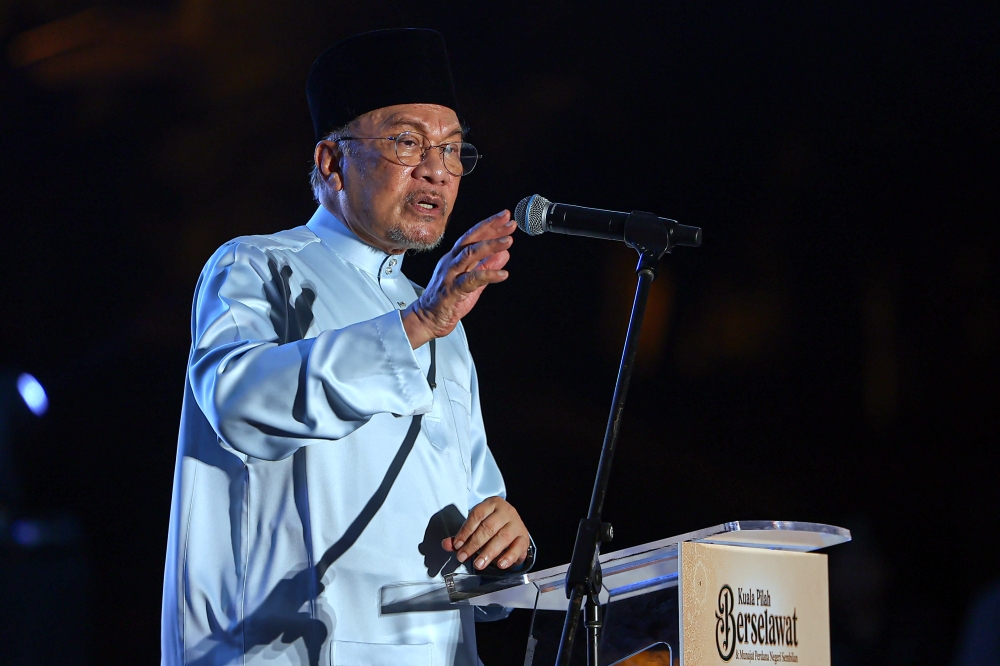
Parti Keadilan Rakyat (PKR) risks losing its foundational purpose if it becomes merely a machine for winning elections, party president Anwar Ibrahim warned in a significant statement that reflects broader anxieties about the trajectory of Malaysian opposition politics. Speaking in Kuala Lumpur on August 15, Anwar underscored that PKR's core mission extends far beyond securing parliamentary seats or ministerial positions. Instead, the party must maintain its commitment to operating as a genuine mass movement that channels grievances, mobilises ordinary citizens, and remains answerable to the communities it serves.
Anwar's intervention carries particular weight given his position within Malaysia's political landscape. As the Prime Minister and architect of the current ruling coalition, his words represent more than a routine appeal for party discipline; they suggest a genuine concern that PKR, like many movements that transition from opposition to government, may be gradually shifting its centre of gravity away from its rank-and-file membership towards a narrower elite focused on power consolidation. This tension between maintaining grassroots authenticity and the operational demands of governing is hardly unique to Malaysia, but it poses specific challenges in a nation where political parties have historically been viewed with considerable public scepticism.
The distinction Anwar draws between a mass movement and an electoral apparatus is conceptually important. A mass movement, by definition, organises around shared principles and sustained engagement with constituents between election cycles. It establishes mechanisms through which ordinary members can influence party direction, hold leaders accountable, and participate meaningfully in policy formulation. An electoral vehicle, by contrast, activates primarily when votes are at stake, then recedes into dormancy until the next campaign. The former requires ongoing investment in community organising, ideological education, and internal democracy; the latter optimises for resource efficiency and message control.
For PKR specifically, this distinction matters enormously. The party emerged from the reformasi movement of the late 1990s, drawing energy from street protests, civil society networks, and a broad coalition united by demands for accountability and democratic renewal. That origin story provided legitimacy and differentiated PKR from established parties viewed as self-serving. Yet as PKR has evolved from fringe opposition force to partner in government, maintaining that identity has grown harder. Government positions bring resources and access that can insulate leaders from grassroots pressure, and the machinery of state power creates incentives to prioritise stability and coalition management over the potentially disruptive demands of a mobilised membership.
Anwar's emphasis on integrity signals awareness that public trust in Malaysian political institutions remains fragile. Decades of governance under the Barisan Nasional coalition undermined faith in institutions through perceived cronyism, patronage, and endemic corruption. The 2018 election represented a genuine break in that pattern, but scepticism has partially returned as voters observed how quickly grand reform promises encountered the constraints of coalition politics and entrenched bureaucracies. If PKR becomes indistinguishable from the traditional machines it once opposed—valued primarily by members for access to contracts, positions, or patronage—it surrenders the moral authority that distinguishes it from rivals and reinforces public cynicism about politics generally.
The challenge of maintaining mass movement characteristics while governing is not theoretical. Parties across Southeast Asia have navigated this terrain with mixed results. Thailand's various governments have struggled to build stable coalitions that retain popular legitimacy. Indonesia's major parties, though large, are frequently criticised as hollow vehicles controlled by oligarchs rather than expressions of principle. The Philippines has seen personalistic politics repeatedly overwhelm institutional concerns. By contrast, successful democratic parties in the region—Singapore's People's Action Party in its early decades, or certain elements of Vietnam's communist system—achieved this through deliberate investments in cadre development, ongoing member education, and institutional mechanisms that prevent capture by narrow elites.
For Malaysia specifically, PKR's trajectory will influence not just the party itself but the broader health of Malaysian democracy. The country's political system depends on electoral competition to function, which requires multiple viable parties capable of mobilising support. If PKR atrophies as a mass organisation while remaining useful electorally, opposition alternatives may strengthen, but the overall quality of political participation could decline. Conversely, if PKR successfully maintains genuine grassroots engagement while in government, it provides a model for institutionalising democratic accountability in a context where such models remain underdeveloped.
Anwar's statement also reflects practical political awareness. PKR's parliamentary strength and coalition position depend substantially on its ability to deliver not just votes but credible representation of constituent interests. Members who feel merely used for campaigning may withhold effort when most needed. Urban middle-class supporters motivated by governance quality and democracy will defect if the party appears hypocritical. Rural and working-class constituencies that PKR has built strength among will lose faith if material improvements don't follow political engagement. A mass movement, properly functioning, can deliver these elements more reliably than a centralised, elite-focused apparatus.
The sustainability of Malaysia's current government structure, with its diverse coalition and slim working majorities, ultimately depends on maintaining both effectiveness and legitimacy. PKR, as the largest component of the governing coalition, bears substantial responsibility for both. Anwar's intervention suggests he recognises that the party cannot indefinitely coast on past achievement and must actively recommit to the principles and practices that made it electorally competitive. Whether this warning translates into concrete organisational changes—whether party structures genuinely empower members, whether leadership succession mechanisms remain open and contestable, whether PKR politicians remain accessible to constituents—will determine whether the party can sustain the mass movement identity Anwar advocates or whether it will follow the trajectory of other movements that surrendered their authenticity upon reaching power.

