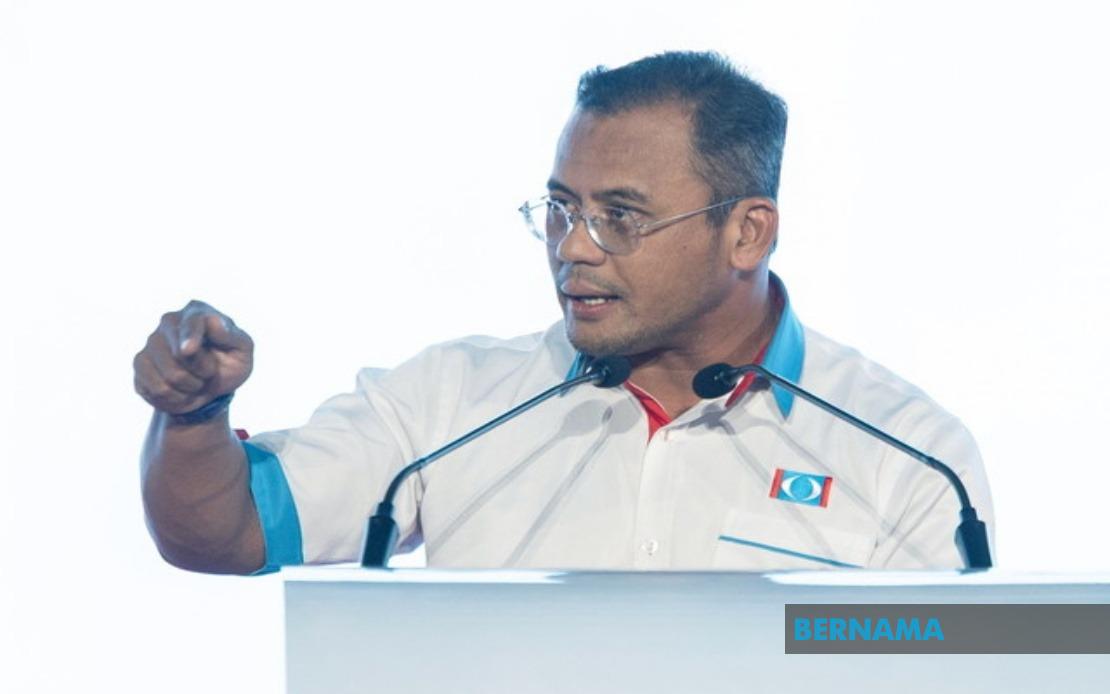
PKR's top leadership has reaffirmed the party's commitment to championing equitable political engagement across Malaysian society, while firmly rejecting attempts by rivals to weaponise racial and religious issues for electoral gain. Speaking at the PKR National Congress in Melaka on August 16, senior party officials drew a careful distinction between respecting the constitutional position of Islam and the Malays—a non-negotiable principle under Malaysia's founding document—and maintaining fairness toward all communities regardless of ethnicity or faith.
Datak Seri Amirudin Shari, PKR vice president and Selangor Menteri Besar, articulated this balancing act during the congress's closing ceremony at Melaka International Trade Centre. He underscored that the constitutional recognition of Islam's position and Malay-Bumiputera privileges are foundational elements that all political actors must respect. Yet simultaneously, PKR's governing philosophy demands equitable treatment of Malays, Chinese, Indians, and followers of Christianity, Buddhism, and Hinduism alike. This framing reflects an ongoing tension in Malaysian politics: how to acknowledge constitutional asymmetries while building cross-community political movements.
Amirudin traced PKR's ideological lineage to Datuk Seri Anwar Ibrahim's reform movement, which commenced in 1998 amid significant social turbulence. According to the vice president, that struggle has substantially advanced several interconnected agendas, including deepening democratic participation, protecting fundamental civil liberties, implementing more equitable wealth distribution systems, and establishing governance structures rooted in integrity and accountability. By invoking this historical narrative, Amirudin positioned PKR as a vehicle for systemic modernisation rather than a mere electoral coalition.
Paralleling Amirudin's remarks, fellow vice president Datuk Seri R. Ramanan, who also serves as Minister of Human Resources, issued a sharper critique of competitive political tactics. Ramanan singled out rival parties for deliberately exploiting racial fault lines to mobilise voters and fracture societal cohesion in pursuit of narrow partisan advantage. He characterised such strategies as fundamentally corrosive to national harmony and warned that allowing narrow political agendas to drive public discourse poses existential risks to Malaysia's multi-ethnic social fabric. For Malaysian observers, this intervention is particularly significant given Ramanan's ministerial portfolio overseeing labour relations and employment policy—areas where communal tensions historically emerge.
Ramanan further exhorted PKR's internal machinery to prioritise unity and suppress ego-driven factional struggles. His comments implicitly acknowledged fractures within the party's ranks, a reality that has periodically surfaced in media reporting. He cautioned that leadership-level infighting inevitably cascades downward, demoralising branch activists, confusing ordinary members, and weakening the party's grassroots infrastructure. Crucially, he warned that such internal dysfunction benefits PKR's political opponents, who can exploit disarray to consolidate their own support. This call for cohesion reflects a strategic imperative: in Malaysia's intensely competitive political environment, where government composition often hinges on narrow parliamentary mathematics, organisational discipline and member morale substantially influence electoral outcomes.
Third vice president Datuk Chang Lih Kang advanced an empirical counterargument to identity politics. Rather than relying on racial or religious messaging, Chang asserted that PKR's durability and political efficacy derive from demonstrable policy performance and constituent service excellence. He cited the Chennah state election result in Negeri Sembilan as concrete evidence that such conventional wisdom can be overcome. In that contest, Anthony Loke, the Democratic Action Party's secretary-general, secured noteworthy support from Malay voters despite encountering identity-based opposition attacks. For Malaysian analysts, this observation carries weight: it suggests that in certain electoral contexts and under particular conditions, candidate credibility and developmental track records can partially neutralise identity-based mobilisation.
The Chennah outcome is particularly instructive for Southeast Asian political observers because it contests the widely held assumption that ethnic or religious identity constitutes an insurmountable electoral barrier in Malaysia's Westminster-derived system. If reproduced across multiple constituencies, such results could signal a gradual shift in voter behaviour—though caution is warranted before extrapolating from individual contests to systemic trends. The extent to which this pattern represents a sustainable realignment or a localised anomaly remains contested among Malaysian political scientists.
Underlying these leadership pronouncements is a pragmatic recognition that PKR occupies a distinctive political niche. As a multi-ethnic coalition partner within the broader Pakatan Harapan alliance and as a government participant, PKR must navigate competing pressures: maintaining appeal to Malay-Muslim constituencies, preserving support among non-Malay urban and semi-urban voters, and demonstrating that inclusive governance does not necessitate abandoning constitutional protections for Islam and Malays. This balancing act is considerably more complicated than the identity-focused strategies adopted by several opposition parties, which can afford to cultivate narrower support bases.
The timing of these statements, during a major party congress, underscores PKR's investment in ideological clarity as a differentiating factor. By explicitly rejecting racial divisiveness and articulating a positive vision of multi-communal political engagement, the party is attempting to occupy the political centre-ground in Malaysian politics. Whether this positioning translates into electoral durability depends substantially on whether PKR can deliver tangible improvements in living standards, public services, and governmental transparency across all communities. The party's recent governance performance in Selangor—Malaysia's most populous state and an economically critical region—will likely prove consequential in evaluating the electoral viability of this inclusive approach.
For regional observers, PKR's stance carries implications extending beyond Malaysia's borders. Thailand, Indonesia, and the Philippines all grapple with competing pressures between inclusive democratic governance and identity-based political mobilisation. PKR's experience attempting to maintain cross-community coalitions while respecting constitutional asymmetries offers both cautionary lessons and potential models for neighbouring democracies seeking to balance pluralism with stability.
Looking forward, the substantive test of PKR's commitment to inclusive politics will emerge through concrete policy implementation and electoral performance. Statements delivered at party congresses frequently articulate aspirational principles; translating such rhetoric into consistent governance practice across successive electoral cycles remains considerably more challenging. The party's ability to retain both Malay-Muslim support and non-Malay confidence will ultimately determine whether its inclusive political model constitutes a viable alternative to the identity-driven strategies that currently dominate Malaysian competitive politics.

