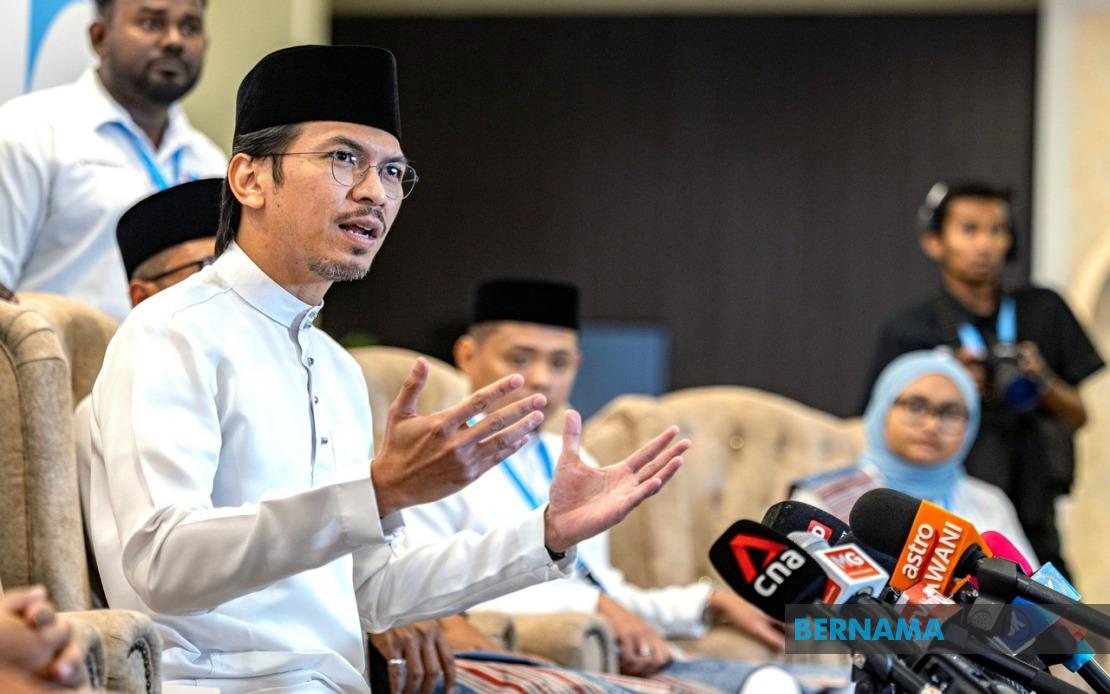
The Parti Keadilan Rakyat has moved to downplay concerns about membership losses, with the party's youth wing leadership asserting that recent departures to competing political entities represent only a marginal drain on resources and organisational cohesion. Speaking at the 2026 Angkatan Muda Keadilan National Congress in Melaka, youth wing chief Muhammad Kamil Ahmad Munim characterised the scale of member exits as inconsequential, emphasising that PKR continues to function effectively across all operational divisions despite the outflows.
The remarks come in response to claims made by Parti Bersama Malaysia co-founder Datuk Seri Rafizi Ramli, who had suggested that approximately one-quarter of his newly-formed party's membership originated from PKR. Such assertions raised questions about the depth of internal discontent within PKR and the appeal of alternative political platforms to disaffected party members. By framing these defections as statistically negligible, the youth wing sought to contain any narrative suggesting serious fractures within the broader PKR structure.
Muhammad Kamil acknowledged that some members had indeed opted to leave PKR, attributing their departures to perceived loss of confidence in the party's direction or leadership. Rather than dismissing these individuals outright, he framed the youth wing's posture as respectful of personal autonomy, positioning defections as exercises of individual choice rather than symptoms of systemic failure. This diplomatic approach attempts to preserve relationships with departing members while signalling to the broader grassroots that PKR remains a cohesive, forward-looking organisation capable of accepting divergent viewpoints.
Central to PKR's assurances regarding operational continuity has been the party's emphasis on distributed leadership structures and clearly delineated responsibility chains. While PKR deputy president Nurul Izzah Anwar currently remains on leave—a development that potentially raised questions about succession planning and executive capacity—the party has stressed that her absence does not impede strategic progress. Vice-president Datuk Seri Saifuddin Nasution Abdullah and election director Datuk Seri Amirudin Shari have assumed expanded portfolios to ensure that key functions remain uninterrupted.
The party's messaging strategy reflects an effort to reframe what might otherwise appear as organisational vulnerability into evidence of institutional resilience. By highlighting strong delegate attendance at the AMK congress and pointing to continued grassroots engagement, PKR leadership attempted to demonstrate that member commitment remains robust despite departures and leadership transitions. High turnout figures serve as tangible indicators of party vitality, offsetting any narrative that recent member losses signal broader disengagement.
For Malaysian observers, the PKR situation illustrates broader dynamics within the ruling coalition and opposition landscape. The rise of Parti Bersama Malaysia, which explicitly attracted former PKR members and sympathisers dissatisfied with existing party structures, reflects growing complexity in Malaysia's political marketplace. That Rafizi Ramli, a high-profile PKR figure, launched a competing entity represents a significant fracture within progressive political circles, and the successful recruitment of former party members validates concerns about PKR's internal cohesion.
The framing of member departures as insignificant also carries implications for upcoming electoral contests. PKR's assertion that organisational strength remains undiminished becomes relevant context as the party prepares for state elections and the next general election. Whether the party can effectively mobilise resources and volunteers at the campaign stage will provide a real-world test of leadership claims about organisational resilience. State and branch-level leaders have reportedly explained Nurul Izzah's leave status to grassroots members, suggesting efforts to prevent local-level demoralisation that might translate into reduced campaign activity.
The timing of these statements—made during a youth wing congress—also warrants examination. Angkatan Muda Keadilan represents a critical constituency for PKR's future, as younger members typically provide energy for campaign operations and volunteer mobilisation. By directly addressing stability concerns at this forum, senior leadership sought to reassure youth members that their ongoing investment in the party remains justified and that the organisation possesses sufficient internal strength to weather temporary disruptions.
PKR's defensive posture regarding member losses also reflects awareness that political momentum in Malaysia remains fluid and perception-dependent. Public acknowledgement of significant defections could accelerate additional departures as members perceive declining organisational viability. Conversely, emphatic assertions of stability aim to anchor member confidence and discourage further exits. This communicative calculus helps explain why PKR leadership chose to quantify departures as merely a small percentage rather than providing absolute figures that might convey larger scale losses.
The broader question facing PKR concerns whether internal restructuring and distributed leadership can genuinely compensate for the absence of key figures or the loss of members to rival platforms. The party's next electoral performance—both in state and national contests—will ultimately determine whether claims of unaffected operations reflect genuine organisational health or represent wishful messaging designed to manage short-term perception crises. For now, PKR's leadership continues to insist that recent departures represent minor adjustments rather than consequential threats to party viability and electoral competitiveness.

