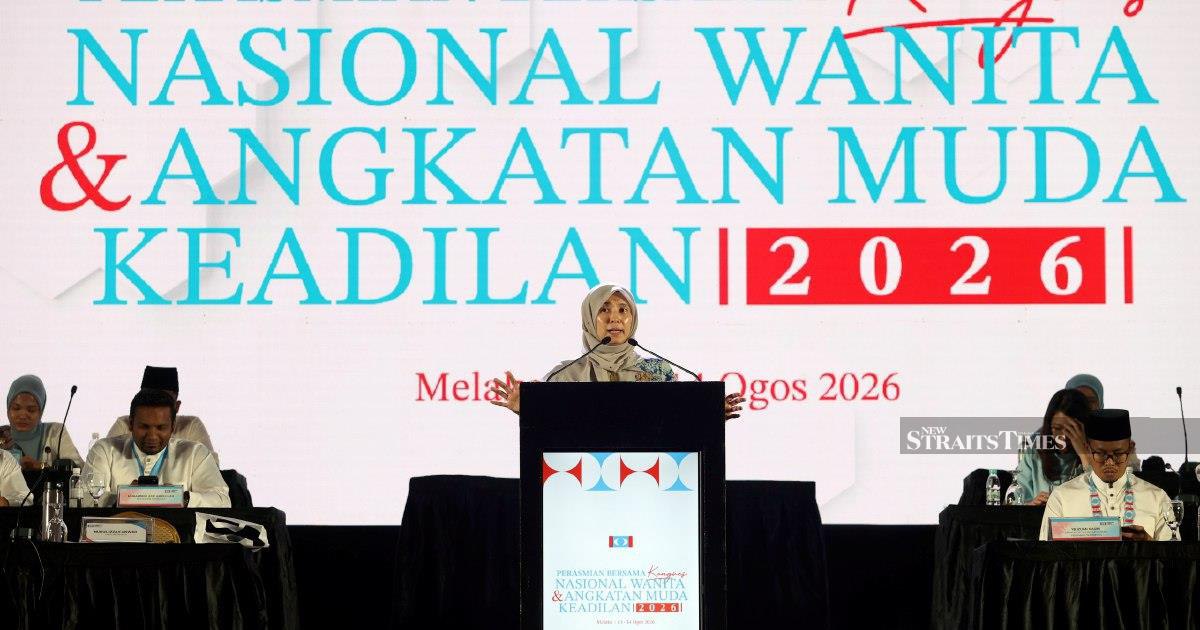
PKR's deputy president Nurul Izzah Anwar has issued a significant call for her party to establish unambiguous ethical boundaries, warning that the pursuit of political pragmatism must never serve as justification for corrupt practices or governmental misconduct. Speaking at an event in Ayer Keroh, Nurul Izzah emphasised the critical importance of maintaining moral clarity even as political parties navigate complex coalition dynamics and negotiate power-sharing arrangements that have become increasingly common in Malaysian politics.
The remarks carry particular weight given PKR's central position within the ruling coalition structures that have defined Malaysian governance since 2022. As a party that has consistently presented itself as a vehicle for democratic reform and anti-corruption efforts, PKR faces mounting pressure to demonstrate that its participation in government has not compromised its stated principles. Nurul Izzah's intervention suggests internal conversations within the party about maintaining ethical consistency as it balances ministerial responsibilities with its foundational political identity.
The concept of 'red lines' that Nurul Izzah referenced represents non-negotiable principles that a political party refuses to abandon regardless of immediate political advantages or electoral calculations. In the Malaysian context, where coalition politics often requires significant compromise and accommodation of diverse political interests, establishing such boundaries becomes a mechanism for preventing gradual ethical erosion. For PKR, these boundaries would theoretically prevent the party from endorsing or overlooking instances where coalition partners engage in corrupt transactions, misuse of public resources, or selective law enforcement that contradicts democratic principles.
Political analysts have noted that Malaysian parties frequently face pressure to overlook questionable conduct by coalition allies to maintain government stability. This dynamic creates situations where parties tacitly accept or actively defend actions that contradict their stated reform agenda in exchange for continued ministerial positions or political relevance. Nurul Izzah's statement appears to push back against this normalisation, insisting that PKR cannot adopt a framework where coalition loyalty supersedes integrity concerns or where political survival justifies moral compromise.
The timing of these remarks reflects broader tensions within Malaysia's governing coalition regarding accountability and governance standards. Multiple government scandals and investigations into official conduct have periodically tested coalition unity, creating scenarios where parties must choose between maintaining government cohesion and upholding anti-corruption commitments. PKR's positioning as a reformist party within this coalition places it in a particularly delicate position, as it must demonstrate progressive governance credentials while remaining a pragmatic coalition partner.
Nurul Izzah's emphasis on preventing corruption and abuse of power specifically acknowledges that political compromise, while necessary in coalition environments, carries inherent risks of normalising misconduct. The statement serves as an internal reminder that PKR's political differentiation depends on maintaining higher standards than competitors, even when such positions create friction with coalition partners or complicate political manoeuvring. This positioning reflects a deliberate choice to define the party's identity around ethical governance rather than simply accumulating power.
The deputy president's intervention also speaks to concerns among PKR's membership and supporters about whether the party's participation in government has dulled its reformist edge. By articulating the need for clear ethical boundaries, Nurul Izzah provides reassurance that party leadership remains committed to principled governance, even as the realities of administering complex government apparatus require pragmatic decisions and compromises. This rhetorical move acknowledges anxieties within the reform-minded constituency that initially supported PKR.
From a Southeast Asian perspective, Malaysia's struggles with coalition governance and corruption present lessons relevant to neighbouring democracies managing similar challenges. The question of how reformist parties maintain ethical identity within pragmatic governing coalitions represents a fundamental governance issue across the region. PKR's approach to defining and enforcing its own red lines could influence how other regional parties contemplate similar dilemmas about balancing principle and political necessity.
The establishment of clear party red lines would require mechanisms for enforcement and accountability. This includes internal party processes for addressing situations where senior leaders or coalition partners potentially violate these boundaries, as well as transparent communication to the public about the party's ethical commitments. Without such institutional mechanisms, red lines become merely rhetorical devices without substantive impact on actual party conduct. Nurul Izzah's call therefore implicitly extends beyond statement-making toward institutional design and accountability structures.
Looking forward, PKR faces the practical challenge of operationalising these ethical boundaries in contexts where political calculations frequently override principled positions. The party must develop clear protocols for evaluating potential compromises, ensuring that decisions to accommodate coalition partners' interests receive scrutiny against established ethical standards rather than occurring through informal negotiation and political convenience. This represents a significant governance challenge that will test whether PKR can translate Nurul Izzah's principled rhetoric into actual party discipline and consistent behaviour across different political scenarios.

