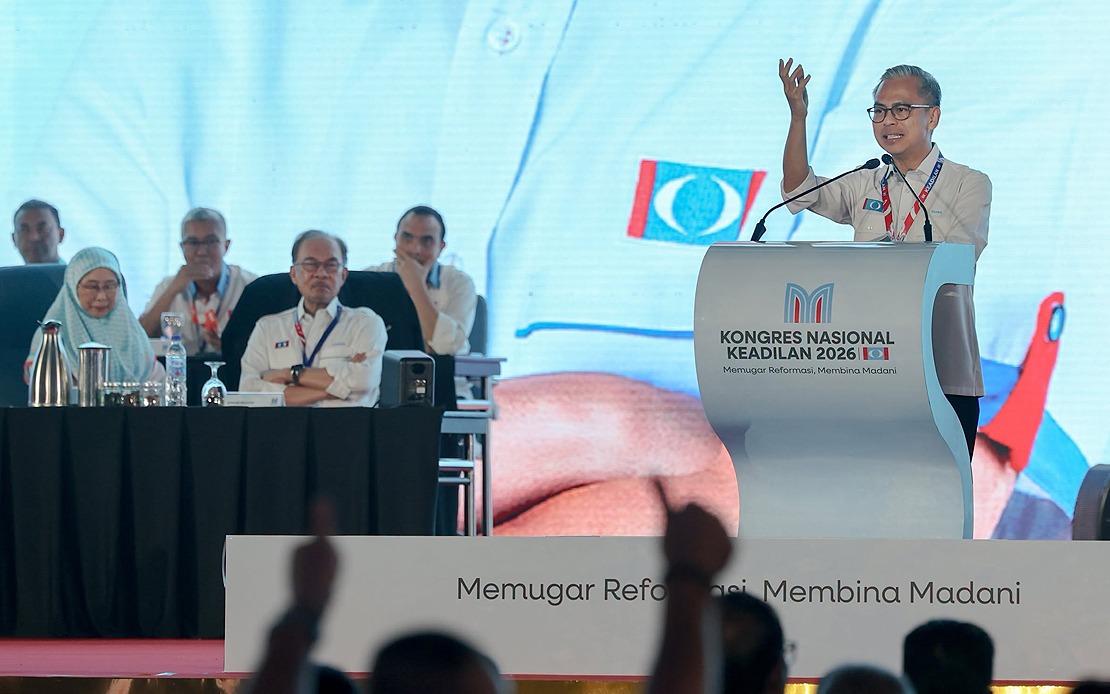
The conclusion of the 2026 Parti Keadilan Rakyat National Congress in Kuala Lumpur on August 16 marked what party officials described as a crucial moment for reassessment and recommitment to the party's core principles. According to Datuk Seri Fahmi Fadzil, the PKR Information Chief, the two-day gathering served a purpose that extended beyond the typical convention format of speeches and formal debates, functioning instead as an occasion for internal evaluation and renewal of the party's strategic direction.
Fahmi characterized the congress as providing space for the party machinery to engage in genuine reflection about its current trajectory and future prospects. The event offered an opportunity to solicit input directly from grassroots members, assess both organizational strengths and areas requiring improvement, and recommit publicly to the reformasi movement that has defined PKR's identity since its inception. This framing suggests the party sought to use the congress not merely as a ceremonial gathering but as a working session designed to address internal concerns and reinvigorate party morale.
Central to the congress messaging was the address delivered by PKR President Datuk Seri Anwar Ibrahim, which Fahmi highlighted as emphasizing the ongoing necessity of the reform struggle and the imperative that the party remain grounded in the interests of ordinary Malaysians. The reiteration of this foundational principle appears designed to refocus the party on its populist roots at a time when governing parties often face accusations of becoming disconnected from constituents. By anchoring the party's identity in the people's agenda rather than in personalities or individual leaders, PKR sought to project continuity with its historical mission.
Fahmi's subsequent remarks outlined a concrete action plan for party members returning to their respective constituencies following the congress. Rather than treating the gathering as a concluding event, he framed it as a departure point for intensified engagement with communities. Party members were explicitly directed to reconnect with voters, actively solicit public feedback regarding their concerns, and demonstrate tangible commitment to addressing identified problems. This emphasis on grassroots reconnection reflects an understanding that electoral support cannot be assumed and requires continuous cultivation through visible responsiveness to constituent needs.
The Information Chief's call for stronger party organization and disciplined teamwork addresses a longstanding challenge for Malaysian political parties navigating the tension between internal democracy and operational coherence. By emphasizing the need to "move as an organized and disciplined team," Fahmi signalled that the party recognizes the necessity of maintaining party unity while still accommodating the internal debate that occurred during the congress. This balance is particularly important for PKR, which has historically positioned itself as a reformist alternative to the more hierarchically structured governing parties.
Fahmi acknowledged explicitly that the political environment surrounding PKR will remain contested and challenging. Rather than downplaying these difficulties, he framed political headwinds as an expected feature of the landscape that the party must navigate while maintaining steadfastness to its declared principles. This formulation serves multiple purposes: it prepares party members psychologically for setbacks, establishes a framework within which difficulties can be interpreted as confirmation of the party's principled stance rather than as evidence of failure, and signals to supporters that commitment to reform may require accepting short-term reversals in pursuit of longer-term objectives.
The distinction Fahmi drew between the congress itself and the ongoing work of party machinery illuminates an important aspect of how Malaysian political parties function. The congress represented a discrete event with defined parameters and outcomes, but the party's actual work of organizing, mobilizing, and engaging citizens occurs continuously in the intervals between such formal gatherings. By emphasizing that responsibility extends beyond the congress conclusion, Fahmi underscored that real organizational progress depends on sustained effort by thousands of party members working independently across the country rather than through centralized direction from party headquarters.
For Malaysian political observers, the PKR congress represents a moment when a major component of the current governing coalition assessed its position and reaffirmed its commitments. As one of the three parties within the Pakatan Harapan coalition that has led government since 2022, PKR's internal health and commitment to the reform agenda it championed in opposition remain significant factors in the stability of the current administration. The emphasis on listening to grassroots concerns and remaining responsive to popular sentiment may also reflect awareness that governing parties often lose electoral ground through perceived detachment from ordinary citizens' daily struggles.
The broader context of these statements includes Malaysia's ongoing political fragmentation and the continued competition for voter support across established and emerging political formations. By reinforcing its identity as a reform-committed party grounded in popular interests, PKR seeks to maintain differentiation from other coalition partners and from opposition groups. This positioning becomes increasingly important as the country moves toward future electoral contests and as debates intensify regarding the pace and scope of institutional reform that Malaysian voters expect from their government.
Fahmi's framing of the congress outcomes also carries implications for how the party management structures decision-making between formal gatherings. The emphasis on listening to grassroots input and the commitment to continuous engagement suggests that party leaders view themselves as accountable to their membership and to the constituents they represent. Whether this commitment translates into actual structural changes in how PKR operates internally and how its representatives interact with voters will become apparent through observable actions over the coming months as the party implements the directives articulated at the congress.

