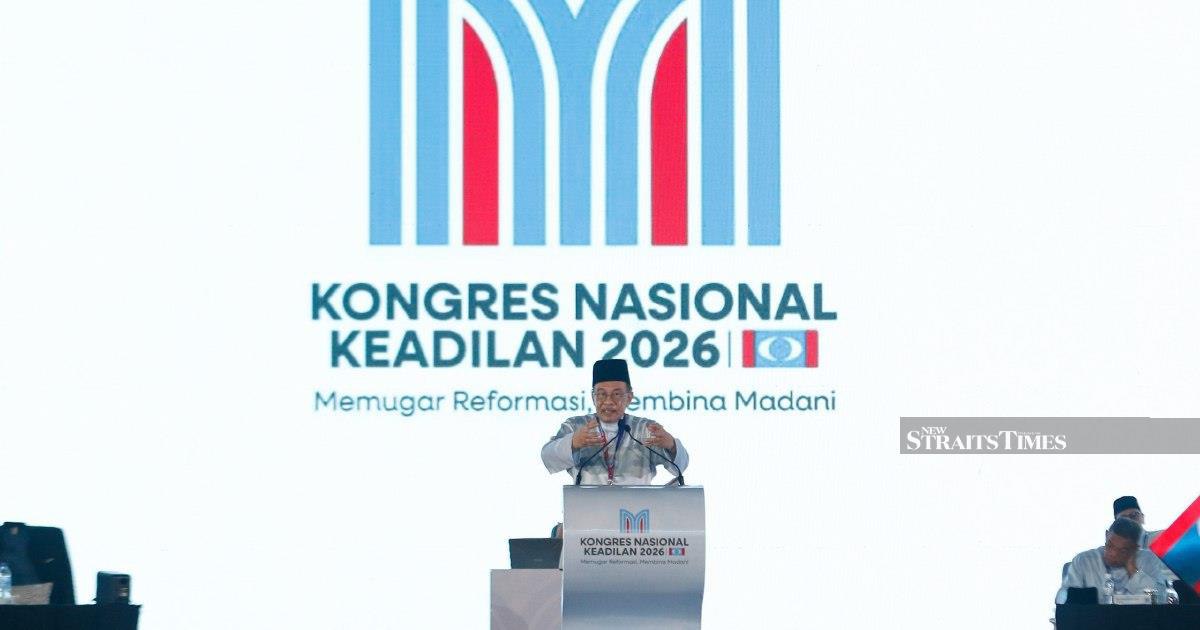
PKR president Datuk Seri Anwar Ibrahim has confirmed that embezzlement took place within Tabung Haji, drawing on evidence presented in the Royal Commission of Inquiry that examined the institution's affairs. Speaking at the party congress held in Ayer Keroh, the prime minister directly referenced the RCI's findings when addressing party members about financial misconduct at Malaysia's pilgrimage savings scheme.
Tabung Haji, which serves as a savings and investment vehicle for Malaysian Muslims preparing for the Hajj pilgrimage, has faced sustained scrutiny over its operational and financial governance in recent years. The institution manages substantial sums accumulated from pilgrims and operates multiple investments across various sectors, making transparency and accountability critical to maintaining public trust. The RCI was established to investigate allegations of mismanagement and financial irregularities that have clouded the organization's reputation.
Anwar's public acknowledgement at a major party gathering signals the government's willingness to confront findings from the investigative body rather than downplay them. This represents a shift toward greater accountability discourse within the ruling coalition, particularly on matters involving public funds and religious institutions. The timing of his remarks during the PKR Congress suggests the party is positioning itself on issues of institutional integrity ahead of ongoing political developments.
The pilgrimage fund has faced multiple challenges, including investment losses, governance disputes, and questions about how management decisions were made during periods of financial stress. For Malaysian pilgrims who contribute their savings to Tabung Haji, any evidence of embezzlement directly undermines confidence in the scheme's stewardship. The organization manages approximately 9 million active accounts, making it one of the largest financial institutions serving Malaysia's Muslim population.
The RCI's investigation touched on several layers of institutional management, examining both historical decisions and contemporary operational practices. Its conclusions about embezzlement suggest that funds were improperly diverted or misused by individuals within positions of authority. Such findings carry serious implications not only for the individuals involved but also for the broader governance framework that allowed such misconduct to occur.
Anwar's confirmation at the PKR Congress reflects the broader political environment surrounding institutional accountability in Malaysia. The party, as part of the ruling coalition, has been emphasizing its commitment to tackling corruption and improving governance standards across government agencies and statutory bodies. Public acknowledgement of the RCI's findings demonstrates willingness to confront uncomfortable truths rather than allowing such matters to fade from public discourse.
For Tabung Haji account holders across Malaysia and those planning upcoming pilgrimages, Anwar's remarks underscore ongoing concerns about the safety and management of their contributions. Many Malaysians view their Tabung Haji accounts as essential instruments for fulfilling one of Islam's five pillars, making the institution's credibility a matter of personal financial and spiritual importance. Transparency about past misconduct becomes a foundation for rebuilding that confidence.
The RCI's investigation and its subsequent findings represent an important step in Malaysia's broader anti-corruption agenda. Rather than allowing institutional problems to remain hidden behind bureaucratic silence, bringing such matters into public light through formal inquiries demonstrates a system willing to scrutinize itself. The government's public recognition of these findings signals that no institution—regardless of its religious or social significance—stands above accountability.
As Malaysia continues navigating complex questions about institutional reform and governance standards, the Tabung Haji situation exemplifies challenges facing bodies that manage public resources. The organization's leadership must now implement structural reforms recommended by the RCI, strengthen internal controls, and work to restore confidence among millions of account holders. Success in these endeavors will require sustained commitment from both management and government oversight bodies.
Moving forward, stakeholders including Tabung Haji management, government regulators, and the parliamentary committees responsible for overseeing statutory bodies must ensure that the RCI's recommendations translate into concrete institutional improvements. The acknowledgement of embezzlement is meaningful only if followed by systemic changes that prevent recurrence. For Malaysian pilgrims who depend on Tabung Haji, ensuring the organization emerges from this period of scrutiny with strengthened governance and demonstrated integrity remains paramount.

