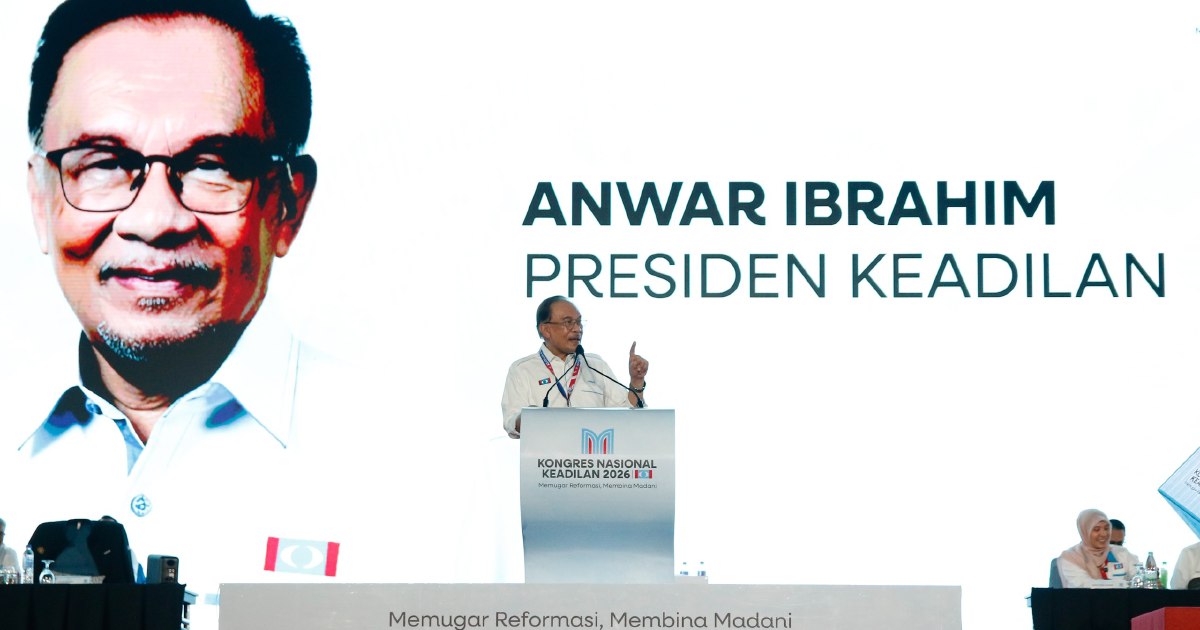
Datuk Seri Anwar Ibrahim has confirmed that PKR intends to maintain its pragmatic approach to coalition politics, continuing its working relationship with Barisan Nasional and Umno at the federal level whilst simultaneously honouring its commitments to Pakatan Harapan partners DAP and Amanah. The statement, made in Ayer Keroh, underscores the delicate balancing act that Malaysia's political landscape requires of the party.
This dual alignment reflects the complex realities of post-2022 Malaysian politics, where no single coalition commands overwhelming parliamentary dominance. PKR's positioning as a bridge between these two major political blocs grants it considerable influence in shaping policy outcomes and government stability, making it an indispensable player in legislative proceedings. The party's ability to navigate both relationships simultaneously has become central to its strategy for maintaining relevance and leverage in the current political environment.
The Pakatan Harapan alliance, comprising PKR, DAP, and Amanah, has been a significant force in Malaysian politics since 2018. DAP's representation of urban, educated voters and Amanah's appeal to former PAS members provide complementary electoral bases. PKR's commitment to remain loyal to these partners signals that Anwar views the coalition as more than merely transactional, despite the obvious tensions that arise from also working with Umno, a party that opposed PH for decades. This loyalty carries weight in PH's internal dynamics and in managing the expectations of DAP's largely urban Malaysian Chinese base and Amanah's supporters.
Simultaneously, PKR's continuation of its federal-level cooperation with Barisan Nasional and Umno reflects a recognition that stability and legislative effectiveness require consensus-building across traditional partisan lines. The BN-Umno partnership represents the institutional establishment and rural constituencies that PH struggled to win over during its tenure. By maintaining this relationship, PKR ensures its legislative agenda can proceed without constant obstruction and that the government possesses sufficient parliamentary numbers to function effectively.
The implications for Malaysian governance are significant. PKR's balancing act means that major legislation often requires consensus beyond strict coalition lines, leading to more deliberative, if sometimes slower, policy processes. This arrangement has produced unexpected cooperation on issues ranging from economic stimulus measures to infrastructure projects, demonstrating that pragmatic governance can transcend historical rivalries. However, it also creates vulnerability when either coalition demands exclusivity or when internal disagreements within PKR's own ranks surface regarding the direction of these partnerships.
For Umno and Barisan Nasional, the continued alignment with PKR represents a rehabilitation of sorts following their electoral defeat in 2018 and the subsequent fall of the Najib Razak administration. Umno views PKR's partnership not as ideological agreement but as mutual interest in maintaining governmental continuity and preventing the emergence of either an overwhelming BN dominance or a PH supermajority. This understanding has enabled the party to play a stabilising role despite its troubled recent history.
For DAP and Amanah within Pakatan Harapan, PKR's dual commitments are a source of both strategic advantage and periodic frustration. The party's ability to negotiate with Umno can secure concessions that benefit PH as a whole, but it also creates concerns about whether PKR might gradually shift its primary allegiance toward BN if political fortunes change. These worries remain largely beneath the surface but shape internal coalition dynamics and resource allocation during election campaigns.
The regional context adds another layer to PKR's positioning. Across Southeast Asia, similar patterns of coalition fluidity have emerged in Indonesia, Thailand, and the Philippines, where traditional grand coalitions have given way to more ad-hoc arrangements. Malaysia's experience demonstrates both the flexibility and fragility of such approaches. While they allow stable governance without manufactured supermajorities, they also create persistent uncertainty about long-term government direction and make long-term policy planning complex for international partners and investors.
Anwar's explicit statement appears designed to provide reassurance to all parties simultaneously: to DAP and Amanah that PH remains his primary commitment, to Umno and BN that federal cooperation will continue, and to the broader Malaysian public that the government possesses sufficient stability to function. Whether this equilibrium can be maintained indefinitely or whether PKR will eventually be forced to choose between its competing partnerships remains an open question that will shape Malaysian politics through the next electoral cycle.
The statement also reflects PKR's internal calculations regarding the next general election. By maintaining visible commitment to both alliances, the party preserves flexibility in post-election coalition talks while signalling to voters that it takes all its partnerships seriously. This approach has become characteristic of Malaysian politics in the post-2022 era, where electoral outcomes rarely produce clear mandates and coalition formation remains the true theatre of democratic competition in the country.

