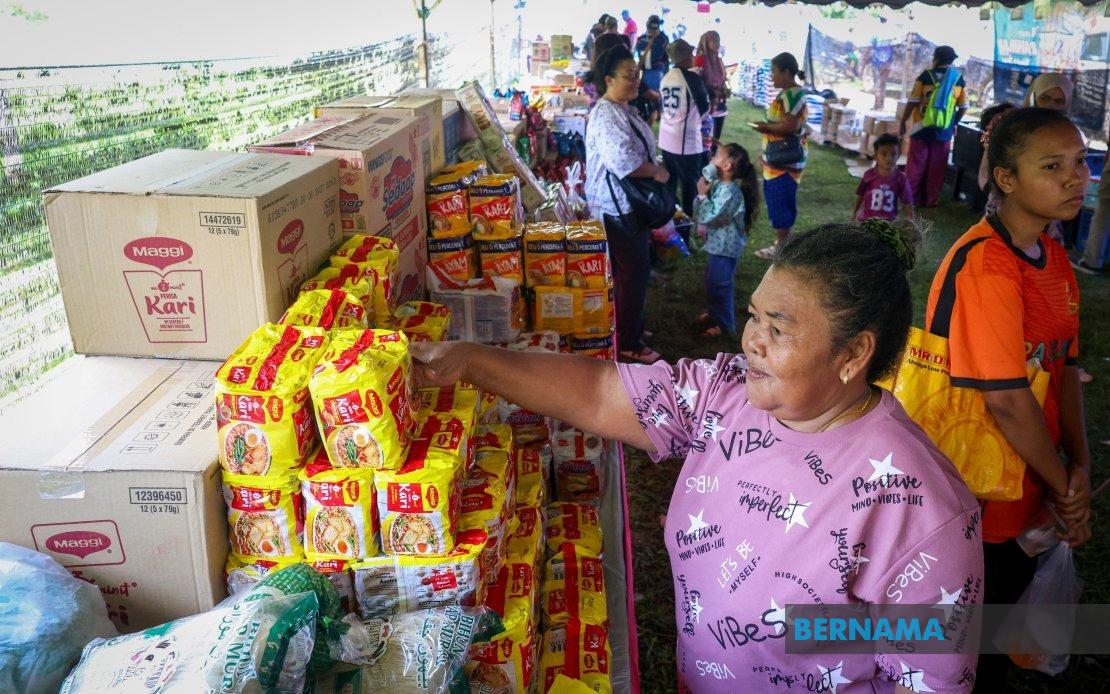
The Rahmah MADANI Sales Programme (PJRM) has expanded to the Pasik Resettlement Scheme (RPS) near Gua Musang, delivering subsidised groceries and household items directly to more than 1,000 Temiar Orang Asli residents who previously faced significant hardship in obtaining basic necessities. The programme allows villagers to use their SARA credits—vouchers distributed under the government's cost-of-living assistance scheme—to purchase everything from rice and cooking oil to fresh produce at prices substantially below local market rates.
The arrival of PJRM at Pasik RPS addresses a longstanding logistical challenge that has constrained the community's access to affordable goods. Residents historically endured a gruelling two-and-a-half-hour journey to Kampung Jerek whenever they needed to stock up on rice, sugar, oil and other staples. The trip itself imposed a heavy financial toll beyond the cost of goods themselves—residents typically spent at least RM600 per journey to cover vehicle rental, meals and incidental expenses, creating a significant burden for households already struggling with tight budgets.
Ramli Chimbong, a 51-year-old Kampung Ayong resident, highlighted the transformation that the programme's local arrival represents for his family and neighbours. The price differential alone justifies the expansion: a nine-kilogramme bag of rice that commands RM40 in village shops was being sold through PJRM for just RM29. When multiplied across multiple essential items purchased regularly, such savings accumulate into meaningful relief for families subsisting on limited incomes. By eliminating the need for exhausting trips to distant towns, the programme restores both time and money that residents can redirect toward other pressing needs.
SMS Maju Solution, the company contracted to operate the Pasik RPS outlet, mobilised substantial quantities of stock for the launch. The initial delivery included 100 different product lines encompassing 300 bags of rice, 300 trays of eggs and 300 chickens—items meeting the dietary staples and protein requirements of the settlement. The early morning queues forming at nine o'clock demonstrated pent-up demand within the community, with residents eager to access the programme's benefits.
Another significant factor enabling high uptake is the substantial SARA credit balances remaining in residents' accounts. According to Sabariah Mohamed Sayuti, the SMS Maju Solution proprietor, many villagers still retain between RM300 and RM800 in unspent vouchers, with very few having depleted their allocations to RM100 or below. This observation suggests that residents have either been unable to access previous PJRM outlets due to geographic isolation or have consciously conserved their credits pending the arrival of a convenient local access point. The availability of fresh goods at depressed prices through a trusted government-backed channel likely prompted families to utilise accumulated credits without delay.
The logistical challenges of servicing a remote settlement became apparent during the inaugural operation. A vehicle carrying supplies encountered a tyre puncture while traversing the rocky and muddy roads characteristic of the area, illustrating the infrastructure constraints that have historically isolated Pasik RPS from convenient commercial access. Such operational difficulties underscore the effort required to extend subsidised retail services into peripheral communities and the genuine commitment required to overcome geographical barriers to service delivery.
Nenggiri assemblyman Mohd Azmawi Fikri Abdul Ghani positioned the PJRM expansion within the broader government strategy to alleviate rural cost-of-living pressures. As inflation continues eroding purchasing power across Malaysia, remote and indigenous communities face disproportionate impacts—higher transport costs, limited competitive retail environments and distance from bulk-buying opportunities conspire to inflate prices paid for identical goods. Government-sponsored programmes such as PJRM directly counteract these structural disadvantages by bringing subsidised goods to where people live rather than requiring them to travel to subsidised outlets.
The assemblyman's call to replicate the Pasik RPS model across all Orang Asli settlements reflects recognition that dozens of similarly isolated communities face comparable access barriers. The Orang Asli population across Peninsular Malaysia, numbering around 180,000 individuals, frequently resides in geographically dispersed locations with limited transport infrastructure and restricted retail competition. Systematic expansion of PJRM to all settlements would constitute a meaningful acknowledgment of equity gaps and represent tangible implementation of inclusive development principles.
For Malaysian policymakers, the Pasik RPS initiative offers lessons applicable beyond indigenous communities. Peripheral urban-fringe settlements, isolated rural villages and underserved pockets within supposedly developed areas often face similar cost-of-living disadvantages rooted in geography rather than individual circumstance. Mobile or distributed retail models using subsidised pricing and government-backed payment systems like SARA credits could address such structural inequalities more effectively than purely urban-focused assistance programmes. The political economy favours expanding such initiatives where demonstrable demand exists and vulnerable populations lack alternative access channels.
The programme also reveals the practical challenges of implementing welfare policy in challenging terrain. That SMS Maju Solution persisted despite vehicle damage and difficult road conditions suggests that private operators can be incentivised to serve unprofitable peripheral markets when government subvention covers the margin gap. This public-private cooperation model has proven effective in healthcare delivery, education and other sectors where market forces alone fail to achieve universal coverage.
The SARA credit system underpinning PJRM represents a pragmatic approach to targeted assistance, allowing beneficiaries discretion in purchasing choices rather than imposing paternalistic restrictions. The substantial balances remaining in residents' accounts suggest that previous supply-side constraints rather than lack of entitlements explained underutilisation. By addressing the supply problem through direct service delivery to communities, the government converts previously inaccessible credits into actual purchasing power and lived welfare improvements.
Moving forward, monitoring programme uptake and cost outcomes at Pasik RPS will provide valuable data for scaling decisions. If residents indeed accumulate savings and improve their household food security whilst utilising SARA credits more completely, the expansion case strengthens considerably. The programme's success ultimately depends on reliable logistics, adequate stock rotation and sustained political commitment to maintain operations despite the challenges posed by remote locations.

