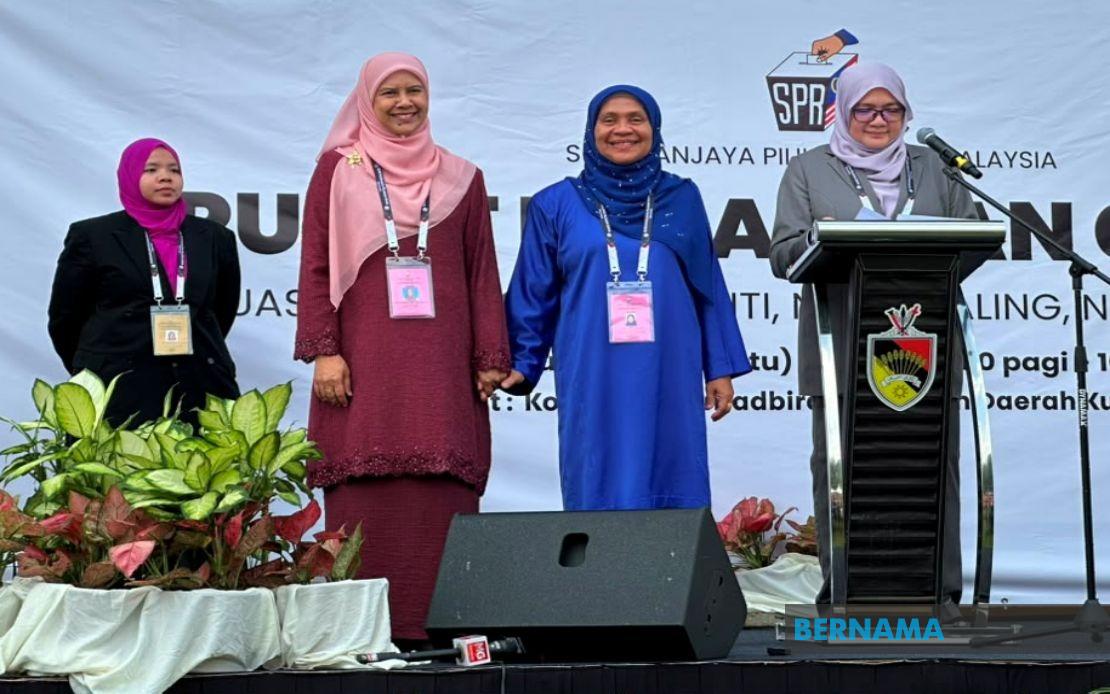
Negeri Sembilan's political landscape is taking shape with nomination day revelations showing how the state's constituencies will be contested. In the Pilah seat, voters will decide between two women candidates in what represents a notable pattern emerging across the state. Datuk Noorzunita Begum Mohd Ibrahim, who currently holds the seat for Pakatan Harapan, will defend her position against Barisan Nasional's S. Leza Md Yasin. The contest underscores shifting dynamics in Malaysia's electoral politics, where women candidates are increasingly visible in competitive races at the state level.
The nomination process concluded on July 18 at the Kuala Pilah District and Land Office, with returning officer Nawal Mohammed Amin confirming the field of candidates shortly after the 10 am deadline. Noorzunita Begum filed her papers at 9.03 am, swiftly followed by her rival at 9.09 am. The efficiency of the submission process reflected the readiness of both camps to contest what appears to be a closely watched race, particularly given the symbolism of two women fighting for the same constituency in a state election.
The broader composition of the 16th Negeri Sembilan State Election reveals a mixed electoral landscape. While Pilah and Johol will witness straight contests, other constituencies are shaping up for three-cornered battles that could complicate the traditional two-coalition narrative. In Juasseh, Pakatan Harapan's Mohd Aidil Abdullah will challenge incumbent Datuk Ismail Lasim of Barisan Nasional, but both face pressure from Bersatu's Mohd Zuhami Md Yusof. This emerging pattern, replicated across multiple seats, suggests that Bersatu's electoral positioning remains fluid and potentially consequential in determining final outcomes.
The Seri Menanti seat presents another three-way contest where Pakatan Harapan's Mohd Kamarul Arifin Mohd Wafa seeks to dislodge incumbent Muhammad Sufian Maradzi of Barisan Nasional. The presence of Bersatu's Datuk Seri Megat D. Shahriman Zaharuddin in the fray adds complexity to what might otherwise be a straightforward incumbent defence. Similarly, Senaling will see Mohd Hanis Mohd Alimin representing Pakatan Harapan, Mohamad Qayyum Abd Jalil for Barisan Nasional, and Mohd Izzafi Khan contesting for Bersatu. These three-cornered races reflect how splinter parties can influence seat distribution even when they lack the organisational machinery of larger coalitions.
In contrast, Johol presents a simpler arithmetic with a direct confrontation between Pakatan Harapan's Mohd Zailan Mohd Munawar and incumbent Datuk Saiful Yazan Sulaiman of Barisan Nasional. Straight fights often intensify campaigning and voter mobilisation, as neither coalition can afford complacency when facing a single opponent. The absence of a third candidate in this constituency may shift strategic focus and resource allocation for both major coalitions as they assess which seats require concentrated effort.
The presence of senior national figures during nomination submissions illustrated the significance both coalitions attach to these contests. Pakatan Harapan fielded substantial political firepower, with PKR Wanita chief Fadhlina Sidek, who serves as Education Minister, accompanying candidates. Angkatan Muda Keadilan vice-chief Dr Mohammed Taufiq Johari, holding the Youth and Sports portfolio, and Deputy Investment, Trade and Industry Minister Sim Tze Tzin, the Bayan Baru MP, also appeared in support. This deployment of ministerial talent underscored the national implications of state-level contests.
Barisan Nasional matched this show of force with equally prominent figures. Deputy Home Minister and UMNO Supreme Working Council member Datuk Seri Dr Shamsul Anuar Nasarah attended to BN candidates, while Perak Menteri Besar and Perak UMNO chairman Datuk Seri Saarani Mohamad ensured coordinated campaign messaging. The involvement of Perak's leadership in Negeri Sembilan's election hinted at broader peninsular dynamics, where state elections rarely remain isolated from neighbouring political developments. Such cross-state coordination reflects how modern Malaysian politics operates through interconnected networks of party machinery and leadership.
The Electoral Commission has scheduled early voting for July 28, providing a preliminary gauge of voter sentiment before the main polling day on August 1. Early voting data, historically significant in Malaysian elections, often provides campaigns with crucial last-minute intelligence to adjust strategies. The compressed timeline between nomination and polling means candidates and their teams must move swiftly to establish presence in constituencies, particularly in rural areas where ground-level organisation proves decisive. For Pilah's two women candidates, this period will be crucial in distinguishing their policy platforms and local engagement from one another.
Negeri Sembilan's significance extends beyond its nine state seats. The state has historically been a political bellwether, with its electoral outcomes frequently foreshadowing broader national trends. A Pakatan Harapan resurgence or Barisan Nasional consolidation at the state level could signal shifts in national coalition fortunes. The presence of Bersatu in multiple contests adds another variable that observers will scrutinise for clues about whether the party can establish itself as a genuine third force or remains a marginal player dependent on coalition mathematics.
For Malaysian voters watching regional political developments, Negeri Sembilan's August 1 election offers insights into coalition strength, regional party performance, and the effectiveness of national campaigns at state level. The Pilah race between two women candidates, while symbolically important, must be understood within this larger context of coalition positioning, marginal seat dynamics, and voter sentiment regarding governance and development agendas. Both candidates will need to articulate clear visions for their constituency beyond relying solely on coalition brands to secure victory in what is shaping up as a genuinely competitive contest.

