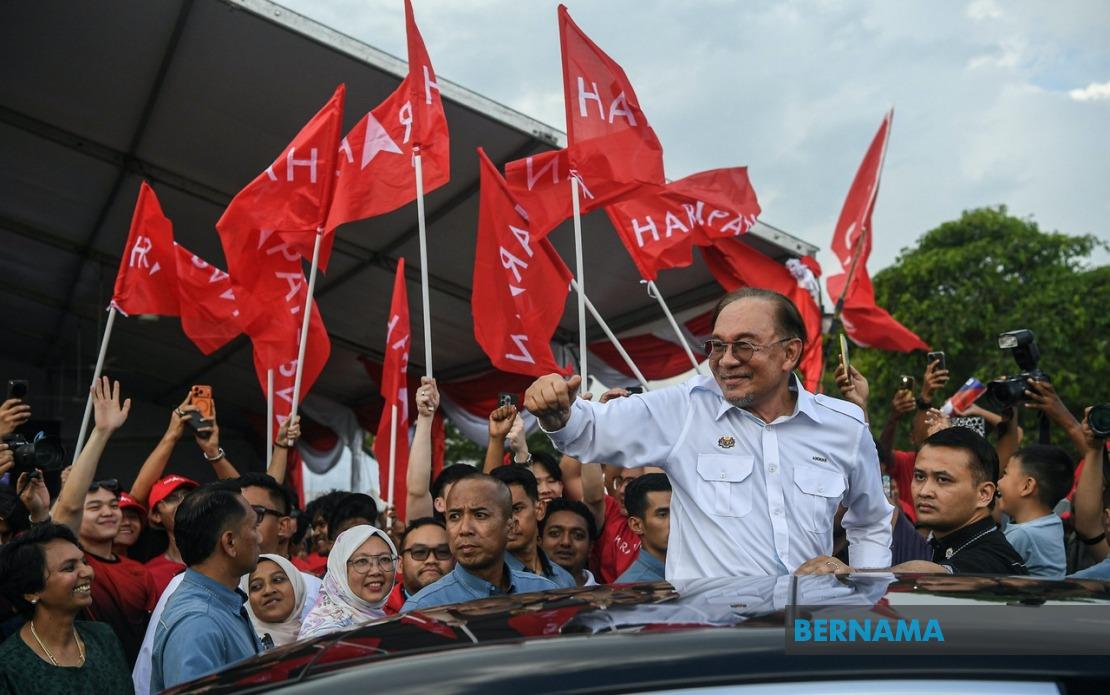
The 16th Johor State Election has witnessed an extraordinary proliferation of digital campaign strategies, with political parties leveraging platforms like TikTok and Facebook to reach voters across the state. Yet beneath this technological veneer lies a persistent truth: senior voters in Johor remain deeply committed to traditional face-to-face campaigning methods. A Bernama survey has revealed that despite the dominance of creative online content and sophisticated digital tactics, many older constituents continue to regard a candidate's physical presence as the most reliable indicator of their sincerity and genuine commitment to public service.
The appeal of direct candidate interaction among elderly voters extends beyond mere nostalgia or unfamiliarity with technology. Voters consistently expressed that attending campaign rallies and events provides an irreplaceable opportunity to observe candidates' personalities, bearing, and overall demeanour in real time. This personal assessment—what some describe as gauging a politician's "aura"—cannot be replicated through a smartphone screen or carefully edited video content. A 70-year-old retired teacher from Perling noted that the atmosphere at live campaign events creates an engaging environment that streaming from home simply cannot match, and that witnessing political leaders in person carries greater psychological weight than passive consumption of digital content.
However, the picture that emerges from voter interviews is considerably more nuanced than a simple binary between digital natives and technophobic seniors. Many older voters openly acknowledged the practical utility of social media platforms, particularly for those facing time constraints, health limitations, or mobility challenges. A 73-year-old housewife from Sedeli described her routine of following campaign developments on her mobile phone while managing household tasks, demonstrating that digital engagement does not require abandoning traditional preferences. Similarly, a retired civil servant with mobility restrictions highlighted how TikTok and other platforms have democratised access to political information, allowing him to stay informed without navigating crowded rally venues—though he expressed a continuing desire to meet candidates in person whenever possible.
Where digital campaigns have proven particularly valuable is in accommodating working-age voters whose professional commitments and scheduling constraints make attending physical events impractical. A 58-year-old business owner from Bukit Permai illustrated this dynamic, explaining that she initially evaluates candidates' manifestos and policy positions through social media before conducting her final assessment at ground level. This represents a strategic layering of information sources rather than wholesale replacement of one medium with another. The sequence matters: digital content serves as a preliminary filtering mechanism, allowing voters to identify which candidates merit their limited time and attention at physical events.
Critics and political observers might assume that older voters' attachment to face-to-face campaigning reflects a broader digital literacy gap, yet several survey respondents explicitly rejected this characterisation. A 59-year-old voter from Kempas pushed back against perceptions that senior citizens lack technological capability, arguing instead that effectiveness depends on how political parties structure their digital messaging. He contended that online campaigns employing simple language and concise formatting can reach audiences across the entire age spectrum. Nevertheless, he maintained that direct candidate interaction remains superior because politicians can respond to questions spontaneously and foster the kind of personal confidence that recorded content struggles to generate.
An academic perspective provides valuable framework for understanding these dynamics. Dr Nazreena Mohammed Yasin from Universiti Tun Hussein Onn Malaysia's Department of Social Sciences observed that physical and digital campaigning no longer represent opposing strategies but rather complementary mechanisms within an integrated electoral ecosystem. While social media has become the dominant information source for substantial segments of the electorate, traditional campaign events retain significant emotional and psychological resonance. The experience of participating in an election—witnessing crowds, sensing collective political energy, interacting directly with candidates—carries symbolic weight that transcends mere information transfer.
The academic analysis also highlights important generational variation in how voters source political information. Some older constituents continue relying on newspapers and television broadcasts, while others have enthusiastically adopted Facebook, TikTok, and WhatsApp, drawn by convenience and accessibility. This diversity suggests that assuming monolithic behaviour among voters above a certain age threshold obscures the reality of individual preference variation. A 73-year-old voter from Perling might find that online platforms, while unable to replicate the atmosphere of live events, offer practical advantages that cannot be dismissed simply as technological resistance.
Dr Yasin's research further indicates that many voters are now operating according to a hybrid methodology, synthesising firsthand experiences from campaign events with information gleaned from social media platforms before entering the polling booth. This integrated approach represents a significant evolution in electoral behaviour, where voters deliberately triangulate between multiple sources to construct their political judgement. Rather than viewing digital and physical campaigning as competitors for voter attention, this pattern suggests they function as reinforcing systems within a broader landscape of political engagement.
The stakes of these observations become apparent when considering that approximately 2.7 million voters were expected to participate in the 16th Johor State Election to select 56 state representatives. For political parties navigating this diverse electorate, the implication is clear: abandoning either traditional rallies or digital platforms would be strategically myopic. Instead, successful campaigns recognise that elderly voters in particular value authenticity and personal connection, attributes that physical presence more readily communicates, while also acknowledging that digital channels expand the reach and accessibility of campaign messages.
What emerges from this Johor election cycle is a portrait of sophisticated voter behaviour that transcends simple generational stereotypes. Elderly constituents are not rejecting digital tools but rather integrating them into existing preferences for direct political engagement. Working-age voters are not abandoning interest in face-to-face campaigning but rather using digital platforms to manage time constraints. The contemporary political landscape in Malaysia increasingly demands that campaigns operate across multiple channels with messages tailored appropriately to each medium, rather than assuming that technological advancement renders traditional methods obsolete. This evolution reflects broader patterns visible in democracies worldwide, where voter sophistication has deepened precisely as information sources have multiplied.

