Pakatan Harapan presented its vision for the 16th Negeri Sembilan state election as fundamentally different from typical campaign promises, with party leaders emphasising that their proposals rest squarely on demonstrated administrative success rather than aspirational rhetoric. The coalition's approach, outlined in a manifesto unveiled ahead of the August 1 polling date, comprises ten priority commitments aimed at voters who have observed the incumbent state government's performance over multiple terms.
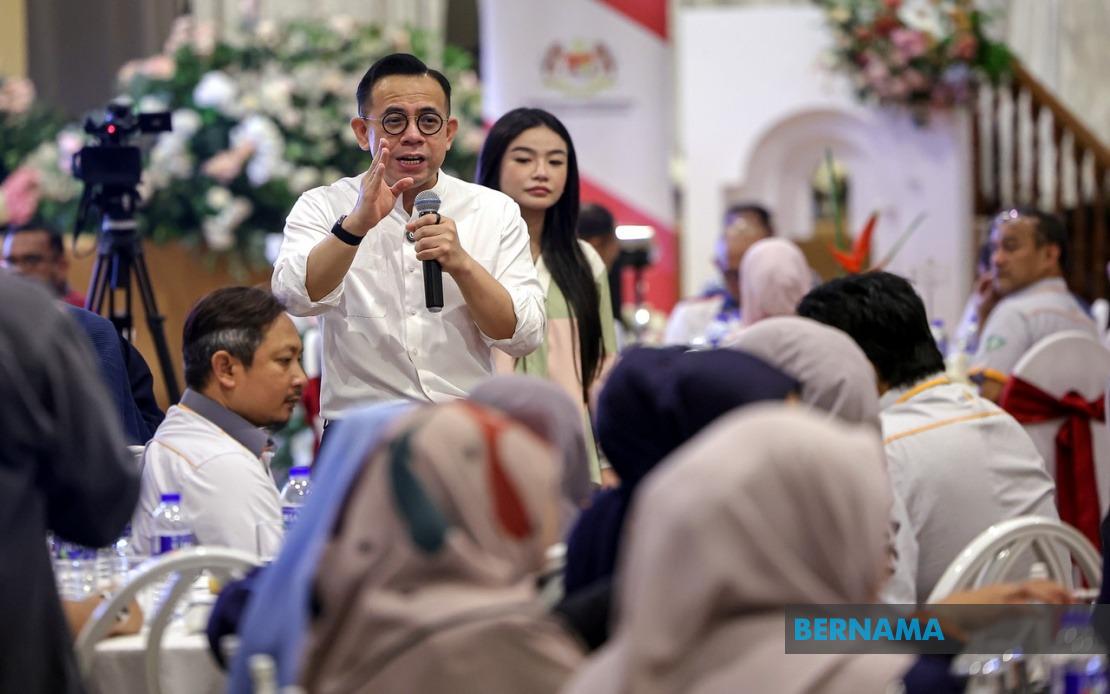
Penang DAP chairman Steven Sim articulated this distinction while speaking to reporters in Seremban on July 21, framing Pakatan Harapan's offer as distinct from the generic manifestos routinely circulated by competing political organisations. Sim stressed that the coalition's credibility derives from years of operational governance under Menteri Besar Datuk Seri Aminuddin Harun, whose administration has shaped the state's economic trajectory and public policy environment. The emphasis on proven results rather than mere programmatic vision represents a strategic messaging choice designed to appeal to voters weighing the reliability of electoral pledges against historical performance.
The manifesto's structure reflects continuity alongside innovation, framing each commitment as an intensification or expansion of initiatives already embedded in the state's governance framework. Sim characterised the document as representing enhancement and extension of programmes that have demonstrated measurable impact, suggesting that voters need not rely on speculation about whether proposals will be executed. This positioning addresses a perennial vulnerability in electoral competition: the gap between campaign commitments and post-election delivery. By anchoring promises in existing institutional capacity and proven administrative machinery, Pakatan Harapan attempts to reduce the perceived risk that manifesto commitments will languish unimplemented.
Sim's remarks acknowledged the fundamental political challenge facing any incumbent administration seeking reelection. The minister responsible for entrepreneur development and cooperatives recognised that manifesto-making itself requires minimal effort—any political party can assemble attractive-sounding pledges. The genuine test, he suggested, lies in demonstrating the organisational capability, resource allocation, and political will to realise those commitments. Negeri Sembilan voters, under this logic, should compare the abstract promises of opposition parties against tangible benefits already delivered and currently visible throughout the state.
Among the ten commitments outlined in the manifesto is the establishment of a youth entrepreneurs fund (TUB), designed to nurture small business creation among the state's younger demographic. This initiative falls within the formal portfolio of Sim's federal ministry, the Ministry of Entrepreneur Development and Cooperatives (KUSKOP), creating institutional alignment between federal and state-level initiatives. The fund represents the kind of targeted intervention that appeals to specific electoral constituencies—in this case, young Malaysians facing barriers to business creation. Its inclusion in the manifesto suggests coordinated strategy between federal and state-level Pakatan Harapan organisations.
The timing of the campaign occurs against the backdrop of Malaysia's ongoing economic dynamics, including inflationary pressures affecting small entrepreneurs and structural challenges in employment creation for younger generations. The youth entrepreneurs fund addresses these concerns within the framework of Negeri Sembilan's economic development strategy. By channeling resources toward business creation rather than employment in conventional sectors, the manifesto implicitly adopts a particular economic philosophy emphasising entrepreneurial solutions to income generation and economic participation.
Sim emphasised that federal government support for economic development remains contingent upon Pakatan Harapan retaining control of the state government. This framing subtly ties local electoral outcomes to broader federal considerations, suggesting that a change in state-level political control might diminish the coordination and resource flow between Kuala Lumpur and Seremban. The minister indicated that KUSKOP would continue intensive collaboration with the state government on entrepreneurial capacity-building, workforce development, and small business support mechanisms. This intergovernmental coordination carries implications for the distribution of federal development resources and the prioritisation of state-specific initiatives within national economic planning.
The electoral calendar established by the Election Commission structures the campaign timeline around early voting on July 28, with main polling occurring on August 1. This compressed schedule concentrates campaign activity and messaging intensity, giving political parties limited opportunity to shift public opinion substantially or introduce new dimensions to the electoral debate. For Pakatan Harapan, this timeline necessitates rapid deployment of the manifesto as a central messaging tool, with validation of its credibility depending heavily on voter confidence in the state government's administrative track record.
Negeri Sembilan's political significance extends beyond its own state jurisdiction. As a Pakatan Harapan-controlled state, electoral retention here demonstrates the coalition's capacity to maintain political support in heartland constituencies. Conversely, significant swings against the incumbent would carry broader implications for federal-level political calculations, potentially indicating broader erosion of coalition support or the effectiveness of opposition messaging. State elections in Malaysia frequently serve as barometers of public sentiment regarding national political configurations.
The manifesto's emphasis on economic performance and tangible benefits delivered to ordinary citizens reflects a particular electoral strategy emphasising bread-and-butter governance over ideological positioning. Pakatan Harapan's messaging downplays party political competition to focus on comparative administrative competence and economic outcomes. This approach assumes that voters in Negeri Sembilan prioritise material improvements—job creation, entrepreneurial support, infrastructure development—over partisan identity or ideological differentiation between competing parties.
Sim's positioning of the manifesto within a narrative of proven effectiveness attempts to establish confidence in future performance based on historical record. However, this strategy contains inherent vulnerabilities, particularly regarding voter attributions of economic results to state-level governance. Economic conditions result from complex interactions between state policies, federal initiatives, global market forces, and macroeconomic circumstances beyond any state government's control. Voters may credit or blame state governments for economic outcomes determined partly by factors beyond their influence, creating unpredictable electoral dynamics regardless of manifesto quality or track record quality.
For Malaysian observers and voters across other states, Negeri Sembilan's election provides insight into whether incumbent administrations can convert administrative achievements into electoral support, and whether voters credit state governments for economic performance and public service delivery. The outcome will inform broader assessments of Pakatan Harapan's electoral viability at the state level and the coalition's capacity to maintain political control across multiple jurisdictions despite the political and governance pressures that all long-term incumbents face.

