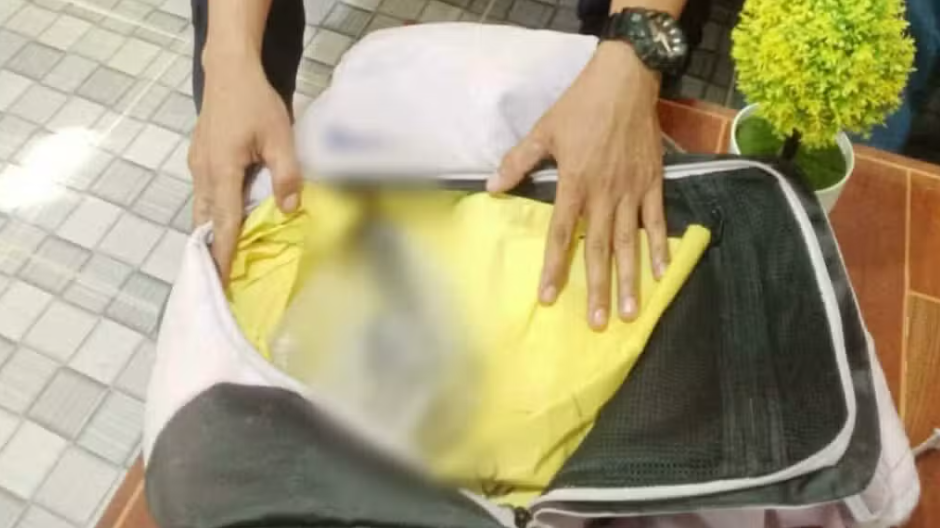
A Philippine school in Cebu province discovered a loaded firearm in a teenager's bag during a surprise security check, prompting immediate police intervention and raising fresh concerns about weapon safety in households with minors. The .357 Smith & Wesson Magnum revolver was found on Thursday, Aug 20, at approximately 3.50pm when a teacher conducting routine inspections of student belongings came across the weapon in the 14-year-old's school bag at a school in Pinamungajan, Cebu.
The discovery triggered swift action from school administrators, who contacted local police to secure the firearm and launch an investigation into how the weapon ended up in the student's possession. Responding officers verified the report and took custody of the revolver, which was found without ammunition. The weapon has since been processed for documentation and proper legal disposition as part of ongoing police procedures.
Investigators pieced together how the teenager came into possession of the firearm through initial questioning. The .357 revolver had belonged to the student's grandfather and was ordinarily stored inside a cabinet at the family's residence. On the morning of the incident, the minor accessed the cabinet, removed the weapon, and brought it to school—a decision made without the knowledge or permission of his parents, who were working outside the municipality at the time. The teenager was under the care of his grandparents, who apparently were unaware of the action until police arrived.
The incident occurred against a backdrop of heightened security consciousness in Cebu schools following a deadly shooting at a senior high school in Zamboanga that claimed two lives. Cebu Governor Pamela Baricuatro responded by directing provincial police leadership and municipal police chiefs to strengthen security protocols across public and private educational institutions. The governor's directive encompassed increased police visibility at schools, more frequent security inspections of student belongings, and enhanced operational coordination between law enforcement and school management teams.
In response to the governor's orders, Cebu Police Provincial Office Provincial Director Police Colonel Abubakar Udang Mangelen Jr implemented a one-police-to-school deployment programme in collaboration with local government units and school administrators. This initiative aims to station dedicated police officers at educational facilities to deter weapons from entering school grounds and to respond rapidly to security incidents. The programme represents a significant escalation of the police presence typically seen in Philippine schools and signals the authorities' commitment to preventing another tragedy.
The student's case is being handled according to legal procedures applicable to minors, with authorities prioritising both accountability and appropriate rehabilitation support. He was transferred to the Municipal Social Welfare and Development (MSWD) Office, which will oversee his care and coordinate intervention programmes while awaiting the arrival of his parents or legal guardians. As of Friday, Aug 21, the investigation remained ongoing, with authorities working to understand the minor's motivations and to ensure that proper psychological and social support is provided throughout the legal process.
The case underscores a critical vulnerability in household firearm security across Southeast Asia, where inadequate storage practices place weapons within reach of curious or troubled children. Police have issued public reminders to gun owners to implement proper storage measures, including locked cabinets, safes, and ammunition separation—steps designed to render firearms inaccessible to minors while maintaining the owner's right to legal firearm ownership. In the Philippine context, where firearm regulation remains contested between public safety advocates and gun rights proponents, such incidents fuel arguments for stricter enforcement of existing storage regulations.
For Malaysian observers, the incident serves as a cautionary tale about the dangers of complacency regarding household security measures. While Malaysia maintains stricter overall firearm regulations than the Philippines, unlicensed weapons remain a persistent problem in certain communities, particularly in areas affected by criminal activity or militant influences. The case demonstrates how even in households where firearms are legally owned, failure to secure weapons can create emergency situations that endanger children and create broader public safety risks that extend beyond the family home.
The broader security response in Cebu reflects a trend across the Philippines of militarising school environments in response to violence. Deploying armed officers to every school carries both benefits and risks—while potentially deterring external attacks and providing rapid response capability to armed incidents, it also normalises weaponry in educational spaces and raises questions about whether children are receiving appropriate psychological support alongside enhanced security hardware. Regional education experts have debated whether such approaches effectively address root causes of school violence or merely treat symptoms.
The recovery of this particular weapon occurred through routine preventive procedures rather than emergency response, suggesting that comprehensive inspection protocols can be effective in identifying threats before they materialise. The teacher who conducted the bag inspection followed precautionary procedures that proved critical in preventing a potential tragedy. Her action illustrates how systematic application of security measures by school staff—working in coordination with police—can identify dangerous situations before they escalate into emergencies affecting multiple people.
Looking forward, the incident will likely strengthen arguments within the Philippine government for more rigorous enforcement of existing firearm storage laws and potentially for legislative tightening of regulations governing how legally-owned weapons must be kept in households with minors. Similar discussions are occurring across Southeast Asia as governments grapple with balancing legitimate civilian firearm ownership rights against public safety imperatives. For Malaysian policymakers, the case provides evidence supporting arguments for maintaining or enhancing current restrictions on civilian firearm access, particularly given the region's ongoing security challenges.

